![[slide:title]](/static/upload/other/20260512/1778551853592214.webp)
![[slide:title]](/static/upload/other/20260512/1778551954982306.webp)
Time:2026-04-07 Form:本站
Best Alternatives to Straumann Implants: A Deep, Practical Guide for Clinics and Distributors
When discussing premium dental implant systems, Straumann is often considered the gold standard. Its reputation is built on decades of clinical research, strong brand positioning, and high success rates. However, for many clinics, distributors, and procurement managers, Straumann is not always the most practical choice.
Rising costs, supply chain considerations, and increasing demand for flexibility have led many professionals to explore viable alternatives—systems that offer comparable clinical performance but with better margins, adaptability, or accessibility.
This guide goes beyond surface-level comparisons. Instead of simply listing competitors, we will examine what truly makes a good alternative to Straumann, evaluate the most credible global options, and help B2B buyers make informed, strategic decisions.

Straumann’s strengths are undeniable: premium materials (such as Roxolid), strong R&D, and extensive clinical documentation. But these advantages come with trade-offs.
Straumann implants are among the most expensive on the market. For clinics operating in price-sensitive regions or high-volume practices, this significantly impacts profitability.
Straumann operates as a branded system, leaving little room for customization or private-label opportunities—an important factor for distributors building their own product lines.
In straightforward implant cases, the clinical advantages of premium systems may not justify the cost difference. Many alternative systems provide equivalent outcomes in routine procedures.
Before comparing brands, it's critical to define what “alternative” really means in a clinical and business context.
l High survival rate (95%+ over 5–10 years)
l Proven surface treatment technology
l Strong primary stability and osseointegration
l Versatile connection systems (internal hex, conical)
l Availability of components and digital workflows
l Precision machining
l Certified materials (typically Grade 4 or Grade 5 titanium)
l Consistent surface treatment
l Competitive pricing
l Supply chain reliability
l OEM/ODM flexibility

Nobel Biocare is perhaps the closest direct competitor to Straumann in terms of brand positioning and clinical credibility.
Strengths:
l Long clinical history and strong research backing
l Advanced digital ecosystem (guided surgery, CAD/CAM)
l Wide product range
Limitations:
l Pricing is similarly high to Straumann
l Less flexibility for distributors
Best for: Premium clinics that want an alternative without stepping down in brand perception.

Zimmer Biomet offers a balance between clinical performance and pricing.
Strengths:
l Strong implant design and biomechanical stability
l Backed by a large medical device company
l Competitive mid-to-high pricing
Limitations:
l Less aggressive innovation compared to top-tier brands
l Moderate global brand recognition in dentistry
Best for: Clinics seeking reliability with slightly better cost efficiency.

The Astra Tech implant system is well known for its marginal bone preservation.
Strengths:
l Excellent clinical outcomes in long-term studies
l Strong prosthetic solutions
l Good reputation among specialists
Limitations:
l Premium pricing tier
l Complex system for beginners
Best for: Specialists focused on long-term aesthetics and bone stability.

BioHorizons is a strong mid-range option, especially in North America.
Strengths:
l Laser-Lok surface technology
l Competitive pricing
l Strong educational support
Limitations:
l Smaller global footprint compared to Straumann
l Limited OEM opportunities
Best for: Clinics wanting clinical innovation without premium pricing.

Osstem has become one of the largest implant manufacturers globally, especially dominant in Asia.
Strengths:
l Excellent cost-performance ratio
l Wide product portfolio
l Strong training and support network
Limitations:
l Perceived as mid-tier in some Western markets
l Brand positioning still evolving globally
Best for: High-volume clinics and cost-sensitive markets.

Among emerging implant manufacturers, Ruitech represents a growing segment of engineering-driven, OEM-focused implant systems that are gaining traction in global B2B markets.
Rather than positioning itself as a traditional branded competitor, Ruitech operates with a manufacturing-first philosophy, which appeals particularly to distributors, private-label brands, and large dental groups.
Strengths:
l Focus on precision CNC machining and strict quality consistency
l Use of medical-grade titanium (Grade 4 / Grade 5) aligned with international standards
l Flexible OEM/ODM capabilities, supporting private branding strategies
l Competitive pricing structure suitable for scalable distribution
Limitations:
l Lower brand recognition compared to legacy Western brands
l Limited long-term published clinical data in public literature
Best for:
Distributors, dental chains, and procurement-focused organizations looking to build their own implant brand or improve margins without compromising manufacturing quality.
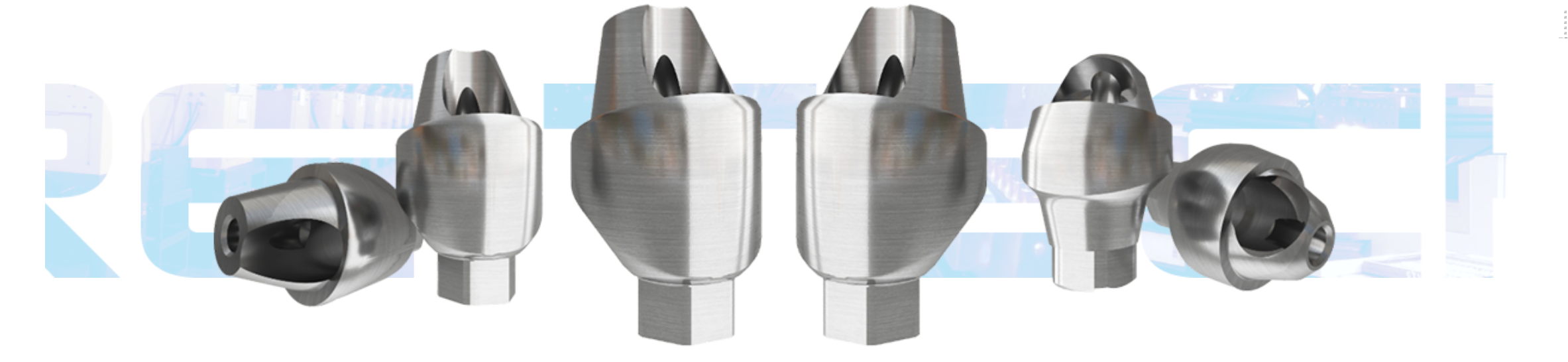
While branded systems dominate discussions, an important and often overlooked segment is OEM/ODM implant manufacturing.
Many modern factories now produce implants with:
l Comparable titanium grades (Grade 4 / Grade 5)
l Advanced surface treatments (SLA, RBM, anodized)
l Precision CNC machining
l Strict quality control aligned with ISO standards
For distributors and large clinics, OEM solutions offer:
l Significantly higher margins
l Brand ownership opportunities
l Flexible product customization
l Faster response to market demand
In many cases, these systems are manufactured using processes and materials comparable to well-known brands—but without the brand premium.
A growing number of global buyers are shifting toward trusted manufacturing partners to build their own implant lines, rather than relying solely on established Western brands.
One of the biggest concerns when moving away from Straumann is clinical reliability.
However, modern implantology has reached a level of maturity where:
l Implant macro design differences have narrowed
l Surface technology has become standardized
l Surgical protocols are well established
For most routine cases, success rates across major systems are remarkably similar when:
l Proper case selection is applied
l Surgical technique is correct
l Prosthetic planning is well executed
In other words, the clinician often matters more than the brand.
l Look for OEM capability and branding flexibility
l Evaluate supply chain stability
l Assess regulatory certifications (CE, FDA, etc.)
l Consider total treatment cost vs patient pricing
l Evaluate ease of use and prosthetic workflow
l Ensure availability of components locally
l Standardize systems to reduce training complexity
l Optimize procurement for cost efficiency
l Balance brand perception with profitability
Not necessarily. Many mid-range systems achieve comparable success rates in standard cases. The key variables are surgical skill and case planning.
Nobel Biocare is often considered the closest in terms of clinical reputation and premium positioning.
Yes. Brands like Osstem Implant and Dentium offer strong performance at a lower cost, making them ideal for high-volume practices.
It depends on your business model. For high-end clinics, Straumann may still be valuable. For cost-sensitive or scalable operations, alternatives can significantly improve margins.
Private-label (OEM) implants are becoming increasingly popular among distributors. When sourced from reliable manufacturers, they can match the quality of branded systems while offering better business flexibility.
Straumann remains a benchmark in implant dentistry—but it is no longer the only path to clinical success.
Today’s market offers a wide spectrum of alternatives, from premium competitors like Nobel Biocare to cost-effective solutions such as Osstem Implant and Dentium.
For B2B buyers, the decision is no longer just about clinical performance. It’s about balancing quality, cost, scalability, and brand strategy.
In many cases, the most competitive advantage doesn’t come from choosing another big brand—but from rethinking the supply model entirely.
That’s where forward-looking manufacturers and private-label strategies quietly reshape the industry—often behind the scenes.