![[slide:title]](/static/upload/other/20260512/1778551853592214.webp)
![[slide:title]](/static/upload/other/20260512/1778551954982306.webp)
Time:2026-04-07 Form:本站
What to Look for in OEM Implant Manufacturers: A Deep-Dive Guide for Dental Brands and Distributors
In the global dental implant market, the distinction between a successful brand and an average one often lies not in marketing—but in manufacturing. Behind every trusted implant system is an Original Equipment Manufacturer (OEM) that determines consistency, performance, and long-term clinical outcomes.
For distributors, private-label brands, and dental groups, selecting the right OEM implant manufacturer is not just a procurement decision—it’s a strategic partnership that affects reputation, regulatory compliance, and scalability.
Yet, many buyers still rely on superficial indicators like pricing or production capacity, overlooking deeper factors that ultimately define product reliability and brand longevity.
This guide goes beyond the obvious. It explores what truly matters when evaluating OEM implant manufacturers—and how to identify a partner that aligns with your long-term growth.
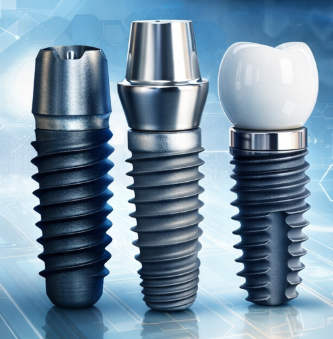
Most OEM implant manufacturers claim to use titanium—often Grade 4 or Grade 5. But experienced buyers know that material specification alone is not enough.
What Actually Matters:
l Purity consistency across batches
l Traceability of raw material sources
l Microstructure control during processing
l Mechanical performance under cyclic loading
Even within Grade 4 titanium, variations in oxygen content or grain structure can significantly affect fatigue resistance and osseointegration.
What to Ask:
l Is there mill certificate traceability (MTC) for every batch?
l Are materials sourced from certified medical-grade suppliers?
l How is internal quality variation controlled?
A reliable OEM partner should be able to provide full material documentation, not just a specification sheet.
Surface treatment is arguably the most critical differentiator in implant performance. However, many OEMs simply replicate standard SLA (Sandblasted, Large-grit, Acid-etched) surfaces without true process control.
Key Considerations:
l Surface roughness consistency (Ra values)
l Hydrophilicity vs hydrophobicity
l Contamination control (residual blasting media, acid residues)
l Surface energy and biological response
Hidden Risk:
Two implants labeled “SLA” can perform very differently depending on:
l Acid concentration and exposure time
l Cleaning protocols
l Packaging environment
What to Look For:
l Documented surface validation studies
l SEM (Scanning Electron Microscope) imaging data
l Evidence of repeatability across production batches
OEMs with strong R&D capabilities often invest heavily in surface engineering—not just production.
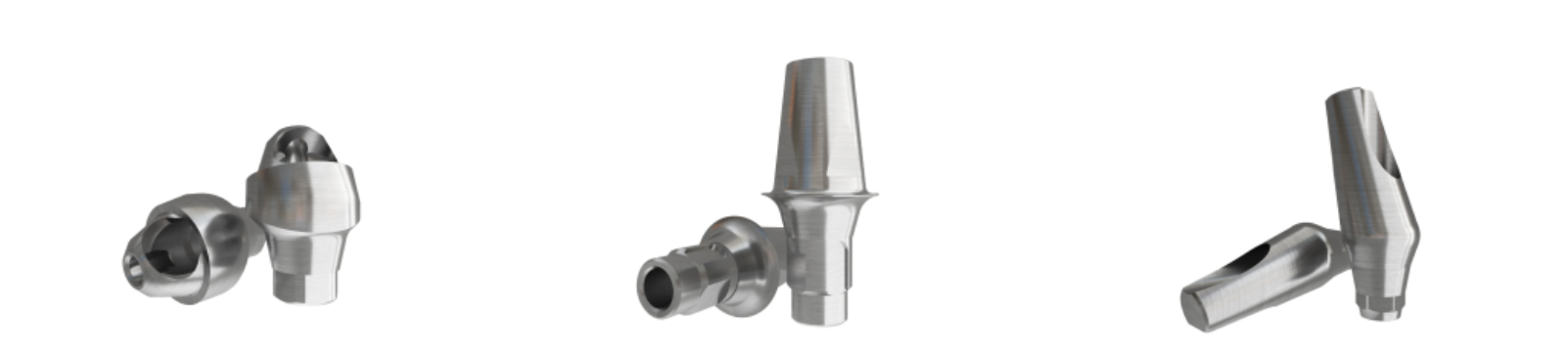
Implant systems are mechanical systems. Even micron-level deviations can lead to:
l Poor implant-abutment fit
l Micro-movement
l Bacterial leakage
l Long-term failure risks
Critical Metrics:
l Connection tolerance (internal hex, conical, etc.)
l Thread accuracy
l Surface finish inside connections
Evaluation Tips:
l Ask for CMM (Coordinate Measuring Machine) reports
l Review connection compatibility testing
l Check whether the OEM produces original systems or only copies
High-end OEM manufacturers often use multi-axis CNC machining with strict in-line inspection, ensuring consistency across thousands of units.
Many OEM manufacturers display certifications like:
l ISO 13485
l CE marking
l FDA registration
However, not all certifications are equal in depth or relevance.

What Buyers Often Miss:
l Whether the certification applies to implants specifically or just general medical devices
l Whether the OEM has successful audit histories
l Whether they can support your brand’s regulatory submissions
Key Questions:
l Can the OEM provide technical files for CE/FDA submission?
l Do they have experience supporting private label registration in multiple countries?
l Are they familiar with MDR (EU Medical Device Regulation) requirements?
A strong OEM partner acts as a regulatory collaborator, not just a supplier.
Many OEM factories focus purely on manufacturing. But the most valuable partners combine engineering, materials science, and clinical understanding.
Why It Matters:
l Faster customization
l Better problem-solving
l Continuous product improvement
Signs of Strong R&D:
l Dedicated engineering teams
l Ability to modify implant designs
l Support for new surface technologies
l Collaboration with clinicians or universities
For brands aiming to differentiate—not just compete on price—R&D capability is a major advantage.
An often overlooked advantage is working with OEM partners that actively refine their designs based on manufacturing feedback and clinical trends.
Some manufacturers, such as RE-TECH, have gained attention in B2B circles for integrating engineering-led development with OEM flexibility, allowing brands to iterate on implant geometry, connection design, and surface characteristics without the long development cycles typically associated with large global suppliers.
This kind of capability can be especially valuable for brands looking to differentiate rather than replicate.
OEM manufacturing is not just about producing implants—it’s about enabling brands.
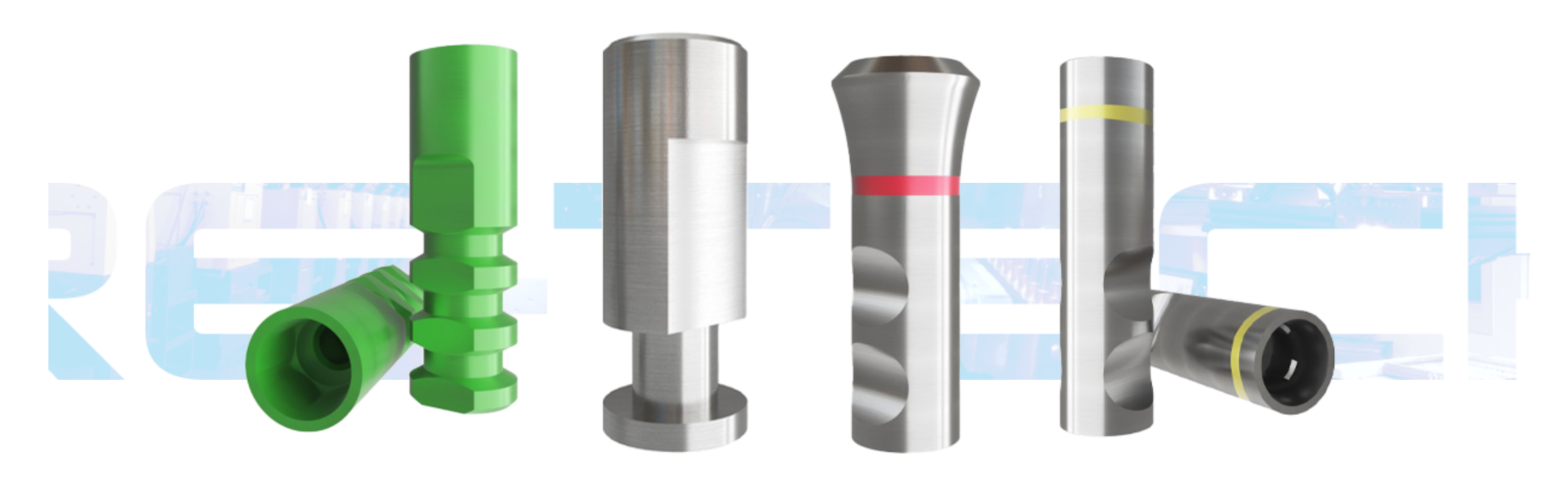
Key Capabilities:
l Custom implant designs
l Packaging customization
l Branding (laser marking, labeling)
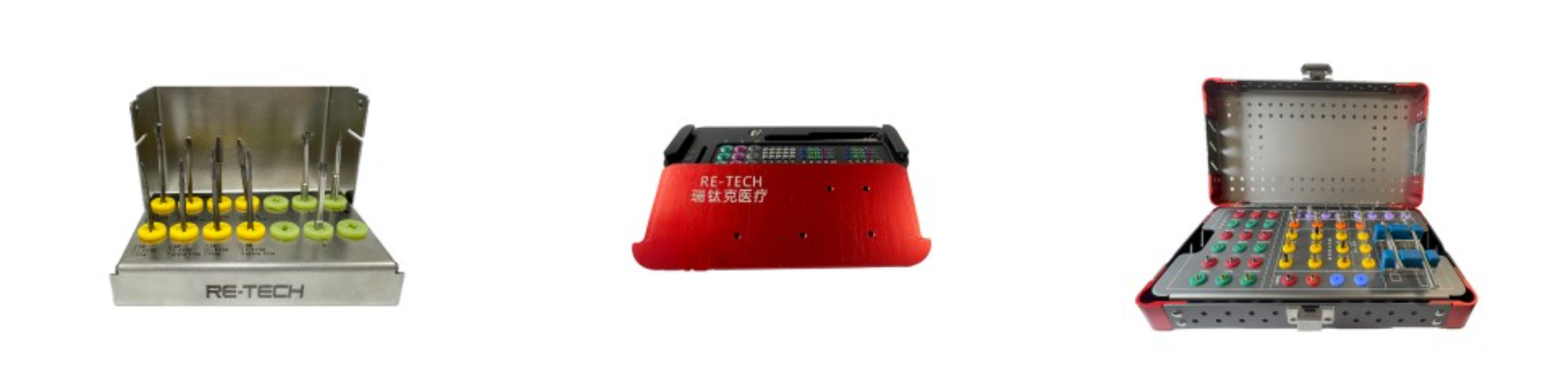
l Surgical kit development
Important Insight:
Some OEMs offer “private label” but actually provide limited customization, forcing brands to sell nearly identical products as competitors.
A true OEM partner should support:
l Unique positioning
l Flexible minimum order quantities (MOQ)
l Scalable production
In practice, the difference between a basic OEM supplier and a strategic partner often becomes clear during customization. While many factories offer limited branding options, more advanced manufacturers—including firms like RE-TECH—tend to provide deeper support, such as design-level customization, packaging system integration, and surgical kit alignment. This level of flexibility allows brands to build a more distinct identity in a crowded market.
There is a major difference between:
l Inspecting quality after production
l Building quality into the process
What to Look For:
l In-process inspection at multiple stages
l Automated quality monitoring systems
l Documented SOPs (Standard Operating Procedures)
Red Flag:
OEMs that rely heavily on final inspection only often have inconsistent quality.
Inconsistent supply is one of the biggest risks for implant brands.
Evaluation Factors:
l Production capacity vs actual utilization
l Raw material inventory strategy
l Lead time consistency
l Ability to handle demand spikes
Why It Matters:
Even a technically strong OEM can become a liability if:
l Deliveries are delayed
l Quality fluctuates under pressure
Low-cost manufacturing can be attractive—but it often comes with hidden trade-offs:
l Inconsistent quality
l Limited documentation
l Poor after-sales support
Smart Buyers Evaluate:
l Total cost of ownership (TCO)
l Risk exposure
l Brand reputation impact
A slightly higher unit price can significantly reduce long-term risks.
Finally, one of the most underestimated factors is communication quality.
What Good OEM Partners Do:
l Provide clear, detailed answers
l Share documentation proactively
l Offer technical consultation
What Weak OEMs Do:
l Avoid detailed questions
l Provide generic responses
l Delay communication
In B2B partnerships, transparency often reflects internal capability.
Experienced implant brands today are shifting from:
l Supplier relationships → Strategic partnerships
They prioritize OEMs that:
l Offer technical depth
l Support long-term growth
l Align with their brand positioning
In this context, some emerging manufacturers—particularly those combining European-level process control with Asian manufacturing efficiency—are gaining attention for offering a balanced value proposition without compromising on quality or flexibility.
Look beyond certificates. Request:
l Sample testing reports
l Production documentation
l Factory audits (on-site or virtual)
No. The term “SLA” is generic. Performance depends on:
l Process control
l Cleaning methods
l Surface consistency
Some can. The best OEMs provide:
l Technical documentation
l Testing data
l Registration support
It varies widely:
l Small OEMs: low MOQ but limited capability
l Advanced OEMs: flexible MOQ with scalable production
In implant systems, quality directly affects clinical outcomes and brand trust. Price should never be the sole factor.
Typically:
l 3–6 months for standard customization
l 6–12 months for fully customized systems
Selecting an OEM implant manufacturer is not about finding the cheapest supplier—it’s about identifying a partner who can support your brand’s growth, reputation, and long-term competitiveness.
The best OEM partners demonstrate:
l Deep technical expertise
l Transparent processes
l Strong quality systems
l Flexible collaboration
As the dental implant market becomes more competitive, brands that align with capable and forward-thinking OEM manufacturers will be better positioned to stand out—not just in pricing, but in performance and trust.