![[slide:title]](/static/upload/other/20260512/1778551853592214.webp)
![[slide:title]](/static/upload/other/20260512/1778551954982306.webp)
Time:2026-04-10 Form:本站
Why Choose Alternatives to Premium Dental Implant Brands?A Strategic Guide for Clinics, Distributors, and OEM Buyers
For decades, premium dental implant brands have dominated clinical conversations, procurement decisions, and training ecosystems. Names associated with high-end implants have become almost synonymous with quality—creating a perception that “premium equals safe, anything else equals risk.”
But beneath this perception, a quiet but powerful shift is happening.
Across global markets—from Europe to Southeast Asia to Latin America—clinics, distributors, and OEM buyers are increasingly exploring alternatives to premium implant brands. Not as a compromise, but as a strategic upgrade in cost efficiency, supply flexibility, and operational control.
This article goes beyond surface-level comparisons. Instead of repeating common talking points, we’ll unpack:
l The real drivers behind the shift away from premium brands
l What “alternative” actually means in today’s implant ecosystem
l Where premium brands still hold advantages—and where they don’t
l How to evaluate alternatives intelligently (not blindly)
l Why forward-thinking buyers are redefining value in implant sourcing
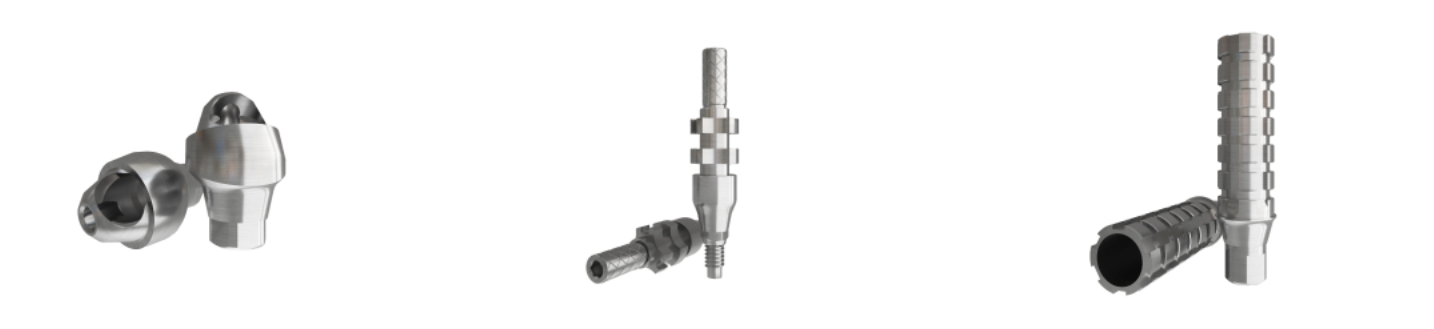
The term premium in dental implants is often misunderstood.
Historically, premium brands earned their position through:
l Early clinical research and documentation
l Proprietary surface treatments
l Strong surgeon education networks
l Global regulatory approvals
However, today’s manufacturing landscape has evolved dramatically.
What Has Changed?
Modern implant manufacturing is no longer exclusive to a handful of companies. Key advancements include:
l CNC machining precision reaching micron-level tolerances
l Standardization of titanium grades (e.g., Grade 4, Grade 5, Ti-6Al-4V ELI)
l Surface treatment technologies becoming widely accessible
l Independent testing labs verifying performance globally
Result:
The technical gap between premium brands and high-quality alternatives has significantly narrowed.
What remains is often:
l Brand equity
l Marketing influence
l Distribution networks
—not necessarily a proportional difference in product performance.
Most discussions focus only on unit price differences. But for B2B buyers, the cost structure is much deeper.
Hidden Cost Layers
1. Inventory Lock-In
Premium brands often require:
l Full system commitment
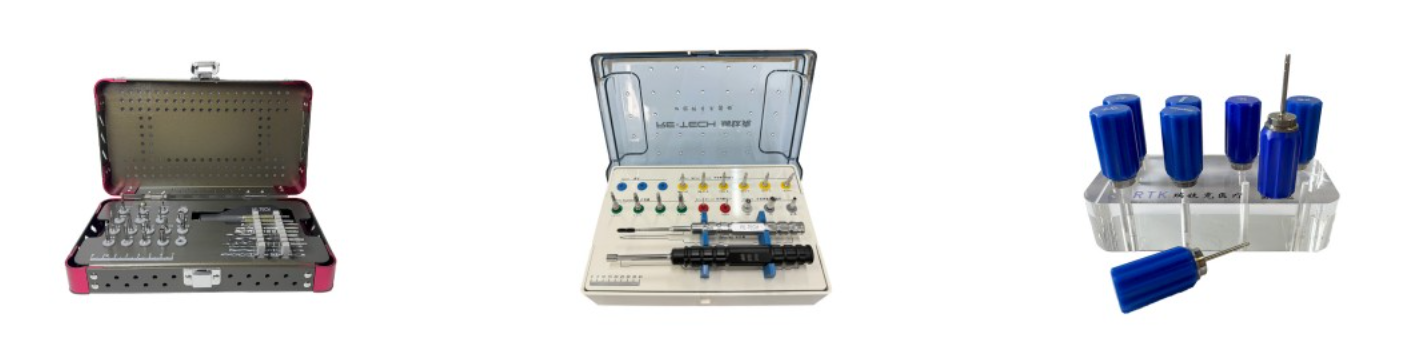
l Dedicated surgical kits
l Proprietary prosthetic components
This creates high switching costs and reduces flexibility.
2. Margin Compression for Distributors
Distributors working with premium brands often face:
l Fixed pricing structures
l Limited room for differentiation
l High competition within the same brand ecosystem
3. Clinic Profitability Constraints
Clinics using high-cost implants must either:
l Pass costs to patients (reducing competitiveness)
l Absorb margins (reducing profitability)
Strategic Insight
Choosing alternatives is not just about “saving money.”
It’s about reclaiming control over pricing, margins, and supply chain decisions.
Not all alternatives are equal—and this is where many buyers make mistakes.
A true alternative is not simply a cheaper product. It must meet four critical benchmarks:
l Medical-grade titanium (Grade 4 or Grade 5 / ELI)
l Verified chemical composition
l Consistent mechanical strength
Modern alternatives often use:
l SLA (Sandblasted, Large-grit, Acid-etched)
l Anodized surfaces
l Hybrid micro-roughness treatments
The key is osseointegration predictability, not brand name.
Look for:
l Tight tolerances on implant-abutment connection
l Stable internal hex or conical connections
l Consistency across batches
Strong alternatives typically hold:
l CE certification
l ISO 13485 manufacturing standards
l Increasingly, FDA registration
Dimension | Premium Brands | High-Quality Alternatives |
Price | High | 30–70% lower |
Brand Recognition | Strong | Growing |
Clinical Data | Extensive historical data | Increasing, often comparable |
Flexibility | Low (closed systems) | High (OEM / customizable) |
Supply Chain | Centralized | Diversified |
Profit Margins | Limited for buyers | Higher potential |
Key Takeaway
The decision is no longer about quality vs. risk.
It is about:
Brand premium vs. operational efficiency
In many regions, implant dentistry is becoming highly competitive. Clinics must:
l Offer competitive pricing
l Maintain clinical outcomes
l Differentiate services
Alternatives enable price-performance optimization.
More distributors and dental groups are shifting toward:
l Private label implant systems
l OEM partnerships with manufacturers
This allows:
l Brand ownership
l Higher margins
l Market differentiation
Manufacturers such as RE-TECH, for example, have quietly supported global partners through customized implant solutions and stable supply, rather than competing in branding wars.
Recent global disruptions have exposed risks in relying on a single premium supplier.
Alternatives offer:
l Multi-source flexibility
l Faster lead times
l Reduced dependency
What used to be “premium-only” is now widely available:
l Surface treatments
l Precision machining
l Sterilization protocols
This levels the playing field.
Reality:
Cost differences often come from:
l Marketing overhead
l Distribution layers
l Brand positioning
—not necessarily inferior materials or processes.
Reality:
Acceptance depends on:
l Clinical results
l Ease of use
l Support and training
Many clinicians are increasingly open to alternatives when performance is proven.
Reality:
While some newer systems have shorter histories, many are:
l Based on well-established implant designs
l Using proven materials and surfaces
Instead of asking “Is this brand famous?”, ask:
l What titanium grade is used?
l What is the surface treatment process?
l What are the tolerance levels?
l Can they support OEM or customization?
l What is their production capacity?
l How stable is their lead time?
l Certifications (CE, ISO, FDA)
l Traceability systems
l Quality control protocols
l Can they grow with your business?
l Do they offer flexibility in product lines?

Interestingly, many successful clinics and distributors are not abandoning premium brands entirely.
Instead, they adopt a hybrid strategy:
l Premium implants for complex or high-end cases
l Alternatives for standard procedures
This allows:
l Risk balancing
l Margin optimization
l Broader patient coverage
The implant industry is gradually shifting from:
Brand-driven decisions → Data-driven and value-driven decisions
This shift is subtle but powerful.
Buyers are asking:
l What is the real clinical difference?
l What am I paying extra for?
l Can I achieve the same outcomes more efficiently?
Manufacturers that focus on engineering, consistency, and partnership—rather than just branding—are gaining attention in this new landscape.
Choosing alternatives to premium dental implant brands is no longer a risky move—it is increasingly a strategic business decision.
For B2B buyers, the question is not:
“Should we trust alternatives?”
But rather:
“Which alternative aligns best with our clinical standards and business goals?”
In a market where technology is widely accessible and manufacturing excellence is no longer rare, the real competitive advantage lies in:
l Smart sourcing
l Flexible partnerships
l Long-term value creation
And those who adapt early will be better positioned to lead—not follow—the next phase of the implant industry.
Yes—provided they meet international standards such as CE and ISO 13485, and are manufactured using medical-grade titanium with validated processes.
Typically between 30% and 70%, depending on the supplier and purchasing volume.
Not necessarily. When properly selected, high-quality alternatives can deliver comparable osseointegration and stability.
Costs often include:
l Marketing and branding
l Global distribution networks
l Training infrastructure
A hybrid strategy is often the most practical, balancing cost efficiency and clinical confidence.
l Consistent quality
l Supply reliability
l OEM capability
l Long-term partnership potential
The conversation around dental implants is no longer defined solely by brand recognition. As technology matures and global manufacturing capabilities continue to advance, the gap between premium brands and high-quality alternatives has narrowed in ways that were almost unthinkable a decade ago.
For clinics, distributors, and OEM buyers, this shift presents an important opportunity—not to simply reduce costs, but to redefine value.
Choosing an alternative is not about rejecting premium systems outright. It is about asking better questions:
l Does the product deliver consistent clinical outcomes?
l Is the supply chain stable and scalable?
l Can it support long-term business growth, not just short-term procurement needs?
Increasingly, the most competitive players in the market are those who move beyond brand-driven decisions and adopt a more data-driven, performance-oriented approach.
In this evolving landscape, manufacturers that prioritize engineering precision, material integrity, and partnership flexibility are becoming essential collaborators behind the scenes. Companies like RE-TECH, for instance, are not necessarily the most visible names in the market, but they represent a growing segment of manufacturers focused on delivering reliable, customizable solutions tailored to B2B needs.
Ultimately, the future of implant sourcing will not be defined by the most recognizable logo—but by the ability to balance clinical confidence, operational efficiency, and strategic flexibility.
And for those willing to rethink traditional assumptions, that future is already here.