![[slide:title]](/static/upload/other/20260512/1778551853592214.webp)
![[slide:title]](/static/upload/other/20260512/1778551954982306.webp)
Time:2026-04-09 Form:本站
Dental Implant Success Rate by Material: A Data-Driven Guide for Clinicians and Procurement Professionals
Dental implants have become the gold standard for tooth replacement, with long-term success rates often exceeding 90–95%. However, a critical variable that is frequently oversimplified in mainstream discussions is material selection.
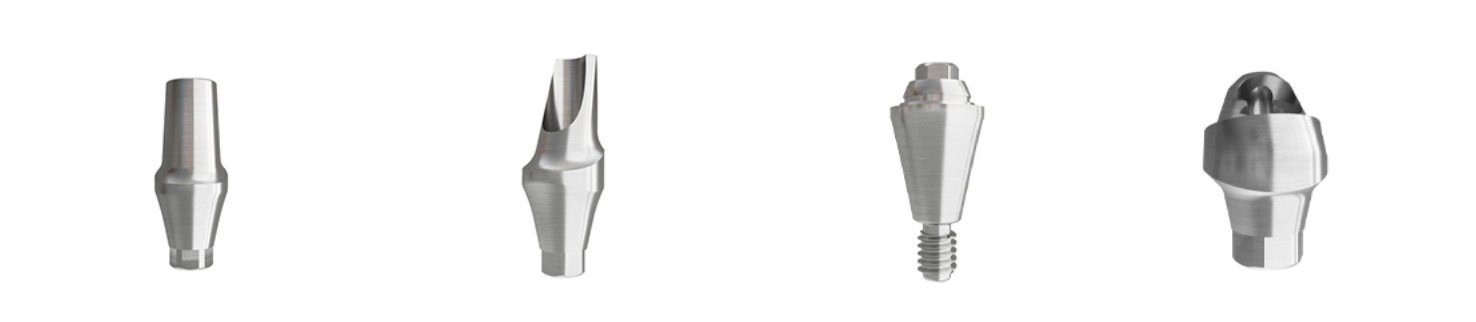
While most articles broadly claim “implants are highly successful,” they rarely examine why certain materials outperform others under different clinical and mechanical conditions. For B2B buyers—implant brands, distributors, and dental labs—this distinction is not academic; it directly impacts:
l Long-term clinical outcomes
l Product liability risk
l Regulatory compliance
l Market positioning
This guide takes a material-centric, evidence-informed approach to dental implant success rates—comparing titanium, titanium alloys, and zirconia—and uncovering the hidden variables that truly determine performance.
Before comparing materials, we must clarify a key misconception: implant survival ≠ implant success.
Survival Rate
l Implant remains in the mouth
l May include complications (bone loss, peri-implantitis)
Success Rate
l Stable osseointegration
l Minimal bone loss (<1.5 mm first year)
l No infection, pain, or mobility
l Functional and aesthetic satisfaction
Most published statistics focus on survival, which inflates perceived performance. For material comparison, true success criteria are far more meaningful.
Overview:
Commercially pure (CP) titanium remains the industry standard due to its excellent biocompatibility and corrosion resistance.
Typical Success Rate:
l 94%–97% over 10 years
Why it works:
l Forms a stable oxide layer (TiO₂)
l Promotes strong bone integration
l Resistant to oral environment corrosion
Limitations:
l Lower mechanical strength compared to alloys
l May deform under high occlusal load
Best suited for:
l Standard cases
l Moderate load conditions
l Cost-sensitive markets
Overview:
Titanium alloys are engineered for enhanced mechanical properties while maintaining biocompatibility.
Typical Success Rate:
l 95%–98% over 10–15 years
Why it outperforms CP titanium:
l Higher tensile and fatigue strength
l Better resistance to microfractures
l Improved performance in narrow-diameter implants
Critical insight:
The success rate is not just about material composition, but also microstructure control and impurity levels. For example, ELI (Extra Low Interstitial) variants reduce oxygen and iron content, improving ductility and fatigue resistance.
Best suited for:
l High-load posterior regions
l Narrow implants
l Immediate loading protocols
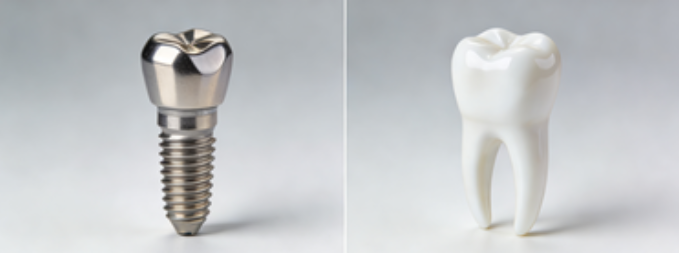
Overview:
Zirconia implants are often marketed as “metal-free” alternatives.
Typical Success Rate:
l 90%–94% over 5–10 years (lower long-term data availability)
Advantages:
l Excellent aesthetics (tooth-colored)
l No metal sensitivity concerns
Limitations affecting success:
l Brittleness (risk of fracture under stress)
l Lower osseointegration consistency compared to titanium
l Limited long-term clinical data
Best suited for:
l Anterior aesthetic zones
l Patients with metal concerns
Titanium and its alloys dominate because of their bioactive oxide layer, which enables direct bone bonding.
l Titanium alloys: Faster and stronger integration
l CP titanium: Reliable but slightly slower
l Zirconia: More variable, surface-dependent
Fatigue failure is one of the most overlooked causes of implant failure.
l Ti-6Al-4V: Highest resistance
l CP titanium: Moderate
l Zirconia: Low (brittle fracture risk)
This is especially critical in:
l Bruxism patients
l Posterior molar regions
l Long-span restorations
All implant materials must withstand:
l Saliva (variable pH)
l Bacterial biofilms
l Fluoride exposure
Titanium alloys, when properly processed, show excellent corrosion resistance, particularly when surface treatments are optimized.
Material alone does not determine success—surface treatment can shift outcomes by 5–10%.
Key technologies include:
l SLA (Sandblasted, Large-grit, Acid-etched)
l Anodization
l Nano-coating
A well-engineered surface can:
l Accelerate osseointegration
l Improve early stability
l Reduce healing time
This is where advanced manufacturers differentiate themselves.
Understanding failure modes is more useful than raw success rates.
Titanium (CP & Alloy)
l Peri-implantitis
l Mechanical loosening (rare with alloys)
Zirconia
l Fracture under cyclic load
l Surface degradation over time
Key Insight:
Most failures are multifactorial, but material choice influences how well an implant tolerates clinical imperfections.
Two implants made from the same material can have drastically different success rates.
Why?
Because performance depends on:
l Grain structure consistency
l Impurity control
l Precision machining
l Surface uniformity
For B2B buyers, this means material specification alone is not enough.
Reliable manufacturers invest in:
l Vacuum melting (for purity)
l Strict ISO and medical-grade standards
l Full traceability
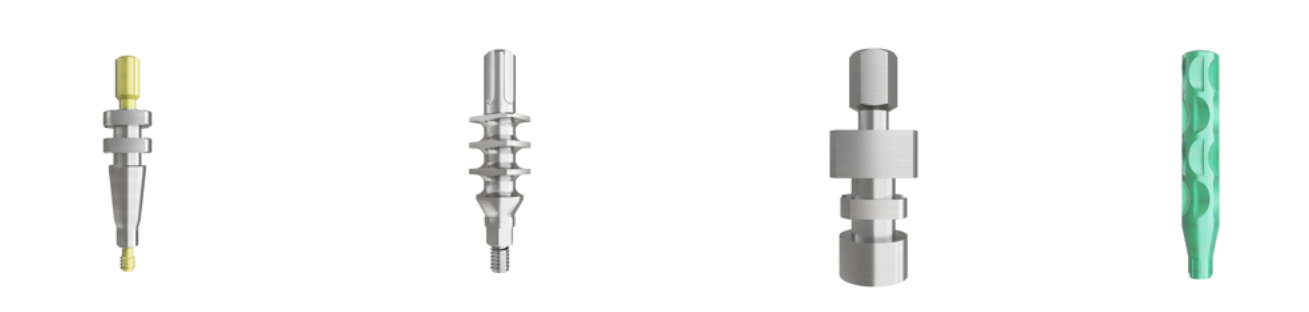
In recent years, some OEM-focused manufacturers—such as RE-TECH—have emphasized tight control over titanium alloy processing and surface engineering, enabling consistent implant performance across different clinical environments without relying on aggressive marketing claims.
A synthesis of clinical literature reveals:
Material | 5-Year Success | 10-Year Success | Key Risk Factor |
CP Titanium | ~96% | ~94% | Mechanical limits |
Ti-6Al-4V | ~97–98% | ~95–97% | Manufacturing quality |
Zirconia | ~92–94% | ~90–92% | Fracture risk |
Interpretation:
l Titanium alloys offer the best balance of strength and reliability
l CP titanium remains highly viable
l Zirconia is niche, not universal
For distributors, implant brands, and procurement teams, material selection should align with market positioning and clinical application.
l Premium implant lines
l Immediate loading systems
l High-performance branding
l General-purpose implants
l Cost-sensitive markets
l Emerging regions
l Aesthetic-focused clinics
l Niche product differentiation
The next wave of innovation is not about replacing titanium—but enhancing it.
Emerging directions include:
l Nano-structured surfaces
l Bioactive coatings (calcium phosphate, peptides)
l Hybrid materials (titanium core + ceramic coating)
The competitive edge will increasingly depend on engineering sophistication rather than raw material type.
Titanium alloys (especially Ti-6Al-4V ELI) generally show the highest long-term success rates due to their superior mechanical and fatigue properties.
Not necessarily. While zirconia eliminates metal exposure, it introduces risks such as brittleness and limited long-term data.
In many cases, yes. A well-treated titanium implant can outperform a poorly processed alloy.
Differences in manufacturing quality, purity, and surface engineering can significantly affect outcomes.
l Material certification
l Manufacturing consistency
l Surface technology
l Supplier reliability
The success rate of dental implants is not determined by material alone—but by the interaction between material science, engineering precision, and clinical application.
While titanium and its alloys continue to dominate due to their proven reliability, the real differentiator in today’s market lies in how these materials are processed, treated, and delivered.
For B2B stakeholders, the takeaway is clear:
The question is no longer
“Which material is best?”
but rather
“Which manufacturer can consistently unlock the full potential of that material?”