![[slide:title]](/static/upload/other/20260512/1778551853592214.webp)
![[slide:title]](/static/upload/other/20260512/1778551954982306.webp)
Time:2026-05-08 Form:本站
Are Premium Implant Brands Worth It? A Practical Guide for Clinics, Distributors, and Dental Implant Buyers
In the dental implant market, “premium” is one of the most powerful words a brand can use. For patients, it suggests safety, long-term success, and peace of mind. For clinicians, it often means documented systems, familiar surgical protocols, and trusted component libraries. For distributors and procurement teams, however, the question is more complicated: are premium implant brands always worth the higher cost, or are there situations where a well-manufactured alternative implant system can deliver better business value?
The answer is not a simple yes or no.
Premium implant brands can be worth it when clinical documentation, brand recognition, advanced surface technology, and long-term component availability are the top priorities. But in many routine implant cases, especially in price-sensitive markets, clinics and distributors may also consider high-quality alternative implant systems that follow strict manufacturing standards, provide stable prosthetic compatibility, and offer reliable supply at a more flexible cost structure.
This article looks at the real value behind premium implant brands, where they make sense, where they may be overused, and how B2B buyers can evaluate implant systems more intelligently.
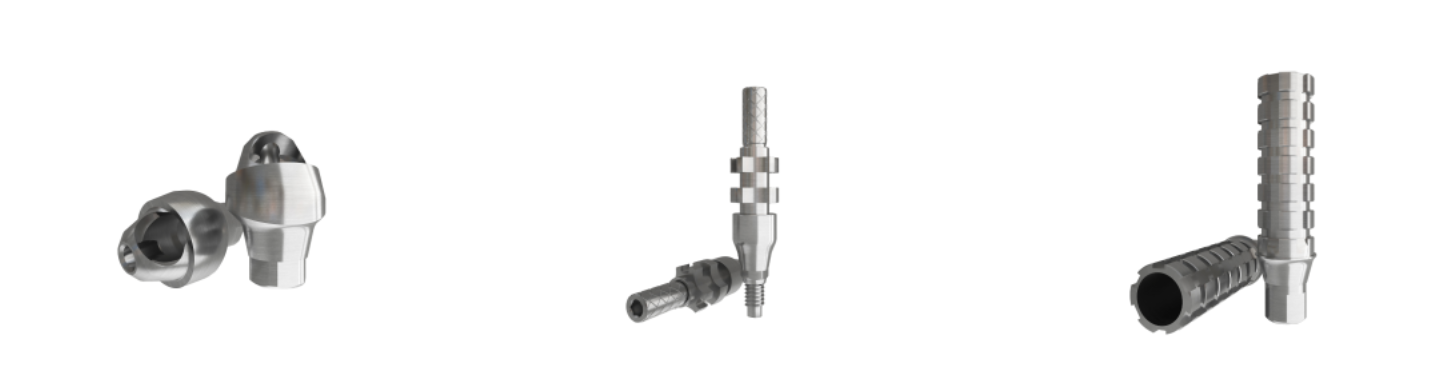
A premium implant brand is usually not defined by the titanium alone. Most dental implants are made from commercially pure titanium or titanium alloy, and the basic material category is widely used across the industry. What separates premium brands is usually a combination of factors:
strong clinical history, published research, global recognition, surface treatment technology, prosthetic ecosystem, training support, digital workflow compatibility, and long-term component availability.
In other words, buyers are not only paying for the implant fixture. They are paying for the complete system around it.
For example, a premium brand may offer a wide range of implant diameters, lengths, abutment options, impression components, scan bodies, temporary parts, surgical kits, digital libraries, and education programs. This ecosystem reduces uncertainty for clinicians, especially in complex cases.
However, this also means that part of the premium price comes from brand infrastructure, marketing, research investment, and global distribution—not only from the manufacturing cost of the implant itself.
Premium implant brands do have clear strengths. It would be unrealistic to dismiss them only because they are expensive.
One of the biggest advantages of premium systems is clinical evidence. Established brands often have long-term studies, survival rate data, case reports, and academic references. For clinicians, especially those treating complex cases, this documentation provides confidence.
When an implant system has been used globally for many years, there is more accumulated knowledge about how it performs in different bone conditions, loading protocols, and prosthetic designs.
For clinics that want to reduce clinical uncertainty, this can be valuable.
Patients may not understand implant thread design, connection geometry, or surface roughness. But they may recognize certain famous implant brands. In high-income markets, some patients are willing to pay more when the clinic explains that a premium implant brand is being used.
This brand effect can help clinics position themselves as high-end providers. In private clinics, patient perception can influence case acceptance.
Premium brands usually have well-developed prosthetic systems. This includes healing abutments, impression copings, scan bodies, Ti-bases, multi-unit abutments, angled abutments, temporary cylinders, and digital libraries.
For clinicians and labs, a complete ecosystem reduces workflow problems. It is easier to restore cases when all components are available and fit predictably.
This is especially important for full-arch cases, immediate loading, angled screw channels, and complex esthetic-zone restorations.
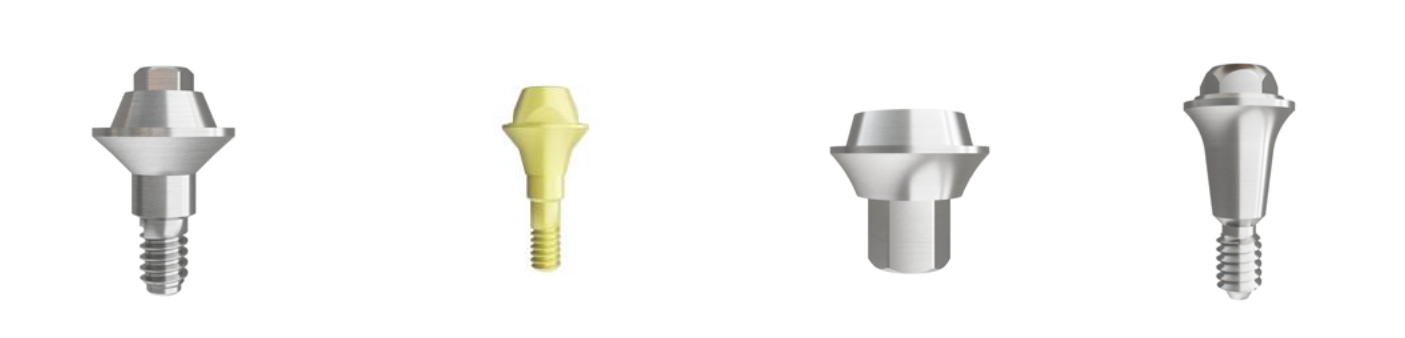
Premium implant companies often invest heavily in education. They provide courses, surgical training, webinars, planning support, and clinical guidance. For new implantologists, this support can be very important.
A cheaper implant system without training, documentation, or technical support may create hidden costs if the clinician lacks experience.
Implant treatment is not finished after surgery. Patients may need maintenance, screw replacement, abutment changes, or prosthetic repair years later. A premium brand with global distribution is more likely to maintain long-term availability of components.
For clinics and distributors, this reduces after-sales risk.
Premium brands are strong, but they are not automatically the best choice in every business situation.
Many implant cases are straightforward: healed sites, sufficient bone volume, single-tooth replacement, conventional loading, and standard prosthetic design. In these situations, the difference between a premium system and a well-manufactured alternative system may not always justify a large cost gap.
For B2B buyers, this matters. If a distributor sells into a price-sensitive market, using only premium brands may limit clinic adoption. Clinics may want a system that is reliable, compatible, and profitable—not necessarily the most expensive option.
Premium implants can create pressure on margins. If the patient is unwilling to pay a much higher treatment fee, the clinic may absorb the cost difference. This is common in competitive markets where multiple clinics advertise implant treatment at aggressive prices.
For distributors, high brand cost also means higher inventory pressure. More capital is tied up in stock, and slower-moving components can become a financial burden.
In some countries, patients recognize major implant brands and ask for them by name. In other markets, patients care more about the dentist’s experience, treatment price, warranty, or clinic reputation.
If the patient does not recognize the brand, the premium value becomes less obvious. In these markets, clinics may prefer high-quality alternative implant systems that allow them to offer competitive pricing while maintaining acceptable clinical performance.
Some premium systems are highly controlled. Their components, tools, and prosthetic parts may be expensive and less flexible. This can be good for quality control, but it can also limit options for labs and distributors.
A distributor may need to stock many original components, while a lab may face higher costs for compatible prosthetic solutions.
Even premium implant systems require correct case selection, surgical technique, prosthetic planning, torque control, infection management, and maintenance. Implant failure can still occur if treatment planning or execution is poor.
A famous brand cannot compensate for poor clinical protocol.
For B2B buyers, the more practical question is not “premium or cheap?” The better question is:
Which implant system provides the best balance between clinical reliability, component support, pricing, supply stability, and market positioning?
Here is a clearer comparison.
Factor | Premium Implant Brands | High-Quality Alternative Implant Systems |
Brand recognition | Very strong | Depends on market and distributor promotion |
Clinical documentation | Usually extensive | Varies by manufacturer |
Price | High | More flexible |
Profit margin | Often lower for clinics/distributors | Often better |
Component ecosystem | Very complete | Must be evaluated carefully |
Digital workflow | Usually mature | Can be strong if libraries and scan bodies are available |
Patient marketing value | High in premium markets | Lower unless clinic focuses on value education |
Inventory pressure | Higher | Lower |
Best use case | Complex cases, premium clinics, brand-sensitive patients | Routine cases, cost-sensitive markets, distributor expansion |
This does not mean alternative systems are automatically equal to premium brands. The quality gap between manufacturers can be large. Some alternative systems are carefully engineered and produced under strict quality control, while others may lack consistency.
That is why buyers should not evaluate only price. They should evaluate the full system.
Whether choosing a premium brand or an alternative implant manufacturer, distributors and clinics should check several core areas.
The implant material should be traceable and suitable for medical use. Buyers should ask about titanium grade, raw material certification, machining control, cleaning process, surface treatment, and batch traceability.
A reliable implant factory should be able to explain how implants are manufactured, cleaned, inspected, packaged, and documented.
Implant surface treatment affects osseointegration. Common surface technologies include SLA-type roughened surfaces, RBM surfaces, and other modified surface processes. The key issue is not only the name of the surface, but the consistency of the process.
Buyers should ask:
How is surface roughness controlled?
How is contamination avoided?
Is every batch inspected?
Are surface images or testing records available?
The implant-abutment connection is critical. Internal hex, conical connection, Morse taper-style connection, and other designs all have different mechanical characteristics.
For clinics and labs, prosthetic stability matters. Poor connection accuracy can lead to screw loosening, micro-movement, poor fit, and restoration problems.
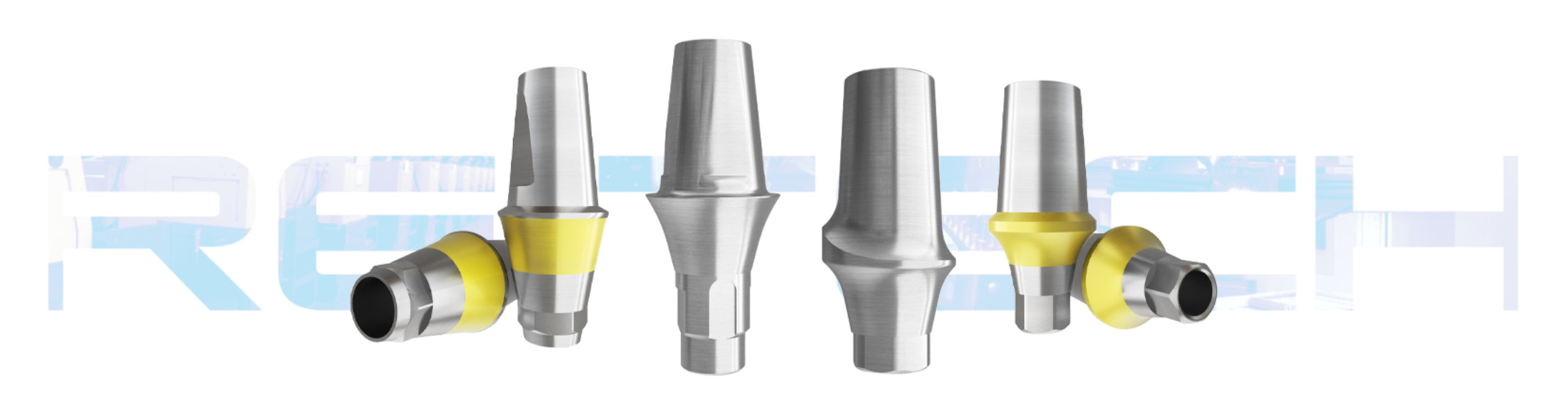
A good implant system should not only offer fixtures. It should include healing abutments, cover screws, impression transfers, analogs, scan bodies, Ti-bases, straight and angled abutments, multi-unit components, and digital workflow support.
This is one area where some low-cost systems fail. The implant fixture may look acceptable, but the prosthetic ecosystem is incomplete.
For distributors, this creates after-sales problems.
Modern implant dentistry increasingly depends on digital workflows. Clinics and labs use intraoral scanners, CAD/CAM software, scan bodies, digital libraries, and custom abutments.
An implant system without digital support may become harder to promote in competitive markets.
Manufacturers such as RE-TECH, for example, place emphasis not only on implant fixtures but also on compatible prosthetic components and digital workflow support, which can help distributors serve clinics and labs more smoothly.
Implant packaging is not a small detail. Sterile packaging, labeling, batch numbers, expiration dates, and clean handling are essential for professional markets.
Poor packaging damages trust quickly, especially for distributors trying to build a serious implant brand.
Distributors should ask whether the manufacturer can supply consistent batches, maintain inventory, support OEM/private label needs, and provide documentation for customs or registration where needed.
A lower price is not useful if the supplier cannot deliver consistently.
Premium brands are most worth it in these situations:
complex surgical cases, severe bone defects, immediate loading, full-arch restorations, highly esthetic anterior cases, premium private clinics, brand-sensitive patients, academic or specialist practices, and markets where patients actively request famous brands.
They are also valuable when a clinic wants a complete support ecosystem and does not want to spend time evaluating lesser-known systems.
For a new implantologist, using a premium system with strong training and documentation may reduce the learning curve.
Alternative implant systems may be a better business choice when the target market is price-sensitive, the clinic handles many routine cases, the distributor needs better margins, or the buyer wants to build a private-label implant portfolio.
For distributors, this is especially important. Relying only on premium brands can limit pricing flexibility. A carefully selected alternative system can create a second product line: premium brands for high-end cases, and value-driven systems for routine cases.
This two-tier strategy is common in many markets. It allows distributors to serve more clinics instead of losing price-sensitive customers to competitors.
The key is to choose an alternative manufacturer with real production capability, quality control, prosthetic support, and stable supply—not just the lowest quote.
While premium brands are not always necessary, choosing the cheapest implant system can be risky.
The hidden costs may include:
component mismatch, poor packaging, inconsistent surface treatment, weak screws, limited abutment options, delayed delivery, lack of documentation, clinic complaints, and distributor reputation damage.
For B2B buyers, reputation is an asset. A distributor may save money on the first order but lose customers if the system causes repeated problems.
This is why the best alternative to premium implants is not “cheap implants.” It is well-manufactured, well-documented, and commercially practical implant systems.
Clinics do not need to frame the decision as “expensive brand versus cheap brand.” That can reduce patient confidence.
A better explanation is:
“We select implant systems based on clinical indication, bone condition, prosthetic plan, component availability, and long-term maintenance. Premium brands are excellent in certain cases, but for many routine treatments, we can also use reliable implant systems that meet quality requirements and provide good long-term value.”
This type of explanation builds trust. It shows that the clinic is not simply selling a brand name, but making a clinical decision.
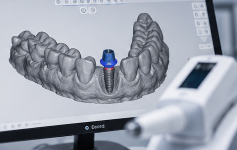
Premium brands often have stronger clinical documentation, longer market history, and broader support systems. However, clinical success also depends on case selection, surgical technique, prosthetic planning, oral hygiene, and maintenance. A premium implant does not guarantee success by itself.
Not necessarily. Price alone does not determine safety. Some lower-cost implant systems are made by capable manufacturers with strong quality control, while others may lack consistency. Buyers should evaluate material, surface treatment, connection accuracy, sterility, documentation, and component support.
Premium brands usually include the cost of research, clinical studies, global marketing, training programs, regulatory support, digital libraries, and large prosthetic ecosystems. The price is not only for the implant fixture itself.
Yes. Many clinics and distributors use a multi-tier strategy. Premium brands may be used for complex or high-end cases, while reliable alternative systems may be used for routine cases or price-sensitive patients.
Distributors should check manufacturing capability, quality certificates, material traceability, surface treatment consistency, prosthetic component range, packaging quality, digital compatibility, lead time, after-sales support, and OEM/private label options.
Some patients do, especially in premium markets. However, many patients care more about the dentist’s experience, treatment safety, total cost, warranty, and expected outcome. Clinics should explain implant selection in terms of clinical suitability rather than only brand name.
Some are, but not all. Buyers should confirm whether the system offers scan bodies, Ti-bases, CAD/CAM libraries, and compatibility with common digital workflows.
There is no single best system for every market. A good distributor portfolio may include premium brands for high-end demand and reliable alternative systems for cost-sensitive clinics. The best choice depends on target customers, pricing strategy, inventory capacity, and local clinical habits.
Premium implant brands are worth it when their advantages are truly needed: complex cases, patient brand awareness, advanced prosthetic requirements, strong documentation, and long-term support.
But they are not automatically the best choice for every case or every market.
For clinics, distributors, and procurement teams, the smarter approach is to evaluate implant systems based on total value: clinical reliability, manufacturing quality, prosthetic compatibility, digital workflow, supply stability, documentation, and margin structure.
In many B2B markets, a balanced portfolio works best. Premium brands can serve high-end cases, while carefully selected alternative implant systems can support routine treatment, improve affordability, and increase business flexibility.
For manufacturers like RE-TECH, the opportunity is not to replace every premium system, but to provide a dependable, well-supported option for distributors and clinics that need quality, compatibility, and practical pricing in a competitive implant market.
The real question is not whether premium implant brands are “good.” Many of them are. The real question is whether their premium price matches the clinical and business needs of each case, clinic, and market.