![[slide:title]](/static/upload/other/20260512/1778551853592214.webp)
![[slide:title]](/static/upload/other/20260512/1778551954982306.webp)
Time:2026-05-25 Form:本站
Open System vs Closed System Implants: A Practical Guide for Dental Implant Buyers
Choosing between an open system and a closed system dental implant platform is not only a clinical decision. For dental clinics, laboratories, distributors, and OEM buyers, it also affects inventory planning, prosthetic flexibility, chairside efficiency, digital workflow, replacement parts, pricing strategy, and long-term customer support.
In many markets, implant buyers no longer evaluate only the fixture itself. They look at the complete implant ecosystem: implants, abutments, impression copings, scan bodies, analogs, healing abutments, screws, drivers, prosthetic components, CAD/CAM libraries, and technical documentation. This is where the difference between an open implant system and a closed implant system becomes important.
However, the term “open system” can be misunderstood. It does not mean “anything fits anything.” In implant dentistry, compatibility must be controlled by accurate connection design, validated tolerances, torque protocol, material quality, and prosthetic workflow. A system that is too closed may limit flexibility and increase costs. A system that is too loosely “open” may create risks if components are not properly engineered or verified.
This article explains the real difference between open and closed dental implant systems, their advantages and limitations, and how B2B buyers can evaluate which model is better for their market.
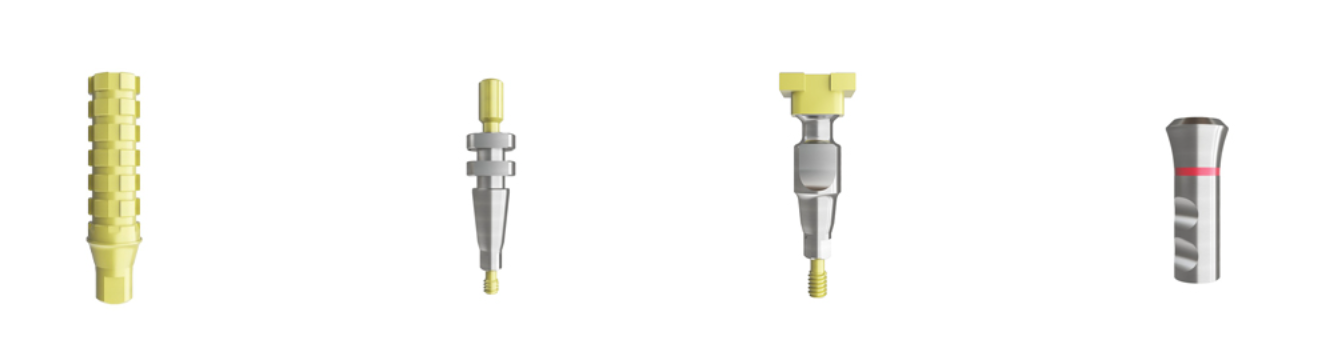
An open system dental implant usually refers to an implant platform that allows broader compatibility with prosthetic components, digital workflows, or third-party restorative solutions. In practical terms, an open implant system may support compatible abutments, scan bodies, Ti-bases, analogs, libraries, drivers, or restorative components from multiple suppliers.
For clinics and labs, an open system can make daily work easier because they are not always restricted to a single brand’s prosthetic ecosystem. For distributors, it can reduce inventory pressure and make the product line easier to sell in price-sensitive markets. For dental laboratories, it can improve workflow flexibility when using CAD/CAM software, milling centers, or digital libraries.
But openness must be understood carefully. A good open system is not just a copy of another system. It should be built around precise platform geometry, stable connection design, verified manufacturing tolerances, clear torque recommendations, and component traceability. Dental implants and abutments are regulated medical devices in many markets, and the FDA classifies endosseous dental implants and endosseous dental implant abutments as Class II devices in the United States. The FDA’s 2024 guidance also treats these devices as implanted devices with prolonged or permanent tissue/bone contact, which means safety, performance, and biocompatibility cannot be ignored.
In simple words, an open system gives buyers more options, but it still needs engineering discipline.
A closed system dental implant is a platform where the implant manufacturer controls most or all related components. The implant, abutment, screw, prosthetic parts, impression tools, scan bodies, digital libraries, and instruments are usually designed to work only within that brand’s ecosystem.
This model is common among premium implant brands. The main advantage is consistency. Since the manufacturer controls the full system, clinics and labs can follow a standardized protocol. Components are usually tested as a system, and the risk of mismatch is lower when users stay fully inside the original brand ecosystem.
Closed systems are often attractive to clinicians who prioritize brand reputation, simplified decision-making, and manufacturer-backed documentation. They can also be useful for large clinics or hospital systems that prefer strict standardization across multiple doctors and branches.
However, closed systems also have limitations. They may increase prosthetic costs, reduce flexibility, create dependence on one supplier, and make it difficult for distributors to offer different pricing levels. If a specific abutment, scan body, or screw is out of stock, the buyer may have fewer alternatives. In emerging markets, this can become a major problem because customers often need fast delivery, competitive pricing, and flexible component options.
The core difference is control versus flexibility.
A closed system prioritizes manufacturer control. The buyer receives a complete and controlled ecosystem, but with less freedom to mix components or workflows.
An open system prioritizes flexibility. The buyer can work with more component options, suppliers, labs, and digital workflows, but must pay more attention to compatibility validation and quality control.
Neither model is automatically better. The better choice depends on the buyer’s business model, clinical requirements, market positioning, and ability to manage component compatibility.
Factor | Open System Implants | Closed System Implants |
Prosthetic flexibility | Higher | Lower |
Supplier options | Multiple suppliers possible | Usually brand-controlled |
Cost control | Easier to optimize | Often higher component cost |
Inventory pressure | Can be reduced with compatible components | More SKUs tied to one brand |
Workflow freedom | Better for labs using different CAD/CAM platforms | More standardized but less flexible |
Risk control | Depends heavily on component validation | Easier if all original parts are used |
Distributor positioning | Suitable for value, OEM, and private-label markets | Suitable for premium brand strategy |
Technical support | May require stronger distributor knowledge | Usually supported by the brand ecosystem |
Implant compatibility is not just about whether an abutment can be inserted into the implant. True compatibility involves multiple factors:
The implant-abutment connection must fit accurately.
The anti-rotation design must engage properly.
The screw channel must align correctly.
The recommended torque must be appropriate.
The microgap should be controlled.
The prosthetic platform must match the restoration plan.
The scan body and digital library must represent the real implant position accurately.
This is why buyers should be careful with vague claims such as “compatible with all systems.” In implant dentistry, small dimensional differences can affect seating, screw preload, load distribution, and long-term prosthetic stability.
Clinical and laboratory research has repeatedly discussed the importance of the implant-abutment interface. Microgaps at the implant-abutment connection may contribute to mechanical and biological problems, including screw loosening, micromotion, bacterial leakage, or peri-implant inflammation risk. A systematic review comparing original and non-original abutments found that original abutments generally showed better fit, resistance to microleakage, rotational stability, and fatigue strength, although results can vary depending on connection geometry and manufacturing quality.
For B2B buyers, the lesson is not that open systems are unsafe. The real lesson is that open systems must be controlled. Compatibility should be based on engineering verification, not visual similarity.
The connection design is one of the most important technical factors in both open and closed systems. Common implant connections include external hex, internal hex, conical connection, Morse taper-style connection, and other indexed or non-indexed designs.
Closed systems usually use proprietary connection designs to protect their ecosystem and ensure that users stay with original components. Open systems usually rely on widely accepted connection geometries or platform designs that can support a broader prosthetic range.
From a mechanical perspective, connection design affects load transfer, screw stability, microgap behavior, and resistance to micromovement. Reviews of implant-abutment connections have suggested that conical connections may help reduce certain mechanical complications such as screw loosening and may support better torque preservation compared with some other designs.
For buyers, this means the question should not be only
“Is this system open or closed?”
A better question is:
“How stable is the connection, and how well are the compatible components controlled?”
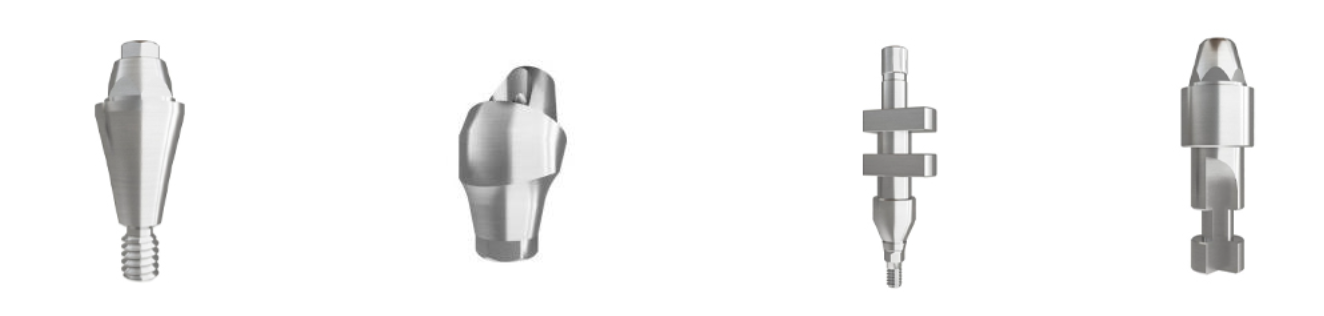
Today, the open-versus-closed discussion is not limited to physical implant parts. It also includes digital dentistry.
In digital workflows, an open system usually allows users to export and import standard files, commonly STL files, and work across different scanners, CAD software, milling centers, and 3D printing workflows. A closed digital system limits users to a specific software, scanner, or manufacturer-controlled workflow. A prosthodontic review on intraoral scan bodies notes that intraoral scanner systems may be open, semi-closed, or closed depending on the degree of freedom users have in exporting and importing usable digital files.
For dental labs, open digital workflows are often attractive because they allow more freedom. A lab can scan with one system, design in another, mill in another facility, and still work with implant libraries from different suppliers. For clinics, open workflows may reduce dependency and make it easier to collaborate with different labs.
But digital openness also requires accuracy. A scan body must match the implant platform. The CAD library must represent the scan body and implant connection correctly. The Ti-base or custom abutment must seat precisely. If the digital library is inaccurate, the restoration may look correct on screen but fail to fit properly in the mouth.
This is why implant distributors should not treat digital libraries as a small accessory. For modern implant systems,scan bodies, Ti-bases, and CAD/CAM libraries are part of the product ecosystem.
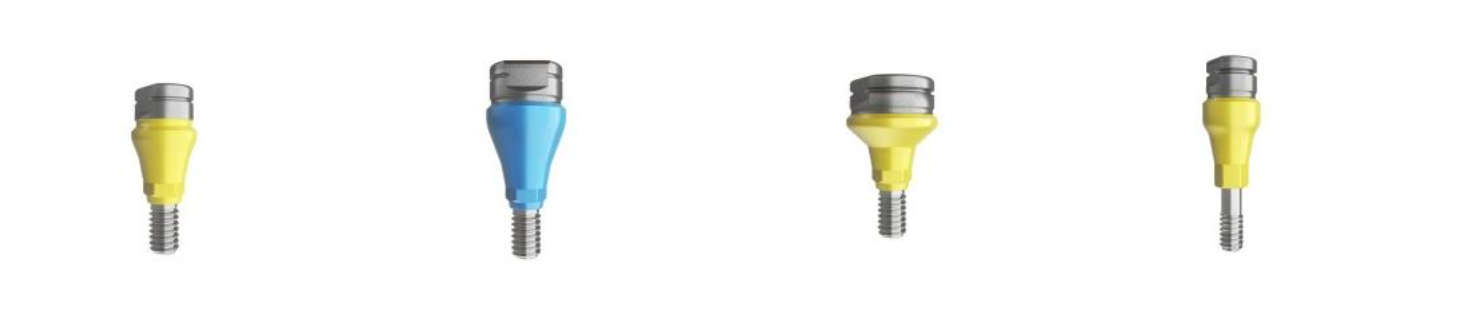
Open systems allow clinicians and labs to choose from a wider range of prosthetic components. This can be helpful when treating different case types, including single crowns, bridges, overdentures, full-arch restorations, and customized CAD/CAM restorations.
A clinic may prefer one abutment supplier for standard cases and another for more complex esthetic cases. A lab may prefer a certain scan body or Ti-base workflow because it fits its equipment and software. Open systems give users more room to adapt.
Cost is a major reason why open systems are popular in many markets. Original components from closed systems can be expensive, especially for price-sensitive clinics or distributors. Open systems can help reduce prosthetic cost without forcing the buyer to change the entire implant platform.
This is important for distributors serving mixed customer groups. Some clinics want premium solutions. Others need reliable but more affordable options. An open system makes it easier to build different product packages.
A closed system often requires distributors to stock a large number of brand-specific parts. If a distributor carries several implant brands, inventory can become complicated very quickly.
Open systems may reduce SKU pressure because certain components or workflows can cover multiple platform needs. This can improve cash flow and reduce slow-moving inventory.
For B2B buyers, open systems are often more suitable for OEM and private-label strategies. A distributor can build a product line around a reliable implant design, then develop compatible prosthetic components, digital tools, packaging, and market-specific support.
This is where manufacturers such as RE-TECH can fit naturally into the supply chain. For distributors or implant brands looking for OEM implant systems and compatible prosthetic solutions, the focus should be on controlled platform design, stable production tolerance, and long-term component availability rather than simply offering a low-price implant.

The biggest risk of an open system is poor compatibility. If a compatible abutment is not manufactured accurately, it may create misfit, screw loosening, rotational instability, or microgap problems.
This is why buyers should not choose open systems based only on price. A very cheap compatible component may cost more in the long run if it causes remakes, complaints, or clinical complications.
Open systems require stronger technical knowledge. Distributors must understand platform sizes, connection types, torque values, restorative options, digital libraries, and component matching. Labs must verify that the scan body, library, Ti-base, and implant platform match correctly.
A closed system simplifies this because the brand controls most of the workflow. An open system gives more freedom, but freedom requires better management.
Not all compatible component suppliers are equal. Some use high-precision machining, strict inspection, traceable materials, and validated libraries. Others may only copy the external appearance.
For B2B buyers, supplier evaluation is essential. Ask for technical drawings, material specifications, tolerance control, surface treatment details, torque recommendations, packaging information, and quality documentation.
Closed systems are designed to keep all components within one validated ecosystem. This reduces uncertainty for clinicians, especially those who do not want to compare multiple suppliers or component options.
Premium closed systems often have strong brand recognition, clinical education, and long-term documentation. For clinics that use brand reputation as part of patient communication, this can be valuable.
A closed system can make training easier because the workflow is standardized. Clinicians and assistants learn one surgical kit, one restorative protocol, one torque system, and one digital workflow.
When clinics use all original components from the same brand, the chance of mismatch is generally lower. This is one reason closed systems remain popular in premium clinical environments.
Closed systems often have higher prosthetic component costs. The implant fixture may be only one part of the total treatment cost. Over time, abutments, screws, scan bodies, analogs, drivers, and replacement parts can significantly affect total cost.
If the buyer depends on one brand, supply interruptions can become a serious problem. When a part is unavailable, the clinic or distributor may have limited alternatives.
Dental labs often work with many implant systems. A highly closed workflow can make collaboration harder, especially when the lab prefers different CAD/CAM software or production partners.
For distributors, closed systems may limit pricing flexibility. If the brand controls the ecosystem, the distributor has less room to develop market-specific bundles or private-label solutions.
For distributors, the better choice depends on market positioning.
If the distributor targets premium clinics, hospital groups, or specialists who value brand reputation and standardized protocols, a closed or semi-closed premium system may be easier to sell.
If the distributor targets general clinics, price-sensitive markets, emerging regions, or labs that need flexible prosthetic workflows, an open system may offer stronger commercial advantages.
Many successful distributors use a hybrid strategy. They may carry premium closed systems for brand-sensitive customers while also building an open or semi-open implant line for clinics that need cost-effective and flexible solutions.
The key is not to present open systems as “cheap alternatives.” A stronger strategy is to position them as flexible, well-controlled, and supply-stable implant solutions.
For clinics, the decision depends on clinical workflow and patient base.
A clinic that performs high-volume implant cases may benefit from an open system because prosthetic flexibility and cost control become more important. A clinic that works closely with multiple labs may also prefer open digital compatibility.
A clinic that values strict standardization, premium branding, and manufacturer-led training may prefer a closed system.
For many clinics, the best approach is not fully open or fully closed. A semi-open system can provide a good balance: controlled implant design, stable original components, and selected compatible options for digital or prosthetic flexibility.
Dental labs usually benefit from open systems because they need to handle different implant brands and workflows. Labs care deeply about scan body accuracy, CAD/CAM libraries, Ti-base availability, and restoration fit.
For labs, a closed system can become restrictive if it limits file export, component choice, or milling workflow. However, labs also need predictable fit. Therefore, a high-quality open system with accurate digital libraries can be more valuable than a vague “universal” system.
Before buying an open system, B2B buyers should ask these questions:
Does the system clearly define compatible platforms?
Are connection dimensions controlled by technical drawings?
Are implants and abutments tested together?
Is dynamic loading performance evaluated?
Are torque values clearly stated?
Are scan bodies and CAD/CAM libraries available?
Are materials traceable?
Is the packaging suitable for export markets?
Can the supplier provide stable long-term component availability?
Can the system support private-label or OEM needs?
Testing is especially important. ISO 14801:2016 specifies a method for dynamic testing of single post endosseous dental implants together with their premanufactured prosthetic components, and it is useful for comparing implant designs or sizes. This matters because implant buyers should evaluate the implant and prosthetic system together, not only the fixture.
A good way to evaluate implant systems is to divide them into three categories.
A closed system is best when the buyer wants strict brand control, simplified training, and a premium positioning strategy.
An open system is best when the buyer needs prosthetic flexibility, competitive pricing, broad lab compatibility, and more supplier options.
A semi-open system is often the most practical choice for B2B buyers. It keeps the core implant and original components controlled while allowing selected compatible prosthetic and digital solutions. This model can reduce risk while still giving clinics and labs enough flexibility.
For OEM buyers and distributors, this is often the most commercially realistic path. Retek, for example, can be positioned in this space by supporting implant system development, compatible prosthetic planning, and stable supply for buyers who need both quality control and market flexibility.
Open system implants can be safe when the implant platform and compatible components are properly designed, manufactured, tested, and used according to the correct protocol. The risk comes from poorly made compatible components, unclear torque values, inaccurate digital libraries, or unverified platform matching.
No. Closed systems offer strong control and standardization, but they may also increase cost and reduce flexibility. They are often suitable for premium clinical settings, but they are not always the best choice for price-sensitive markets, labs, or distributors that need broader component options.
The biggest risk is poor implant-abutment fit. If the connection is inaccurate, it may lead to micromotion, screw loosening, microgap issues, or restoration failure. Buyers should choose compatible components only from suppliers with strong machining control and technical verification.
Distributors often prefer open systems because they allow more flexible pricing, easier inventory planning, broader prosthetic options, and better support for different clinic and lab needs. Open systems are also more suitable for OEM and private-label strategies.
A semi-open implant system combines controlled core implant design with selected compatible prosthetic or digital options. It gives buyers more flexibility than a fully closed system while reducing the risks of an uncontrolled open system.
Clinics should choose based on workflow, budget, lab support, case type, and long-term component availability. High-volume clinics and clinics working with multiple labs may prefer open or semi-open systems. Clinics focused on premium brand positioning may prefer closed systems.
They can reduce prosthetic and inventory costs, especially when compatible abutments, Ti-bases, scan bodies, or digital workflows are available. However, cost savings should never come at the expense of fit, material quality, or mechanical performance.
Buyers should check platform specifications, connection geometry, torque recommendations, material certificates, production tolerance, testing data, digital library accuracy, and supplier experience. Visual similarity alone is not enough to prove compatibility.
Open system implants are not automatically better because they are flexible. Closed system implants are not automatically better because they are controlled. The best implant system is the one that matches the buyer’s clinical workflow, prosthetic needs, supply chain strategy, and market positioning.
For clinics, the main question is whether the system helps deliver predictable restorations with reasonable cost and efficient workflow.
For labs, the main question is whether the system supports accurate digital design and component availability.
For distributors, the main question is whether the system can be sold, supported, stocked, and expanded profitably over the long term.
In the future, the strongest implant platforms will likely not be purely open or purely closed. They will be controlled but flexible, digitally supported but not restrictive, cost-effective but not low-quality, and compatible but not careless. That balance is what modern dental implant buyers are really looking for.