![[slide:title]](/static/upload/other/20260512/1778551853592214.webp)
![[slide:title]](/static/upload/other/20260512/1778551954982306.webp)
Time:2026-04-01 Form:本站
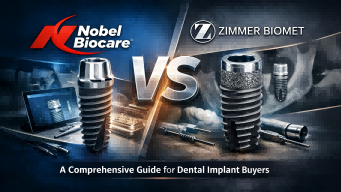 Nobel Biocare vs Zimmer Biomet: A Deep Technical Comparison for Dental Implant Buyers
For distributors, dental chains, and private-label buyers, choosing the right implant system partner is no longer just a clinical decision—it is a strategic business decision.
Two global giants dominate conversations in premium implant systems:
l Nobel Biocare
l Zimmer Biomet
Both brands are widely trusted, clinically validated, and globally recognized. However, beneath their reputation lies a complex reality involving cost structures, surface technologies, surgical workflows, and supply chain flexibility.
If you are a B2B buyer, OEM partner, or procurement manager, understanding these differences is essential—not only to evaluate these brands, but also to determine whether alternative manufacturing partners can deliver comparable quality with better economics.
This guide provides a deep, technical, and commercial comparison to help you make an informed decision.
Nobel Biocare is widely regarded as a pioneer in modern implantology, closely associated with the development of osseointegration protocols.
Key strengths:
l Strong academic and clinical backing
l Premium brand positioning
l Advanced digital workflow integration (guided surgery, CAD/CAM)
Typical positioning:
l High-end clinics
l Full digital workflow users
l Premium patient markets
Zimmer Biomet originates from orthopedic expertise and brings that engineering rigor into dental implants.
Key strengths:
l Strong biomechanical engineering background
l Conservative, stable implant designs
l Integration with broader medical systems
Typical positioning:
l Clinically conservative practitioners
l Multi-disciplinary healthcare groups
l Long-term reliability-focused users
Nobel focuses on innovation-driven implant systems, often emphasizing:
l Tapered implant bodies for primary stability
l Aggressive thread designs
l Platform switching concepts
l Immediate loading protocols
Their implants are often designed for:
l High initial stability
l Faster treatment timelines
l Compatibility with digital workflows
Zimmer Biomet emphasizes mechanical predictability and long-term consistency:
l More traditional cylindrical or tapered designs
l Moderate thread aggressiveness
l Conservative surgical protocols
Their systems are often preferred for:
l Bone preservation
l Reduced surgical risk
l Predictable long-term outcomes
Surface treatment is one of the most critical factors influencing implant success.
l Anodized surface
l Highly porous oxide layer
l Designed to accelerate osseointegration
Advantages:
l Strong bone integration
l Excellent performance in soft bone
Considerations:
l Premium cost due to proprietary technology
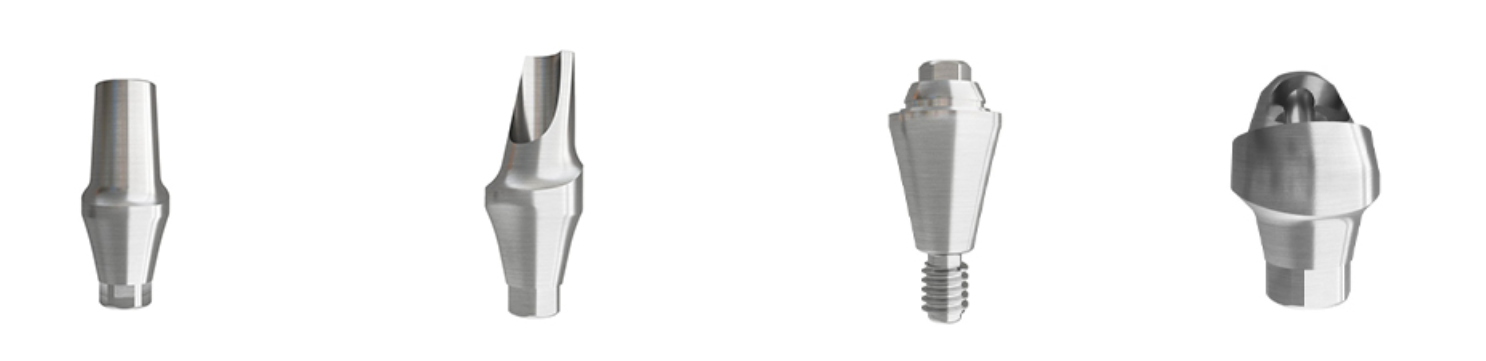
Zimmer offers two main approaches:
MTX Surface
l Grit-blasted and acid-etched
l Proven and widely accepted
Trabecular Metal (Unique Feature)
l Highly porous structure mimicking cancellous bone
Advantages:
l Exceptional bone ingrowth potential
l Unique differentiation in the market
Considerations:
l More niche application
l Higher complexity in manufacturing
l Highly integrated digital workflow
l Strong compatibility with guided surgery systems
l Advanced prosthetic flexibility
Best for:
l Clinics using CAD/CAM and digital planning
l Immediate loading cases
l More traditional surgical workflow
l Emphasis on procedural simplicity
l Reliable step-by-step protocols
Best for:
l Surgeons preferring conventional techniques
l Practices prioritizing consistency over speed
l Extensive prosthetic components
l Strong ecosystem for full-arch restorations
l Seamless integration with digital systems
l Solid prosthetic options
l Slightly less expansive ecosystem compared to Nobel
l Strong mechanical reliability
This is where the biggest difference lies—not in clinical outcomes, but in business feasibility.
l One of the most expensive implant systems globally
l High brand premium
l Significant marketing overhead built into pricing
l Slightly lower than Nobel, but still premium-tier
l Pricing reflects medical-grade positioning
While both brands deliver high quality, their pricing models often include:
l Branding costs
l Global distribution layers
l Marketing overhead
l Training infrastructure
This creates an opportunity:
Many manufacturers today can produce equivalent-grade implants under strict quality systems (ISO, CE, FDA) but at significantly more competitive pricing.
For B2B buyers, the real question is not:
“Which brand is better?”
But rather:
“Can I achieve comparable quality with better margins and control?”
Modern implant manufacturers—especially those focused on precision machining and medical-grade titanium processing—can now deliver:
l Comparable surface treatments
l Identical connection systems (compatible designs)
l High consistency in production
l Flexible MOQ and branding options
Without the heavy branding overhead of global giants, manufacturers like RE-TECH focus on:
l High-purity titanium materials
l Precision CNC machining
l Stable surface treatment processes
l OEM/ODM flexibility for global partners
For distributors and private-label brands, this creates:
l Higher profit margins
l Custom branding opportunities
l Supply chain control
l Faster market responsiveness
Importantly, this approach does not aim to “replace” premium brands—but rather to complement or strategically compete in specific market segments.
From a purely clinical perspective:
l Both Nobel Biocare and Zimmer Biomet show excellent long-term success rates (95%+)
l Differences are often situational rather than absolute
Nobel excels in:
l Immediate loading
l Digital workflows
l Complex restorations
Zimmer excels in:
l Conservative treatment plans
l Bone preservation
l Long-term stability cases
Most end-users (clinics) care about:
l Reliability
l Ease of use
l Cost-effectiveness
If a product meets clinical standards and provides consistent outcomes, price-performance ratio becomes the deciding factor.
When evaluating Nobel Biocare vs Zimmer Biomet—or alternatives—consider:
l Premium patients → Nobel
l Conservative clinical settings → Zimmer
l Cost-sensitive markets → OEM/private label
l High-margin branding → Nobel/Zimmer
l Scalable distribution → OEM partners
l Digital-first → Nobel
l Traditional → Zimmer
l Fixed systems → Big brands
l Flexible manufacturing → OEM suppliers
The dental implant industry is gradually shifting:
Past:
Brand dominance = trust
Present:
Quality + price + flexibility = competitive advantage
Future:
l More distributors launching private labels
l More clinics seeking cost-efficient alternatives
l More reliance on manufacturing partners rather than brands
Not necessarily. Nobel excels in digital innovation and immediate loading, while Zimmer focuses on stability and long-term predictability. The “better” choice depends on clinical and business needs.
Their pricing includes branding, R&D, training systems, and global distribution—not just manufacturing costs.
Yes—if produced by qualified manufacturers with proper certifications and quality control. Many OEM implants today match premium brands in material and design.
Absolutely. Many distributors now partner with manufacturers to create private-label implant systems, allowing better margins and market differentiation.
Focus on:
l Manufacturing capability
l Material quality (e.g., medical-grade titanium)
l Surface technology
l Consistency and certification
l Supply chain reliability
Nobel Biocare and Zimmer Biomet are both excellent systems—but for B2B buyers, the real opportunity lies in strategic sourcing.
Instead of asking:
“Which brand is better?”
A more powerful question is:
“How can I deliver the same clinical reliability with better economics and flexibility?”
That’s where modern manufacturers—like Ruitech—are quietly reshaping the industry.