![[slide:title]](/static/upload/other/20260512/1778551853592214.webp)
![[slide:title]](/static/upload/other/20260512/1778551954982306.webp)
Time:2026-04-27 Form:本站
Limitations of Big Implant Brands for Distributors: A Deep, Unfiltered Analysis
For many dental implant distributors, partnering with large, globally recognized implant brands feels like the safest path. Established names bring perceived reliability, clinical validation, and immediate trust from clinicians. On paper, this seems like a low-risk strategy.
But once distributors move beyond the initial onboarding phase, a more complex reality begins to emerge.
Behind the polished branding and global reputation, large implant manufacturers often impose structural, operational, and financial limitations that directly affect distributors’ growth, flexibility, and long-term profitability.
This article takes a deeper look—not just at surface-level disadvantages—but at the underlying mechanisms that create friction for distributors working with big implant brands. More importantly, it explores how forward-thinking distributors are adapting, diversifying, and building more resilient portfolios.
At first glance, premium implant brands appear to offer strong margins due to their higher price points. However, distributors quickly realize that:
l Wholesale pricing is tightly controlled
l Discount structures are volume-dependent and rigid
l Price competition between distributors is discouraged or restricted
Large brands often operate on a top-down pricing model, where distributors have little to no flexibility to adjust pricing based on local market dynamics.
The Core Problem
Distributors carry the burden of:
l Local marketing
l Inventory risk
l Customer acquisition
Yet they operate within a narrow profit band defined by the manufacturer.
In contrast, smaller or emerging manufacturers often allow:
l Flexible pricing strategies
l Better negotiation leverage
l Higher margin potential per unit
This difference becomes critical in highly competitive or price-sensitive markets such as Southeast Asia, the Middle East, or parts of Eastern Europe.
Large implant systems tend to have extensive product lines:
l Multiple implant diameters and lengths
l Various connection types
l Complex prosthetic components
l System-specific surgical kits
While clinically beneficial, this creates a logistical burden for distributors.
Inventory Challenges
l High minimum order quantities (MOQs)
l Slow-moving SKUs tying up capital
l Difficulty forecasting demand across dozens—or hundreds—of items
Distributors often end up with overstock in low-turnover components and stockouts in high-demand items, creating inefficiencies that directly impact cash flow.
A Structural Limitation
Big brands rarely customize inventory strategies for individual distributors. Their systems are built for global standardization, not local optimization.
Working with a major implant brand usually comes with strict contractual obligations:
l Territory restrictions
l Non-compete clauses
l Branding and messaging control
l Sales targets tied to exclusivity
While these agreements aim to protect brand integrity, they can significantly limit a distributor’s ability to adapt.
Real-World Impact
l Inability to introduce alternative product lines
l Reduced agility in responding to competitor pricing
l Dependence on a single supplier’s roadmap
This creates a single-point-of-failure risk, especially if the brand adjusts its strategy, pricing, or distribution model.
Large implant companies prioritize:
l Clinical validation
l Regulatory approvals
l Risk mitigation
While this ensures safety and reliability, it also slows down innovation.
What Distributors Experience
l Delayed introduction of new implant designs
l Limited customization options
l Slow response to emerging clinical trends
Meanwhile, smaller manufacturers are often more agile:
l Faster product iteration
l Willingness to co-develop solutions
l Greater openness to feedback from distributors
For distributors in fast-evolving markets, this difference can determine competitiveness.
One overlooked consequence of working with large implant brands is brand overshadowing.
The Dynamic
Clinics often associate value with the implant brand—not the distributor.
This means:
l Customer loyalty is tied to the manufacturer
l Switching distributors becomes easy for clinics
l Distributors struggle to build their own brand equity
In essence, distributors become logistics providers, not strategic partners.
Large implant brands usually centralize marketing efforts:
l Global campaigns
l Standardized messaging
l Controlled digital presence
While this ensures consistency, it limits local adaptability.
Key Limitations
l Restricted use of branding assets
l Limited freedom in digital marketing strategies
l Inability to localize messaging effectively
Distributors targeting B2B clients—especially in diverse markets—need localized, nuanced marketing, which is often not supported by large brands.
Big implant manufacturers operate globally, but regulatory compliance often shifts downstream.
Distributors may be responsible for:
l Local registrations
l Import compliance
l Documentation handling
l Post-market surveillance
Despite representing a major brand, distributors still bear significant administrative and legal responsibilities.
Factor | Big Implant Brands | Agile / Emerging Manufacturers |
Pricing Flexibility | Low | High |
Margin Potential | Moderate | High |
Inventory Efficiency | Low | Customizable |
Innovation Speed | Slow | Fast |
Distributor Autonomy | Limited | Flexible |
Branding Control | Manufacturer-led | Shared or distributor-led |
This comparison highlights a critical shift in the industry:
l Distributors are no longer choosing between “premium” and “low-cost.”
l They are choosing between rigidity and flexibility.
Rather than abandoning large brands entirely, many successful distributors are adopting a hybrid portfolio strategy:
A well-known implant system for credibility and clinical trust.
A high-quality, cost-effective system that allows:
l Better margins
l Faster supply
l Greater customization
Niche components or materials that differentiate the distributor.
This approach reduces dependency while increasing competitiveness.
In recent years, a new category of implant manufacturers has emerged—companies that combine:
l Precision manufacturing
l Material expertise
l Flexible business models
Some manufacturers, for example,RE-TECH focus on producing high-quality titanium components with strict tolerances while maintaining open collaboration with distributors.
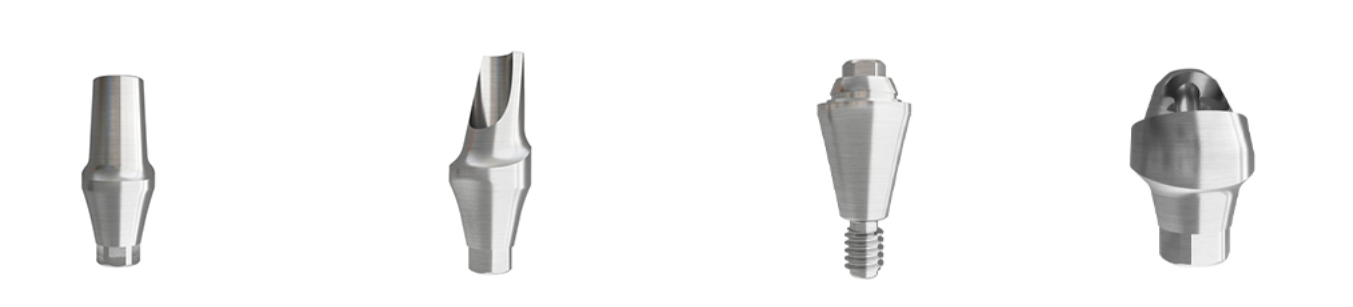
Instead of imposing rigid systems, they support:
l Custom SKU planning
l Faster lead times
l Technical transparency
In practical terms, this allows distributors to build their own competitive edge, rather than relying solely on brand recognition.
It’s not uncommon for distributors to gradually integrate such suppliers into their portfolio—starting with specific components or product lines—before expanding further based on market response.
Several macro trends are accelerating this shift:
l Price sensitivity in emerging markets
l Increased competition among clinics
l Demand for faster supply chains
l Digitalization of procurement
Distributors who rely exclusively on large implant brands may find themselves constrained in adapting to these changes.
Those who diversify gain:
l Pricing agility
l Risk distribution
l Stronger negotiation power
No. Large brands still provide credibility and clinical assurance. The key is not to rely on them exclusively.
Reliability depends on:
l Manufacturing standards
l Material quality
l Quality control systems
Many emerging manufacturers today meet international standards and offer competitive consistency.
Start with:
l Limited product categories
l Pilot markets
l Selected clinics
Gradual integration minimizes risk while testing market acceptance.
Clinics increasingly evaluate:
l Cost-effectiveness
l Supply reliability
l Clinical outcomes
Brand still matters—but it’s no longer the only deciding factor.
By:
l Offering tiered product options
l Educating clients on value differences
l Ensuring consistent product quality
A well-structured portfolio allows distributors to serve different market segments effectively.
The assumption that large implant brands automatically provide the safest path for distributors is no longer entirely accurate.
While they offer stability and recognition, they also introduce:
l Structural rigidity
l Margin limitations
l Operational constraints
The most successful distributors today are not those who choose one side—but those who strategically balance both.
They combine the credibility of established brands with the agility of newer, more flexible manufacturing partners.
In doing so, they shift from being dependent resellers to independent value creators—a transition that defines the next generation of dental implant distribution.