![[slide:title]](/static/upload/other/20260512/1778551853592214.webp)
![[slide:title]](/static/upload/other/20260512/1778551954982306.webp)
Time:2026-04-30 Form:本站
Import and Shipping Dental Implants: A Practical Guide for Distributors, Clinics, and Procurement Teams
Dental implants may look simple from a logistics perspective: small titanium components, compact packaging, high unit value, and relatively low shipping weight. However, anyone who has imported dental implants before knows the real challenge is not the freight cost itself. The real challenge is making sure the products can pass customs, meet medical device requirements, arrive with intact sterile packaging, and remain traceable from manufacturer to end user.
For dental distributors, implant brands, procurement teams, and clinics that import directly, shipping dental implants is a mix of logistics, regulation, documentation, risk control, and supplier coordination. A delayed shipment may affect surgeries. A documentation mismatch may cause customs clearance problems. Damaged sterile packaging may turn sellable inventory into unusable stock. A missing certificate or unclear product label may raise questions from regulators or hospitals.
This guide explains how dental implants are imported and shipped, what documents are usually involved, how air freight and express courier compare, what risks buyers should watch for, and how to evaluate whether a dental implant manufacturer is truly export-ready.
Dental implants are not ordinary industrial screws. They are medical devices designed to be placed into the human body. This means importers usually need to consider three layers at the same time:
First, the product itself must comply with medical device requirements in the destination market. This may include registration, local authorization, labeling rules, technical files, quality system requirements, or proof of conformity.
Second, the shipment must be supported by correct commercial and customs documents. Even when the product is fully compliant, customs clearance can still be delayed if the invoice, packing list, HS code, product description, certificate, or consignee information is inconsistent.
Third, the goods must be protected during transportation. Dental implants are often sterile packed, laser-marked, batch-controlled, and individually boxed. If cartons are crushed, labels are unreadable, or sterile barriers are compromised, the shipment may lose commercial value even if the products themselves are physically small.
This is why experienced implant distributors do not only ask, “How much is the freight?” They ask, “Can the manufacturer support compliant export documents, stable packaging, batch traceability, and country-specific import requirements?”

Different buyers import dental implants for different purposes. The shipping and documentation strategy should match the actual use case.
Samples are usually shipped in small quantities for product testing, compatibility checks, packaging review, surface inspection, or internal evaluation. They are often sent by express courier because speed and convenience matter more than freight cost.
However, “sample” does not mean “no regulation.” Some countries still treat dental implant samples as medical devices, especially if they are sterile, labeled for clinical use, or intended for demonstration to dentists. The invoice should clearly state whether the goods are commercial products, non-clinical samples, or evaluation samples.
A common mistake is writing an unclear product name such as “titanium parts” or “dental accessories.” This may look easier at first, but it can create problems if customs asks for clarification. A more professional description would be specific but not exaggerated, such as “Dental implant samples for evaluation, titanium, non-commercial quantity,” depending on the actual shipment.
A first trial order is usually larger than a sample shipment but smaller than regular inventory. Importers use it to test real market response, sales packaging, prosthetic compatibility, logistics timing, and after-sales support.
For a first order, buyers should check whether the supplier can provide complete export documents, consistent product labeling, batch numbers, and packaging photos before shipment. This stage is where many hidden supplier weaknesses appear. A factory may produce good implants but still lack mature export documentation control.
For regular distributor inventory, the importer should create a repeatable import process. This includes fixed invoice templates, standard product descriptions, agreed HS code references, carton labeling rules, shipping marks, insurance requirements, and document review before dispatch.
At this stage, import efficiency becomes part of business competitiveness. If one supplier’s shipments clear customs smoothly and another supplier’s shipments always require corrections, the difference affects lead time, cash flow, and customer trust.
OEM and private label dental implant shipments require extra attention because packaging, labels, instructions for use, UDI information, brand ownership, manufacturer details, and regulatory responsibility may be more complex.
For example, the physical manufacturer, legal manufacturer, brand owner, importer, and distributor may be different parties. The documents must be aligned. Otherwise, the shipment may raise questions during customs clearance or local regulatory inspection.
For B2B buyers working with OEM dental implant manufacturers, this is one reason to choose a supplier that understands both production and international documentation. Factories such as RE-TECH, for example, usually communicate with overseas distributors not only about implant dimensions and compatibility, but also about packaging consistency, batch traceability, and export document preparation.
The exact documents depend on the destination country, product classification, and importer status. Still, most international dental implant shipments involve several common documents.

The commercial invoice is one of the most important documents for customs clearance. It should include:
l Seller and buyer information
l Product name and description
l Quantity
l Unit price and total value
l Currency
l Country of origin
l Shipping terms
l HS code reference if applicable
l Purpose of shipment if samples
l Signature or stamp if required
The product description should be clear and consistent. Avoid changing product names between invoice, packing list, airway bill, and certificate. If one document says “dental implants,” another says “titanium screws,” and another says “medical accessories,” customs may ask for clarification.
The packing list explains how the goods are packed. It usually includes carton quantity, net weight, gross weight, dimensions, product quantities, and sometimes batch or item references.
For dental implants, carton-level organization matters. If a distributor imports multiple implant sizes, prosthetic components, healing abutments, cover screws, scan bodies, or surgical tools in one shipment, the packing list should be easy to match with the physical cartons.
A messy packing list creates warehouse problems even after customs clearance. Good documentation helps the importer receive stock faster and reduces picking errors.
Some importers request a certificate of origin for customs, tariff, tender, or distributor record purposes. Whether it is necessary depends on the country and transaction. Even when not legally required, some buyers prefer to keep it as part of their import file.
Depending on the market, buyers may request ISO 13485 certification, CE-related documents, Declaration of Conformity, free sale certificates, product specifications, test reports, sterilization records, material certificates, or batch release documents.
Not every document is appropriate for every shipment. For example, some documents are confidential or only available under certain commercial or regulatory conditions. A serious buyer should discuss document expectations before placing the order, not after the goods arrive at customs.
For air freight, the air waybill shows transport details. For courier shipments, the express waybill performs a similar role. The consignee information must match the importer’s registered details when required.
Incorrect phone numbers, incomplete addresses, or mismatched company names can delay delivery even if customs documents are correct.
The HS code affects customs declaration, duty rate, import controls, and clearance route. Dental implants may be classified differently depending on country interpretation, product type, material, and whether the goods are finished medical devices or components.
This is a sensitive area because exporters often provide a suggested HS code, but the final responsibility usually belongs to the importer or customs broker in the destination country.
A good practice is:
1. Ask the supplier what HS code they commonly use for export.
2. Ask your customs broker to confirm the local import classification.
3. Make sure the commercial invoice description supports the chosen classification.
4. Keep the classification consistent across repeated shipments unless there is a valid reason to change.
Do not choose a vague or artificially low-duty classification just to reduce cost. For medical devices, inconsistent classification can cause much bigger problems later.

Because dental implants are small, many importers default to express courier. But this is not always the best choice for every order.
Express courier is suitable for samples, small orders, urgent replacement parts, and early-stage distributor testing. It is fast and convenient, and customs clearance is often handled through the courier’s network.
The downside is that courier clearance may be less flexible for regulated medical device shipments in some countries. If customs requires additional documents, the process may become slower than expected. Courier cost can also become high for larger shipments.
Air freight is often better for regular commercial orders. It gives the importer more control over customs brokerage, documentation, insurance, and airport clearance. For distributors importing larger quantities of dental implants, air freight can be more professional and cost-effective than express courier.
The downside is that air freight requires more coordination. The importer or freight forwarder must handle customs procedures more actively.
Sea freight is rarely used for small dental implant shipments because the products are compact and high-value. However, it may be used when dental implants are shipped together with larger dental equipment, cabinets, instruments, or bulk materials.
For finished dental implants, long transit time and higher handling risk usually make sea freight less attractive unless the shipment is part of a mixed container.
Shipping Method | Best For | Advantages | Risks |
Express courier | Samples, small urgent orders | Fast, simple, door-to-door | Limited flexibility for regulated goods |
Air freight | Regular distributor orders | Professional, scalable, better customs control | Requires broker coordination |
Sea freight | Large mixed shipments | Lower cost for bulky cargo | Slow, more handling, less common for implants |
For most dental implant importers, the best model is usually express courier for samples and air freight for stable commercial orders.
Incoterms define responsibility for freight, insurance, customs clearance, and risk transfer. For dental implants, the most common terms are EXW, FOB, FCA, CIF, CPT, CIP, DAP, and DDP.
EXW means the buyer takes responsibility from the supplier’s premises. It can give the buyer maximum control, but it also creates more work. For small dental implant buyers, EXW is not always convenient unless they already have a strong forwarder in the supplier’s country.
FCA is often more practical than EXW because the supplier delivers the goods to a named carrier or forwarder. For air shipments, FCA can be a clean and professional option.
DAP means the seller arranges delivery to the destination address, but the buyer handles import customs clearance and duties. This is convenient for many distributors because the supplier manages freight while the importer remains responsible for local import procedures.
DDP means the seller handles delivery including import duties and customs clearance. It sounds attractive, but for medical devices it can be risky. In many countries, the importer must be properly registered or authorized. A foreign supplier may not be able to legally handle all import responsibilities.
For dental implants, DDP should be used carefully. It may work for some non-regulated items or certain sample scenarios, but for commercial medical device imports, the importer should confirm whether DDP is appropriate under local regulations.

Packaging is one of the most underestimated parts of dental implant shipping.
Dental implants may be sterile packed in vials, blister packs, double sterile barriers, tubes, or sealed boxes. During transport, the packaging must protect not only the implant but also the sterile barrier, product label, batch number, and instructions.
Important packaging concerns include:
Dental implants are small but valuable. Weak outer cartons can be crushed during international handling. The outer carton should be strong enough to protect inner boxes from compression.
Humidity, rain exposure, or warehouse moisture can damage paper labels and outer packaging. Even if the implant remains safe, damaged labels can create traceability problems. For long-distance air freight, moisture-resistant outer protection is worth considering.
Product labels should remain clean, scannable, and readable after transportation. Batch number, reference number, size, expiration date, and sterilization information should not be rubbed off or covered by tape.
Multiple sizes should not be mixed loosely. A distributor receiving 3.5 mm, 4.0 mm, 4.5 mm, and 5.0 mm implants needs quick identification. Organized inner packaging reduces warehouse errors.
Carton marks should match the packing list. For larger shipments, simple carton numbering such as “Carton 1 of 5” helps the buyer check whether anything is missing.
A reliable dental implant factory should treat packaging as part of product quality, not as an afterthought. RE-TECH, for example, generally positions export packaging, batch identification, and product organization as part of its B2B supply process, because distributors need goods that are easy to receive, store, and resell.
Most titanium dental implants are not extremely temperature-sensitive like some biological products. However, storage conditions still matter because packaging, sterility, labels, and shelf life must be protected.
Importers should check the manufacturer’s recommended storage conditions. If the product label or IFU states specific temperature, humidity, or storage requirements, the logistics plan should respect them.
Avoid exposing dental implants to:
l Direct sunlight for long periods
l Excessive humidity
l Crushed cartons
l Contaminated warehouse environments
l Uncontrolled storage after customs arrival
The risk is often not that titanium will “go bad.” The risk is that packaging integrity, sterility assurance, or documentation traceability becomes questionable.
Before importing dental implants, buyers should clarify several points.
Some countries require dental implants to be registered before commercial sale. Others require importer licensing, authorized representative information, conformity documents, or local language labeling.
A supplier may be able to export the product, but that does not automatically mean the buyer can import and sell it legally in every country. The importer must understand local medical device regulations.
In many markets, medical device importers must have a license, registration, or authorized business scope. Clinics importing for internal use may face different rules from distributors importing for resale.
Some countries require local language labels. Others require UDI, importer information, manufacturer address, sterile symbols, expiration date format, or specific warnings.
Labeling should be discussed before mass production, especially for OEM and private label orders.
The product name, model, size, quantity, batch number, invoice value, and manufacturer information should be consistent across documents. Inconsistency is one of the most common causes of import delays.
Samples, exhibition goods, testing samples, and commercial inventory may require different declaration methods. The invoice should reflect the real purpose.
Shipping delays are not always caused by the carrier. Many delays come from preventable preparation issues.
Descriptions like “metal parts” or “screws” may trigger questions. Customs may ask whether the goods are industrial parts or medical devices.
If the destination country requires a medical device import license and the consignee does not have it, the shipment may be held.
If invoice quantity differs from packing list quantity, customs may request correction.
Under-declaration may seem tempting, but it can create serious problems. Dental implants are high-value medical devices. Declared value should be commercially reasonable and supported by the transaction.
If product labels do not match local requirements, customs or regulators may delay release.
The consignee name should match the company responsible for import clearance. Using a personal name for a regulated medical device shipment may cause issues in some countries.
A customs broker unfamiliar with medical devices may classify or declare the goods incorrectly. For regular importers, using a broker with medical device experience is often worth the cost.
The best time to solve shipping problems is before shipment, not after customs holds the cargo.
Here is a practical pre-shipment checklist for dental implant importers:
1. Confirm product registration or import eligibility in your country.
2. Confirm consignee name, address, tax number, and import license details.
3. Review commercial invoice before dispatch.
4. Review packing list before dispatch.
5. Confirm product description and HS code with your customs broker.
6. Request carton photos and product label photos.
7. Confirm batch numbers and expiration dates.
8. Confirm shipping method and Incoterms.
9. Confirm whether insurance is needed.
10. Keep all compliance and quality documents in one import file.
This process may look basic, but it prevents most common shipment problems.
Not every dental implant manufacturer is equally prepared for international B2B supply. A supplier may have CNC machines, surface treatment capability, and attractive pricing, but still lack the documentation discipline needed for stable importing.
When evaluating a dental implant supplier, ask these questions:
A mature supplier should prepare invoices, packing lists, product descriptions, and certificates in a consistent format.
Every implant should be traceable by batch or lot number. This matters for distributor inventory, complaints, recalls, and regulatory records.
For private label orders, the supplier should understand that label design is not only branding. It is also regulatory information.
Packaging should not change randomly between orders. Distributors need consistency for warehouse management and customer confidence.
Export-ready factories should coordinate with forwarders, provide carton data, arrange pickup, and respond quickly when customs asks for information.
A good supplier does not need to be a legal expert in every country, but they should understand that the EU, USA, Middle East, Latin America, Southeast Asia, and Africa may have different expectations for medical device imports.
This is where choosing a B2B-focused manufacturer matters. RE-TECH’s role as an implant manufacturer is not only to produce implant systems, but also to support distributors with practical export preparation, organized product documentation, and communication around packaging and shipment planning.
For distributors, import and shipping are not just operational details. They affect profit, customer service, and market expansion.
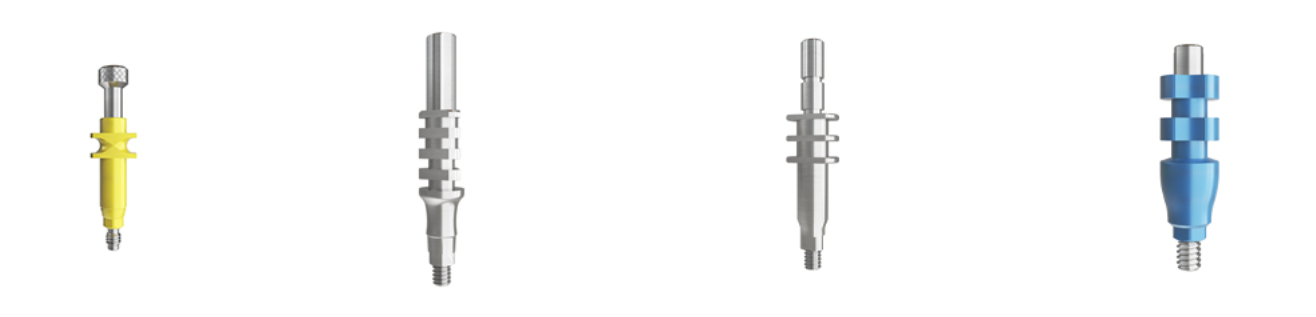
Dental implants come in many sizes and connections. A distributor may need to stock fixtures, cover screws, healing abutments, impression copings, scan bodies, analogs, temporary abutments, multi-unit components, and prosthetic screws.
Poor inventory planning leads to emergency shipments, which increases freight cost. A smart distributor analyzes fast-moving sizes and uses regular air freight for planned replenishment.
Because customs delays can happen, distributors should not operate with zero safety stock. Even a one-week delay can affect surgeries and damage customer relationships.
The real cost of imported implants includes:
l Product price
l Freight
l Insurance
l Customs duty
l VAT or import tax
l Broker fees
l Bank fees
l Local warehousing
l Damaged or unsellable packaging risk
l Emergency replacement cost
A low unit price is not always the lowest landed cost. A supplier with better packaging, fewer document problems, and stable delivery may be more profitable in the long term.
Distributors should avoid importing only implant fixtures without enough prosthetic components. Dentists need a complete workflow. If the implant is available but the matching healing abutment or impression component is missing, sales may slow down.
Some clinics import dental implants directly to reduce cost or access specific systems. This can work, but clinics must be careful.
A clinic should confirm:
l Whether direct import is legal in its country
l Whether the product is approved or accepted locally
l Whether the clinic can store implants properly
l Whether full traceability records are maintained
l Whether replacement components are available quickly
l Whether dentists understand the prosthetic system
l Whether after-sales support is available
Direct import may reduce purchase price, but it also shifts responsibility from distributor to clinic. For many clinics, working with a reliable local distributor is still safer. For experienced implant centers, direct import may be practical if compliance is clear.
A dentist rarely sees the international shipping process, but they feel its result. If packaging looks damaged, labels are confusing, or components are missing, the dentist loses confidence. If shipments arrive late and surgeries must be rescheduled, the distributor loses credibility.
In the dental implant business, trust is built through small details:
l The implant box is clean.
l The label is readable.
l The batch number is clear.
l The correct size is inside.
l The matching prosthetic parts are available.
l The IFU is accessible.
l The distributor can answer technical questions.
Shipping is part of that trust chain. A professional import process protects the brand before the product reaches the clinician.
Many buyers separate “product quality” and “logistics.” In reality, they are connected.
A dental implant with excellent machining but poor packaging creates risk. A competitive price with repeated customs delays becomes expensive. A fast shipment without correct documents may still fail. A supplier that cannot support traceability may not be suitable for long-term distribution.
The better question is not only:
“How fast can you ship?”
The better question is:
“Can you help us import dental implants repeatedly, legally, safely, and predictably?”
That question separates ordinary exporters from serious B2B implant manufacturing partners.
Before placing an international order, buyers can use this checklist:
Area | What to Check |
Product compliance | Registration, certificates, local import eligibility |
Importer status | License, tax number, consignee information |
Documents | Invoice, packing list, certificate, product description |
Labeling | Product name, model, batch, expiry, language, UDI if required |
Packaging | Sterile barrier, carton strength, moisture protection |
Traceability | Lot number, batch record, shipment record |
Shipping method | Express, air freight, or other method |
Incoterms | EXW, FCA, DAP, DDP, etc. |
Customs broker | Experience with medical devices |
Landed cost | Freight, duty, taxes, broker fee, insurance |
After-sales | Replacement parts, complaints, documentation support |
Yes, dental implants are often shipped by express courier, especially for samples and small orders. However, import rules still apply. Some countries may require medical device documents, importer licenses, or customs review even for small shipments.
In most markets, finished dental implants are treated as medical devices. The exact classification depends on local regulations. Importers should confirm requirements with local authorities or an experienced customs broker.
Common documents include a commercial invoice, packing list, airway bill or courier waybill, certificate of origin if required, and relevant quality or compliance documents. Depending on the country, medical device registration or importer license documents may also be needed.
Sometimes, but it must be handled carefully. For regulated medical devices, the importer may need to be locally licensed or registered. DDP may not be suitable for all countries or commercial shipments.
For samples, express courier is usually convenient. For regular distributor orders, air freight is often more professional and scalable. Sea freight is less common for implants because the products are small, high-value, and time-sensitive.
The exporter may suggest an HS code, but the importer and customs broker should confirm the correct classification according to local customs rules. The final classification responsibility usually depends on destination country procedures.
It depends on the country and the intended use. Non-clinical samples for evaluation may have different requirements from commercial implants for surgery. The importer should check local rules before shipping.
Common reasons include unclear product descriptions, missing import licenses, inconsistent invoice and packing list information, incorrect declared value, labeling issues, or customs broker unfamiliarity with medical devices.
Distributors should review documents before shipment, confirm HS codes with brokers, ensure importer information is correct, request packaging photos, maintain compliance files, and work with suppliers experienced in medical device export.
Ask whether they can provide consistent export documents, batch traceability, product label support, packaging photos, quality certificates, OEM packaging guidance, and communication with freight forwarders.
Importing and shipping dental implants is not just about moving small boxes across borders. It is about protecting product compliance, sterile packaging, batch traceability, customs clearance, distributor reputation, and clinical availability.
For B2B buyers, the best supplier is not simply the one that offers the lowest unit price or fastest courier option. The better partner is the manufacturer that understands how dental implants move through the real supply chain: from production and packaging, to export documents, to customs clearance, to distributor inventory, and finally to clinical use.
For distributors building long-term implant businesses, this level of reliability matters. A manufacturer such as RE-TECH can be naturally evaluated not only by implant design and compatibility, but also by how well it supports export preparation, packaging consistency, and B2B shipment coordination.
In a competitive implant market, smooth importing is not a small operational detail. It is part of the product experience, part of the distributor’s profit structure, and part of the trust that keeps dentists coming back.