![[slide:title]](/static/upload/other/20260512/1778551853592214.webp)
![[slide:title]](/static/upload/other/20260512/1778551954982306.webp)
Time:2026-03-02 Form:本站
Dental Implant Longevity: What Determines How Long They Last
After losing a tooth, almost everyone asks the same question: “How long do dental implants last?” Dental implants are a significant investment, so it’s only natural to want long-term reliability and peace of mind. The truth is there’s no fixed number—some implants remain fully functional after more than a decade, while others may fail within just a few years. It all depends on a few key factors. Today, we’ll break down the “lifespan code” of dental implants in simple, clear terms.
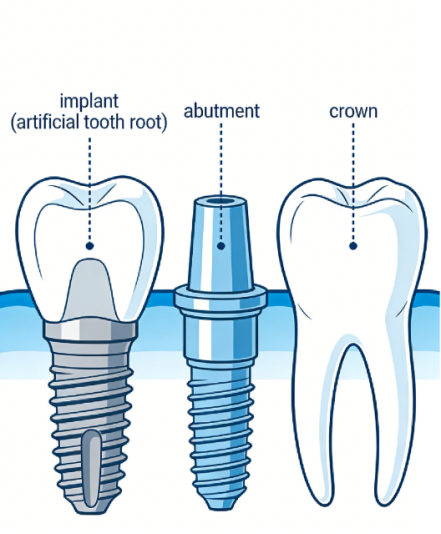
First, let’s put your mind at ease: With proper placement and consistent care, dental implants last far longer than most people expect. According to clinical data from the World Dental Federation (FDI), dental implants have a 10-year survival rate of over 90% and an approximate 20-year survival rate of 80%.
In fact, the very first dental implant placed in 1965 remained functional for 42 years until the patient passed away. There are also patients whose implants have served them well for over 50 years and still work perfectly for chewing.
Simply put, a dental implant is like an artificial permanent tooth. It does not have the pulp or periodontal ligament of a natural tooth and will not develop cavities. But its lifespan depends on joint effort—your dentist places it securely, and you maintain it properly, just like planting a tree: the doctor plants it firmly, and you water and care for it so it can last.
Many people mistakenly believe that “implant lifespan only depends on the dentist’s skill.” In reality, it is a combination of three equally important parts: Dentist expertise + implant quality + patient health and maintenance.
The “artificial root” (the implant fixture) must be placed precisely in the jawbone. Even small errors in angle, depth, or position can cause uneven pressure and early loosening. Experienced implant dentists use CBCT scans to accurately measure bone volume, avoid nerves and blood vessels, and create a personalized treatment plan—greatly improving stability and long-term success.
Implant quality is critical and relates to standards for high-quality implants. Choosing a reputable brand is one of the most important decisions for long-term success. Different brands suit different bone conditions and budgets.Bone condition matters, especially in procedures like guided bone regeneration (GBR). Today’s top implants aremade of biocompatible titanium with advanced surface treatments for better bone integration.
- Straumann (Switzerland): A global leader in implant dentistry. Uses SLActive® hydrophilic surface technology, accelerating osseointegration by about 50%. Ideal for patients with diabetes or insufficient bone volume; many implants last over 20 years.
- Nobel Biocare (Sweden): The “pioneer brand” of modern implants. Its Active series supports immediate loading, allowing patients to eat within hours after surgery.
- Osstem (South Korea): Widely recognized as one of the most suitable implants for Asian patients. Features porous nano‑titanium oxide surface, low rejection rate, and affordable price.
- Dentium (South Korea): Extremely popular worldwide, with reliable surface treatment for strong initial stability and complete after-sales support.
These well-known brands have decades of clinical evidence and are 10–15% more reliable over 10 years than unknown or uncertified brands. High-quality crowns (such as all‑ceramic) also improve durability and appearance.
Dental implants rely on your jawbone for support. Sufficient, dense bone = stable, long-lasting implant. Weak or thin bone (e.g., osteoporosis) may require bone grafting first. Patients with severe osteoporosis have a 2–3x higher failure rate within 5 years.
Systemic health also plays a huge role:
- Uncontrolled diabetes impairs blood flow and immunity, slowing bone healing and increasing infection risk (failure rate rises by 30–50%).
- Smoking is a major risk factor. Nicotine restricts blood flow to the jawbone. Smokers have a 4x higher 10‑year failure rate than non-smokers.
This is the factor you fully control—and the single most important one. Many patients think implants are “set-and-forget.” Poor cleaning leads to peri-implantitis, the top cause of implant failure. Similar to periodontal disease, it gradually destroys bone and causes implants to loosen or fall out.
- Brush gently around the implant at a 45° angle with a soft toothbrush.
- Use floss or a water flosser to clean between teeth and around the abutment.
- Avoid biting hard objects: crab shells, nuts, ice, bottle caps, etc.
- Get professional cleaning and checkups every 6–12 months.
- Myth 1: “Implants last forever with no care.” Fact: Implants need the same cleaning as natural teeth. Without care, they can fail in just 3–5 years.
- Myth 2: “More expensive implants always last longer.” Fact: A high-quality implant helps, but poor maintenance will destroy even the most expensive system.
- Myth 3: “If an implant breaks, you have to redo everything.” Fact: If only the crown is damaged but the fixture is stable, you only need to replace the crown—not the entire implant.
You don’t need to overthink “exactly how many years.” With professional placement + responsible care, implants can easily last 15–20 years—or even a lifetime. Without care or with poor health conditions, they can fail within just a few years.
Dental implants do more than restore chewing function—they restore confidence and quality of life. Instead of worrying about lifespan, focus on choosing a qualified clinic, skilled dentist, and a trusted implant brand.
- For long-term stability & premium quality: Straumann, Nobel Biocare
- For reliable performance & value: Osstem, Dentium
- For complex cases (low bone volume, diabetes): Straumann is often recommended.
With consistent care and regular checkups, your artificial root can become a reliable, long-term tooth replacement.
To help you choose the right implant with confidence, Retech Dental specializes in supplying authentic, globally recognized dental implants from trusted brands including Straumann, Nobel Biocare, Osstem and Dentium. We ensure genuine, clinically proven products to support reliable, long-lasting dental restorations.
For more information about implant systems and partnerships, visit our official website: https://www.retechdental.com