![[slide:title]](/static/upload/other/20260512/1778551853592214.webp)
![[slide:title]](/static/upload/other/20260512/1778551954982306.webp)
Time:2026-03-20 Form:本站
Healing Abutment vs Cover Screw: Key Differences, Clinical Use & Implant Workflow Guide
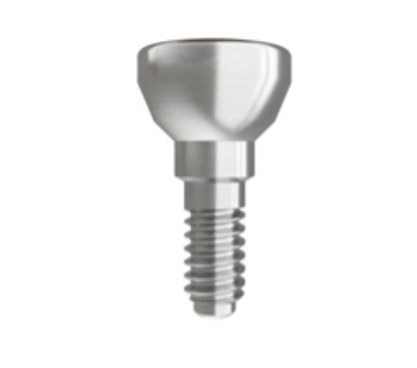
A healing abutment (also called a healing cap) is a temporary component placed on top of a dental implant to guide the healing of surrounding soft tissue.
It extends above the gum line and helps shape the gingiva for the final prosthetic restoration.
Key Features:
l Exposed above the gum
l Promotes soft tissue contouring
l Used in second-stage surgery or one-stage implants
l Available in multiple diameters and heights
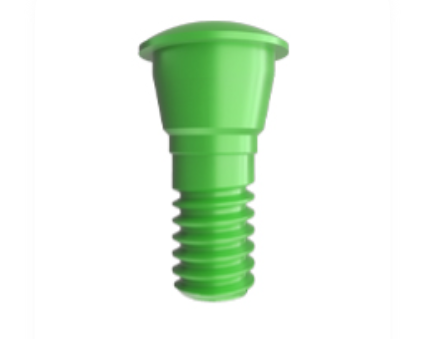
A cover screw is a flat, low-profile component used to seal the implant internally during the healing phase.
It sits flush with or below the gum tissue and is completely covered during healing.
Key Features:
l Fully submerged under the gum
l Protects internal implant connection
l Used in two-stage implant procedures
l Requires a second surgery for removal
Feature | Healing Abutment | Cover Screw |
Position | Above gum | Below gum |
Visibility | Exposed | Hidden |
Function | Shape soft tissue | Seal implant |
Surgical approach | One-stage or second stage | Two-stage |
Healing type | Transgingival healing | Submerged healing |
Second surgery needed | No (in most cases) | Yes |
Clinical goal | Tissue contouring | Osseointegration protection |
Understanding when each component is used is critical.
l Implant inserted into bone
l Cover screw placed
l Gum sutured over implant
Healing type: Submerged
l Bone integrates with implant
l No exposure to oral environment
l Cover screw removed
l Healing abutment placed
Healing type: Transgingival
l Healing abutment removed
l Final abutment + crown placed
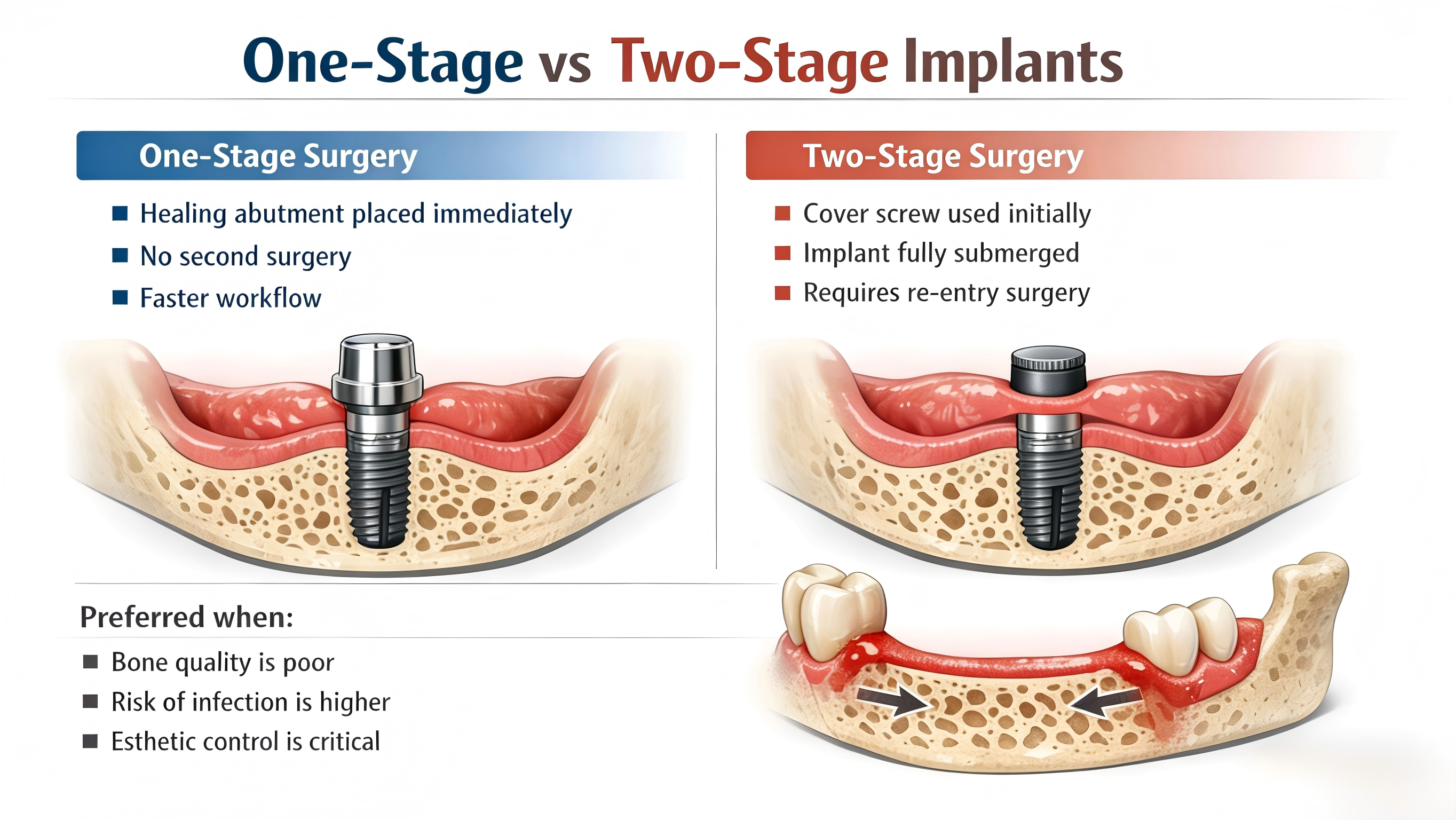
l Healing abutment placed immediately
l No second surgery
l Faster workflow
l Cover screw used initially
l Implant fully submerged
l Requires re-entry surgery
Preferred when:
l Bone quality is poor
l Risk of infection is higher
l Esthetic control is critical
l Performing two-stage implant surgery
l Primary stability is low
l Bone grafting or GBR is involved
l You want undisturbed osseointegration
l Performing one-stage implant surgery
l Implant has strong primary stability
l Soft tissue shaping is needed early
l Reducing chair time is a priority
Pros:
l Eliminates second surgery
l Saves clinical time
l Shapes gingival profile early
Cons:
l Higher exposure to oral bacteria
l Not suitable for all cases
Pros:
l Better protection during healing
l Lower infection risk
l Ideal for complex cases
Cons:
l Requires second surgery
l Longer treatment time
No — they serve fundamentally different purposes.
l A cover screw is designed for sealed healing
l A healing abutment is designed for tissue shaping
Using one in place of the other may compromise several critical aspects of implant treatment:
1. Healing Outcomes:
Each component is designed for a specific healing environment. Misuse may disrupt the normal healing process, increasing the risk of bacterial contamination, delayed tissue recovery, or incomplete osseointegration.
2. Soft Tissue Aesthetics:
Proper soft tissue shaping depends on the correct use of a healing abutment. Substituting it with a cover screw can lead to poor gingival contour, an unnatural emergence profile, and compromised aesthetic results—particularly in visible areas.
3. Implant Success Rate:
Inappropriate component selection may introduce unnecessary risks such as infection, instability, or additional surgical intervention, all of which can negatively affect the long-term success and stability of the implant.
For distributors and clinics, compatibility is critical.
Healing abutments and cover screws are typically manufactured to match:
l Dentsply Sirona
When sourcing OEM components, ensure:
l Connection type (internal hex, conical, etc.)
l Platform size compatibility
l Precision machining tolerance
l Choose cover screw for safety in complex cases
l Choose healing abutment for efficiency and soft tissue shaping
Focus on:
l Multi-system compatibility
l Inventory flexibility (different heights/diameters)
l Surface finishing quality
l OEM/ODM capability
High-demand SKUs:
l Standard platform healing abutments
l Internal hex cover screws
For distributors, selecting a reliable manufacturing partner is equally important. Working with experienced OEM suppliers like RE-TECHcan help ensure stable quality, system compatibility, and scalable supply for growing markets.
Not always. It depends on whether a one-stage or two-stage approach is used.
Only in one-stage implant procedures.
Yes, these terms are often used interchangeably.
No, it is removed before prosthetic restoration.
Neither is universally better — it depends on the clinical scenario.
Clinics and distributors typically source from manufacturers that offer compatibility with major implant systems and consistent quality control. Some OEM suppliers, such as RE-TECH, provide flexible production and customization options for global partners.
Healing abutments and cover screws are both essential components in implant dentistry, but they serve very different roles.
l Cover screws ensure protected healing
l Healing abutments guide soft tissue formation
Understanding when and how to use each is key to achieving optimal clinical outcomes and efficient workflows.