![[slide:title]](/static/upload/other/20260512/1778551853592214.webp)
![[slide:title]](/static/upload/other/20260512/1778551954982306.webp)
Time:2026-03-17 Form:本站
What Does a Healing Abutment Look Like? Types, Sizes and Functions Explained
Dental implants consist of several important components, and one of them is the healing abutment. After an implant is placed into the jawbone, this small component plays a critical role in shaping the gum tissue and protecting the implant during healing.
Many dental professionals and patients ask the same question:
What does a healing abutment look like?
In this article, we will explain the appearance, structure, types, and sizes of healing abutments, as well as their role in the dental implant workflow.
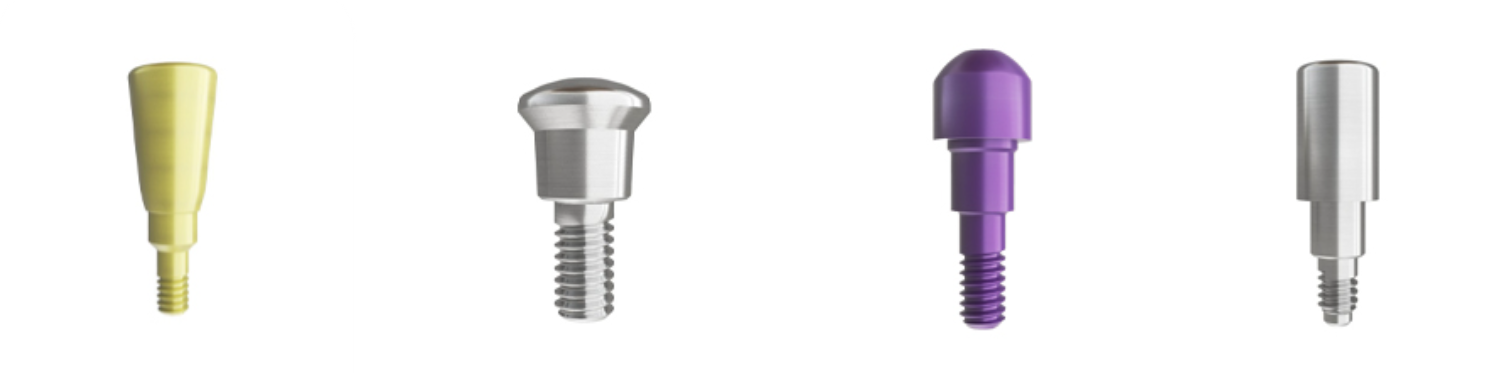
A healing abutment, sometimes called a healing cap, is a temporary component attached to a dental implant after the implant surgery.
Its main purposes are:
Protecting the implant connection
Allowing gum tissue to heal properly
Shaping the soft tissue for the final prosthetic crown
Healing abutments are typically placed after implant insertion or during the second-stage surgery. They remain in place during the
osseointegration period, which usually lasts several weeks.
A healing abutment is a small, cylindrical metal component that protrudes slightly above the gum line.
Its appearance typically includes:
1. Cylindrical or slightly tapered shape
Most healing abutments have a round, smooth shape to allow soft tissue healing.
2. Smooth polished surface
The surface is usually polished to minimize plaque accumulation and irritation.
3. Screw-retained base
The lower part connects directly to the dental implant through a screw mechanism.
4. Visible above the gum tissue
Unlike a cover screw, a healing abutment sits above the gum line so the tissue can heal around it.
In the mouth, it appears as a small metallic post emerging from the gum, often about a few millimeters high.
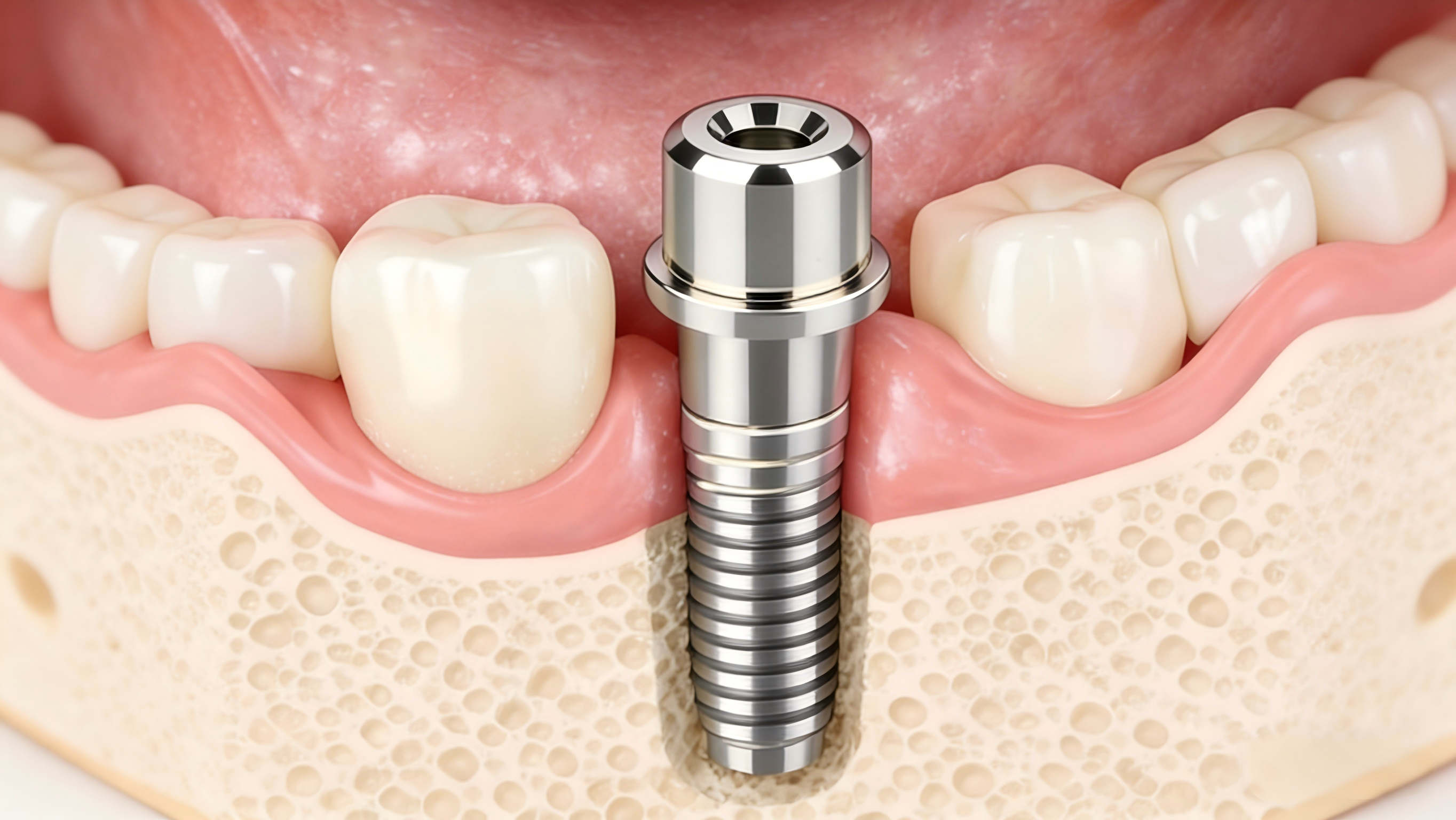
A healing abutment usually consists of three key parts:
The bottom portion connects precisely to the implant platform. This connection can vary depending on the implant system.
This is the vertical height that extends through the gum tissue. Different gingival heights are available to match tissue thickness.
The upper portion shapes the gum contour so that the final crown can achieve a natural appearance.
Proper design of these elements helps create a stable and aesthetic soft tissue profile.
Healing abutments come in different types depending on implant systems and clinical requirements.
The most common type used for routine implant cases.
Features:
l Round shape
l Smooth surface
l Standard diameter
Used when a wider emergence profile is required.
Advantages:
l Better soft tissue shaping
l Suitable for molar regions
l Supports wider prosthetic crowns
Designed to mimic the natural tooth emergence profile.
Benefits:
l Improved soft tissue contour
l Better esthetic outcomes
l Reduced need for tissue shaping later
Some clinicians use customized healing abutments, especially in digital workflows.
These may be designed using CAD/CAM technology to match patient-specific anatomy.
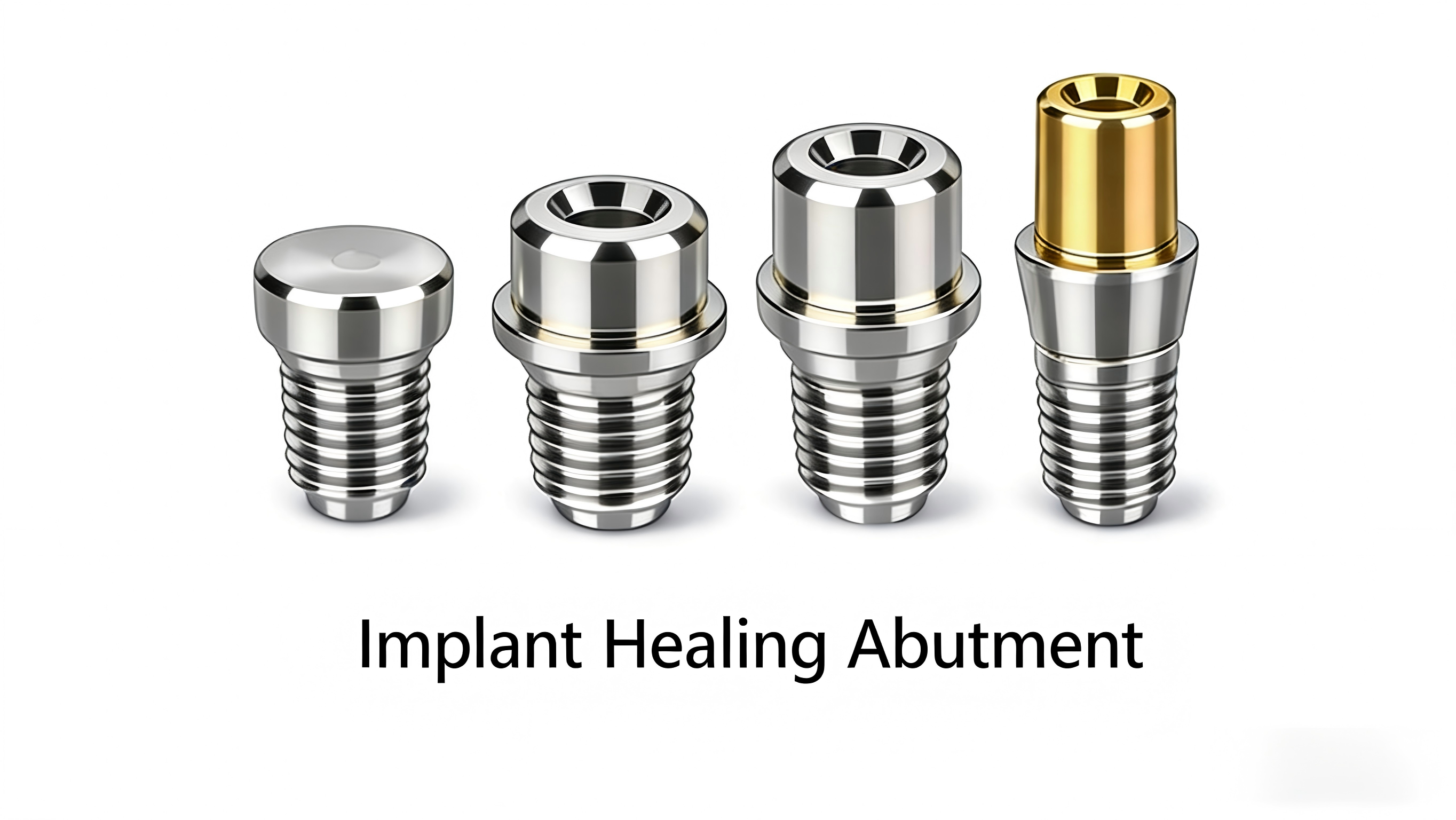
Healing abutments are available in various sizes to accommodate different implant systems and clinical conditions.
Common parameters include:
Diameter
Typical diameters range from:
3.5 mm
4.5 mm
5.5 mm
6.5 mm
The diameter is selected based on implant platform size and tooth location.
Gingival Height
Gingival height determines how far the abutment extends through the gum.
Common heights include:
2 mm
3 mm
4 mm
5 mm
6 mm
Selecting the correct height ensures proper healing and soft tissue contour.
Many people confuse a healing abutment with a cover screw, but they serve different purposes.
Feature | Healing Abutment | Cover Screw |
Position | Above gum | Under gum |
Visibility | Visible in mouth | Hidden under tissue |
Function | Shapes gum | Protects implant internally |
Timing | After second stage | Immediately after implant placement |
The cover screw is used during the submerged healing phase, while the healing abutment is used when the implant is exposed.
Healing abutments are essential in the implant restoration process.
They seal the implant connection and prevent contamination during healing.
They guide the gum tissue to form a natural emergence profile around the future crown.
Proper tissue shaping simplifies the placement of the final abutment and crown.
Without a healing abutment, soft tissue may collapse or heal irregularly.
With the rise of digital dentistry, healing abutments also play a role in modern implant workflows.
After the healing phase, clinicians typically replace the healing abutment with components such as:
l scan bodies
l impression copings
l final abutments
These components allow accurate digital impressions and prosthetic design.
A healing abutment is also commonly called a healing cap in dental implant procedures.
A healing abutment typically remains in place for 2 to 4 weeks, depending on the healing process and treatment plan.
No. Healing abutments are temporary components used only during the healing stage.
They are later replaced by the final abutment.
Yes, but dentists usually recommend avoiding very hard or sticky foods during the healing phase.
Patients may experience mild discomfort immediately after placement, but it typically resolves within a few days.
A healing abutment is a small but essential component in dental implant treatment. It protects the implant, shapes the gum tissue, and prepares the site for the final prosthetic restoration.
Understanding what a healing abutment looks like, its types, and its sizes helps dental professionals choose the right component for each clinical situation.
High-quality healing abutments are essential for predictable implant treatment outcomes.
Many dental clinics and distributors prefer working with reliable manufacturers that provide precision-machined titanium implant components.
RE-TECH Dental specializes in manufacturing compatible dental implant components, including healing abutments, scan bodies, implant analogs, and prosthetic accessories for various implant systems.Learn more about our solutions at: https://www.retechdental.com/.