![[slide:title]](/static/upload/other/20260512/1778551853592214.webp)
![[slide:title]](/static/upload/other/20260512/1778551954982306.webp)
Time:2026-04-16 Form:本站
Dental Implant Cost Breakdown: What Really Drives the Cost Behind the System
When discussing dental implants, most conversations quickly turn to price. However, for professionals in the dental industry—clinics, distributors, and procurement managers—the real question is not
“How much does an implant cost?”
but rather
“What drives the cost, and how can it be optimized?”
Dental implant treatment is not a single product purchase. It is a complex system involving materials science, precision manufacturing, clinical expertise, digital workflows, and regulatory compliance. Understanding this layered structure is essential for making informed sourcing and investment decisions.
This article provides a deep, structured breakdown of dental implant costs—without focusing on retail pricing—so that B2B buyers can better evaluate value, consistency, and long-term performance.
A common misconception is that a dental implant is simply a titanium screw. In reality, it is a multi-component system that includes:
l Implant fixture
l Abutment (stock or custom)
l Prosthetic crown
l Surgical and prosthetic accessories
Each component contributes to overall cost—not only in terms of material, but also design precision, compatibility, and long-term clinical performance.
Key Insight: Cost is distributed across the entire system, not concentrated in a single component.
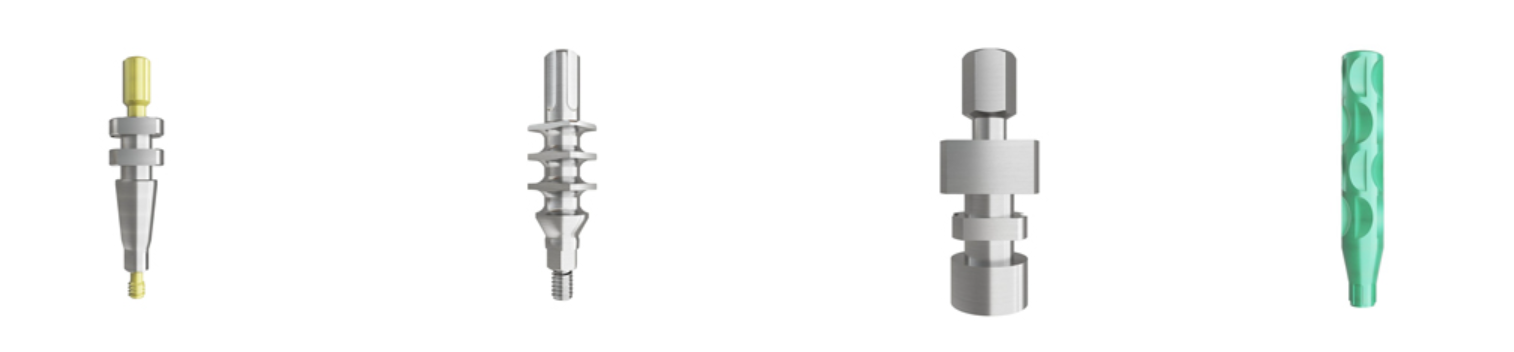
To truly understand implant cost structure, it helps to break it down into four major layers:
This is where the physical product is created.
Key cost drivers include:
l Raw materials (medical-grade titanium or titanium alloys)
l CNC machining precision (thread accuracy, tolerances)
l Surface treatment technology (critical for osseointegration)
l Cleanroom production and sterilization
Although raw material cost is relatively stable, the processing and quality control significantly influence final cost.
Two implants made from the same titanium can differ greatly in value due to manufacturing precision and surface engineering.
From a clinic perspective, the implant system is only one part of the equation.
Additional factors include:
l Surgical expertise and chair time
l Diagnostic imaging (CBCT, digital scans)
l Case complexity (bone quality, anatomical challenges)
l Post-operative care
Important: Clinical execution often represents the largest portion of total treatment cost, even though it is not visible in product pricing.
Modern implantology is increasingly digital.
Cost contributors include:
l CAD/CAM design systems
l Surgical guide fabrication
l Custom abutment design
l Crown manufacturing (zirconia, ceramic, hybrid materials)
Clinics with in-house digital capabilities can improve efficiency, but must absorb equipment and training costs.
Trend: Digital workflows are shifting cost from per-case outsourcing to long-term capital investment.
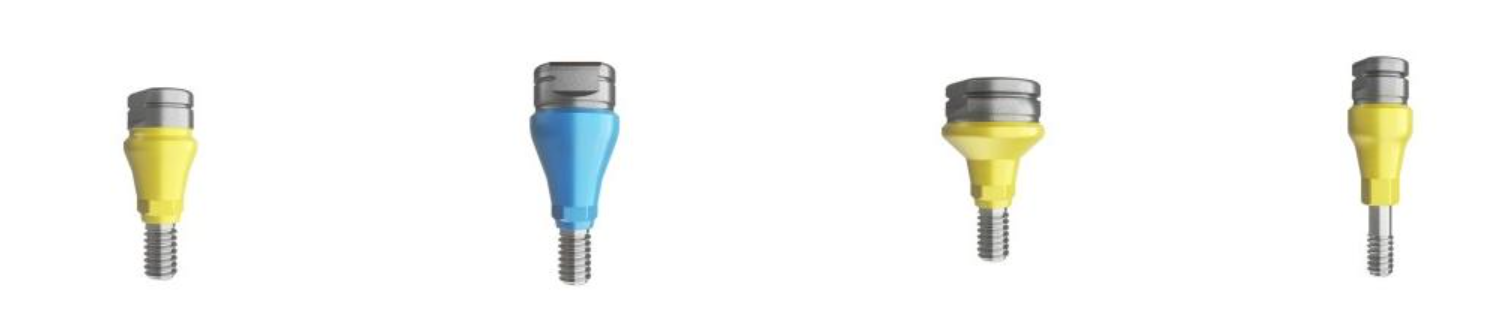
For manufacturers and distributors, compliance is a major hidden cost layer.
This includes:
l Quality management systems (e.g., ISO 13485)
l Regional approvals (CE, FDA, etc.)
l Biocompatibility and fatigue testing
l Sterilization validation
These requirements ensure safety and market access, but also significantly impact production cost structure.
Even without discussing specific numbers, it is clear that implant costs differ globally. This variation is driven by:
l Labor and operational costs
l Regulatory complexity
l Supply chain efficiency
l Market positioning (premium vs value segment)
For example, markets with strict regulatory frameworks and higher clinical standards tend to have higher overall treatment costs—not necessarily because of materials, but because of system-level requirements.
B2B Takeaway: Cost variation is more about ecosystem structure than raw product differences.
Most dental implants are made from:
l Commercially pure titanium
l Titanium alloys such as Ti-6Al-4V ELI
These materials are widely accepted due to:
l Excellent biocompatibility
l Strong mechanical properties
l Proven long-term performance
However, the material itself is not the main cost driver.
What matters more:
l Surface treatment quality
l Microstructure control
l Long-term stability
Emerging materials like zirconia offer aesthetic advantages but come with different mechanical and manufacturing challenges.
Surface engineering is one of the most critical—and often underestimated—cost factors.
Common technologies include:
l Sandblasted and acid-etched (SLA)
l Anodized surfaces
l Nano-modified coatings
These treatments directly influence:
l Osseointegration speed
l Implant stability
l Long-term success rates
Key Insight: Surface technology can differentiate two otherwise identical implants in both performance and cost.
From a production perspective, cost control is achieved through:
l High repeatability
l Tight tolerance control
l Reduced defect rates
l Larger production volumes reduce variability
l Automated processes improve consistency
l In-house production vs outsourcing
l Stable raw material sourcing
For distributors and private-label brands, customization is a key factor.
This includes:
l Branding and packaging
l Custom implant designs
l Exclusive product lines
Manufacturers like RE-TECH focus on balancing consistent quality with flexible OEM solutions, enabling partners to build differentiated offerings without compromising manufacturing reliability.
Strategic Value: Customization is not just a cost—it is a tool for market positioning.

Beyond initial procurement, several hidden factors influence total cost:
l Multiple sizes and configurations
l Stock management challenges
l Learning curve for new systems
l Surgical efficiency over time
l Implant failure rates
l Replacement logistics
l Reputation impact
B2B Insight: Lower upfront cost does not always translate to lower total cost.
Experienced buyers focus on value stability, not just cost reduction.
Key evaluation criteria include:
l Manufacturing consistency
l Certification and compliance
l Supply reliability
l Technical support
l Customization capability
The most competitive suppliers are those who deliver predictable outcomes, not just lower prices.
For clinics, distributors, and brands:
l Reduce intermediary layers
l Improve communication and control
l Simplify workflows
l Reduce inventory burden
l Improve efficiency
l Reduce long-term lab dependency
l Ensure stable supply
l Enable better planning and scaling
The industry is evolving rapidly, with several clear trends:
l AI-assisted planning
l Guided surgery systems
l Advanced automation
l Improved material processing
l Integration of software, training, and support
l Ecosystem-based offerings
Prediction: The competitive edge will move from product pricing to system-level efficiency and support.
Because treatment includes clinical expertise, diagnostics, workflow management, and post-operative care—not just the physical product.
Not necessarily. Quality depends on manufacturing precision, surface treatment, and consistency—not just price positioning.
Consistency. Reliable quality and stable supply chains are more valuable than short-term cost savings.
By optimizing sourcing, reducing supply chain layers, and offering value-added services such as training and digital integration.
Yes. It allows for brand differentiation and stronger market positioning, especially in competitive regions.
Dental implant cost is not defined by a single number—it is shaped by a complex system of manufacturing, clinical application, digital workflows, and regulatory requirements.
For B2B buyers, the key is to move beyond price comparisons and focus on understanding the structure behind the cost. Long-term success depends on choosing partners who can deliver:
l Consistent quality
l Scalable production
l Flexible customization
l Transparent processes
In this context, cost is no longer just an expense—it becomes a strategic variable that directly impacts growth, reputation, and competitiveness.