![[slide:title]](/static/upload/other/20260512/1778551853592214.webp)
![[slide:title]](/static/upload/other/20260512/1778551954982306.webp)
Time:2026-05-18 Form:本站
Comparing Dental Implant Manufacturers: A Practical Guide for Clinics, Distributors, and OEM Buyers
Choosing a dental implant manufacturer is not simply a matter of asking which brand is “the best.” In the real dental market, the better question is: best for whom, under what clinical workflow, at what price level, and with what long-term prosthetic support?
A premium implant system may be ideal for a specialist clinic handling complex full-arch rehabilitation. A value-oriented system may be more suitable for a growing clinic chain that needs stable supply and predictable cost control. A distributor may care more about product range, packaging, private-label potential, and repeatable delivery than about brand reputation alone. An OEM buyer may focus on manufacturing precision, surface treatment consistency, documentation, and whether the supplier can support customized implant systems or compatible prosthetic components.
This guide compares dental implant manufacturers from a practical B2B perspective. Instead of ranking brands only by popularity, it explains the major factors that clinics, distributors, laboratories, and purchasing teams should evaluate before choosing a dental implant partner.
The dental implant market includes global premium brands, regional manufacturers, Korean and European value brands, and OEM/ODM producers. Major global names such as Straumann, Nobel Biocare, Dentsply Sirona, Zimmer Biomet/ZimVie, Osstem, Dentium, BioHorizons, MegaGen, MIS, Camlog, BEGO, and others are often compared because they represent different business models, price levels, product philosophies, and distribution strategies. Straumann’s latest annual reporting continues to emphasize implantology leadership and expansion across core dental segments, showing how competitive and innovation-driven the market remains.
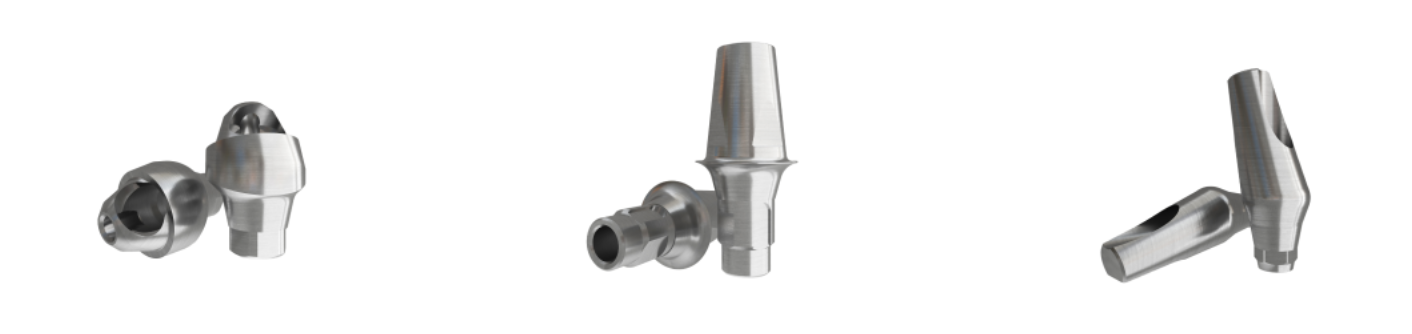
Many buyers compare implant manufacturers by brand name, country of origin, or price. These are useful starting points, but they are not enough.
Dental implants are not standalone screws. They are part of a complete clinical and prosthetic ecosystem. A manufacturer should be evaluated by the implant body, connection design, abutment options, surgical kit, digital workflow, surface treatment, packaging, regulatory documentation, and long-term component availability.
A low-cost implant system can become expensive if prosthetic parts are difficult to source. A famous premium brand can become inefficient if the clinic’s patient base cannot support the price level. A technically strong implant may still be risky for distributors if delivery, labeling, and after-sales support are unstable.
For B2B buyers, the best manufacturer is usually the one that balances six things:
1. clinical reliability
2. prosthetic flexibility
3. product availability
4. regulatory support
5. price structure
6. long-term partnership value
This is why comparing dental implant manufacturers should be done systematically, not emotionally.
Premium brands are usually selected for their clinical documentation, long-term reputation, strong training ecosystem, and advanced implant surface or connection technologies. Straumann, Nobel Biocare, Dentsply Sirona/Astra Tech, and Zimmer Biomet/ZimVie are often placed in this category.
These manufacturers are strong when a clinic wants recognized brand value, published evidence, global availability, and advanced restorative workflows. For example, Dentsply Sirona presents Astra Tech Implant System EV as a system built on decades of development, biologically driven design, and broad clinical study support. Nobel Biocare promotes its TiUltra and Xeal surfaces as part of a full implant system approach from implant body to abutment.
The main limitation is cost. Premium systems often require higher investment in implants, prosthetic components, surgical kits, and training. For clinics serving high-end cases, this can be justified. For distributors in price-sensitive markets, it may reduce flexibility.
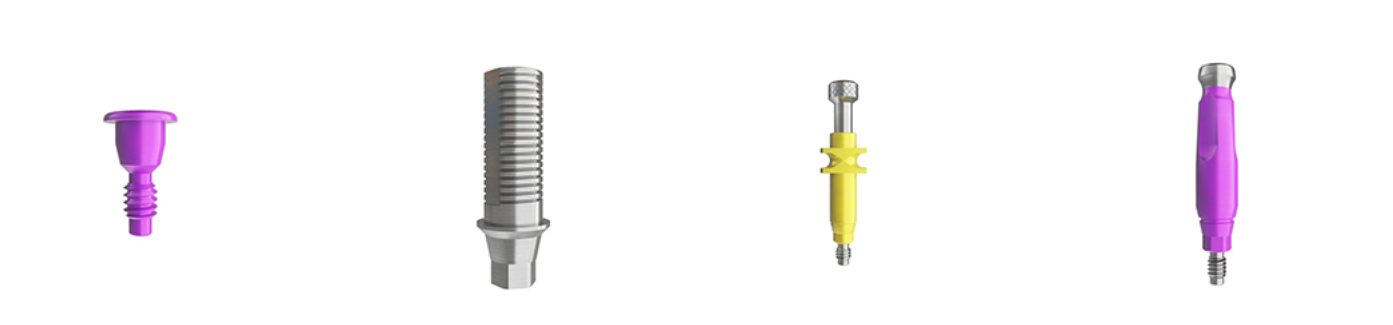
Mid-tier manufacturers often compete by offering reliable implant systems at more accessible prices. Korean, Israeli, European, and Chinese manufacturers have become increasingly visible in this segment. Osstem, Dentium, MegaGen, MIS, Alpha-Bio Tec, Adin, C-Tech, and many others are frequently considered by clinics and distributors looking for a balance between quality and cost.
Osstem, for example, promotes its TS implant system as widely used among dental professionals, showing how Korean systems have become important in many international markets.
The advantage of mid-tier manufacturers is practical value. They may offer a broad product range, active distributor support, and competitive pricing. The potential weakness is variation: not every mid-tier manufacturer has the same level of documentation, component consistency, packaging quality, or export support. Buyers need to evaluate each supplier carefully.
OEM and ODM manufacturers are important for distributors, private-label brands, and companies that want to develop their own implant system or expand their product line.
An OEM manufacturer usually produces implants or components according to a buyer’s specifications or under the buyer’s brand. An ODM manufacturer may provide more design, development, and system-building support.
For B2B buyers, OEM/ODM is attractive because it allows more control over branding, packaging, pricing, and market positioning. However, it also requires deeper supplier evaluation. Buyers should check machining accuracy, surface treatment process, cleaning validation, packaging environment, batch traceability, inspection records, and regulatory documents.
This is where manufacturers such as RE-TECH can be naturally considered by buyers who are comparing OEM implant manufacturing, compatible prosthetic components, and private-label supply options. Instead of choosing only between famous global brands, distributors can also evaluate whether an OEM partner can provide stable quality, flexible specifications, compatibility support, and long-term product development cooperation.
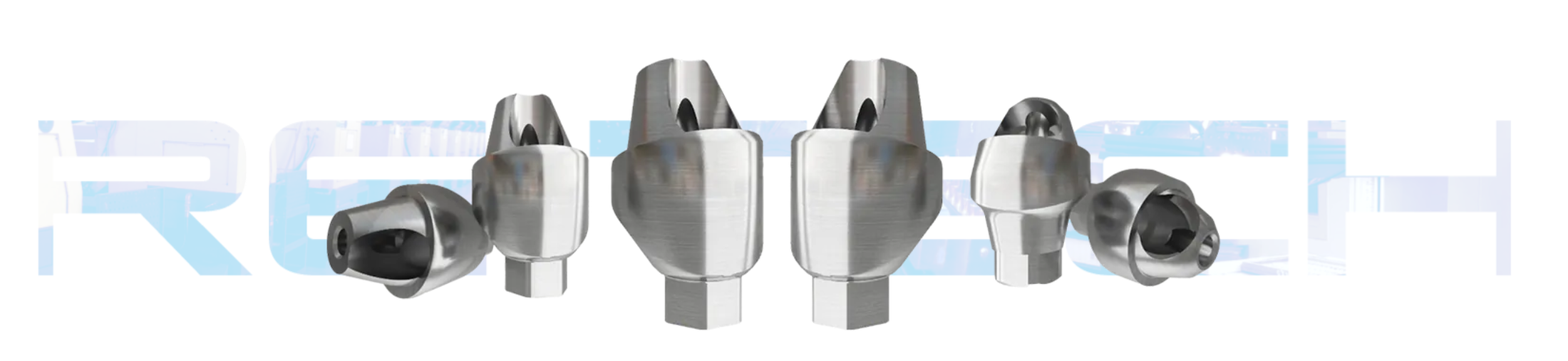
Clinical evidence is one of the most important differences between implant manufacturers. Premium brands often invest heavily in clinical studies, university partnerships, and long-term documentation. This helps dentists feel more confident, especially in complex cases.
However, evidence should be evaluated carefully. A manufacturer may have strong evidence for one implant line but less documentation for a newer or lower-cost system. Buyers should ask:
l How long has this implant system been used clinically?
l Are there published studies on survival rate, marginal bone loss, or soft tissue response?
l Does the evidence apply to the exact implant system being purchased?
l Are the studies independent or manufacturer-sponsored?
l Are there documented results for immediate loading, full-arch cases, or compromised bone?
The FDA notes that dental implant systems include the implant body, abutment, and abutment screw, and that materials may include titanium alloys, ceramic materials, cobalt-based alloys, and other approved materials depending on the device. This reminds buyers that implant safety is connected not only to the implant body but to the whole system and its material documentation.
For distributors, clinical evidence is also a sales tool. A system with stronger documentation is easier to introduce to dentists, especially in markets where doctors are cautious about switching brands.
Implant design affects primary stability, bone response, surgical handling, and prosthetic flexibility. When comparing manufacturers, buyers should look beyond the outer shape and ask how the system behaves clinically.
Important design factors include:
l tapered or parallel-wall body
l thread depth and pitch
l self-tapping ability
l apical design
l platform switching
l internal conical connection or internal hex connection
l microgap control
l emergence profile
l prosthetic component range
An internal conical connection may offer better sealing and stability in some systems, while internal hex designs are widely used and may have broader compatibility. Tapered implants may perform well in extraction sockets or soft bone, while parallel-wall implants may be preferred in certain controlled surgical situations.
The best manufacturer is not always the one with the most complicated design. It is the one whose design matches the buyer’s target cases and clinical users.
Surface treatment is one of the most marketed areas in implant manufacturing. SLA, RBM, HA coating, anodized surfaces, hydrophilic surfaces, laser-treated surfaces, and other technologies are often used to differentiate brands.
Surface quality matters because it affects early bone response and implant stability. But buyers should avoid judging only by marketing terms. Two manufacturers may both say “SLA surface,” but their blasting media, acid etching parameters, cleaning process, surface roughness, and packaging environment may differ.
When evaluating manufacturers, ask for:
l surface treatment method
l surface roughness range
l cleaning process
l residue control
l SEM images if available
l hydrophilicity data if claimed
l packaging and shelf-life information
l sterilization method
l batch traceability
A manufacturer with excellent machining but weak cleaning control is not ideal. Surface treatment must be consistent from batch to batch.
This is one of the most overlooked B2B factors. Many clinics do not regret an implant because of the implant body; they regret the system when they cannot easily find scan bodies, impression copings, healing abutments, multi-unit abutments, angled abutments, screws, or digital libraries.
Before choosing a manufacturer, buyers should check whether the system includes:
l healing abutments in multiple heights
l temporary abutments
l straight and angled abutments
l multi-unit abutments
l ball attachments or locator-type attachments
l scan bodies
l analogs
l Ti-bases
l digital libraries
l guided surgery options
l torque recommendations
l prosthetic screw availability
For distributors, this is especially important. A complete prosthetic ecosystem increases repeat orders. If a dentist buys implants but must search elsewhere for abutments, the distributor loses control of the customer relationship.
This is also where compatible component suppliers and OEM manufacturers can create value. A company like RE-TECH can be positioned naturally in content as a manufacturing partner for buyers who need implant systems, prosthetic components, compatibility support, or private-label development, without presenting the article as a direct advertisement.

Dental implants are medical devices. A professional manufacturer must be able to provide proper documentation, quality management evidence, and product traceability.
ISO 13485 is the international quality management standard for medical devices, and it is commonly used to evaluate whether a manufacturer has a structured medical device quality system.
Buyers should request:
l ISO 13485 certificate
l CE/MDR documentation if selling in Europe
l FDA-related documentation if selling in the United States
l product technical files where applicable
l sterilization validation
l biocompatibility testing
l material certificates
l batch inspection reports
l packaging validation
l labeling support
l UDI support if required
A low price without documentation can create serious risk. For importers and distributors, poor documentation can lead to customs delays, registration problems, or market restrictions.
Implant manufacturing is not normal metal machining. Small deviations in thread geometry, connection tolerance, screw seating, or surface condition can affect clinical use.
When comparing manufacturers, buyers should evaluate:
l CNC machining capability
l tolerance control
l thread consistency
l internal connection accuracy
l screw fit
l surface defect inspection
l cleaning control
l packaging environment
l batch traceability
l final inspection process
The internal connection is especially important. If the implant-abutment fit is unstable, dentists may experience screw loosening, prosthetic complications, or component mismatch. For OEM buyers, this is a critical area to audit.
Manufacturer Type | Main Strength | Main Limitation | Best For |
Premium global brands | Strong reputation, clinical evidence, training, digital workflow | High cost, less pricing flexibility | Specialist clinics, premium cases, complex rehabilitation |
Mid-tier international brands | Good balance of price and performance | Documentation and component depth vary by brand | General clinics, growing distributors, emerging markets |
Korean implant brands | Strong value, wide adoption, practical systems | Brand recognition may vary by country | Clinics needing cost-effective reliability |
European niche manufacturers | Engineering quality, regional trust, specialized systems | Smaller distribution network | Clinics or distributors needing differentiated systems |
OEM/ODM manufacturers | Private-label control, flexible specifications, better margin structure | Requires careful supplier audit | Distributors, implant brands, importers, private-label buyers |
Price is always part of the decision, but it should not be evaluated alone.
A cheap implant is not truly cheap if the prosthetic parts are hard to source, the delivery time is unstable, or the documentation is weak. A premium implant is not automatically the best choice if the patient base cannot afford it or the distributor cannot achieve profitable turnover.
B2B buyers should calculate total commercial value, including:
l implant body price
l abutment cost
l surgical kit investment
l component availability
l training cost
l minimum order quantity
l distributor margin
l registration cost
l delivery stability
l warranty policy
l marketing support
For distributors, OEM/private-label supply may create better margin control because it avoids direct competition with the same famous brands sold by other distributors. However, the buyer must invest more effort in quality verification and market education.
Clinics should focus on clinical predictability and workflow efficiency.
A clinic should ask:
l Is the surgical kit easy to use?
l Are the implant sizes suitable for common cases?
l Are prosthetic parts easy to order?
l Does the system support digital impressions?
l Are scan bodies and libraries available?
l Can the lab easily restore the system?
l Is the brand accepted by patients?
l Does the manufacturer or distributor provide training?
l Are replacement parts available long term?
For a clinic, the biggest mistake is choosing a system based only on initial implant price. If the restorative workflow becomes difficult, the savings disappear.
Distributors need to think differently from clinics. Their decision is not only clinical; it is commercial.
A distributor should evaluate:
l margin structure
l product range
l packaging design
l local registration support
l minimum order quantity
l exclusive distribution possibility
l private-label options
l marketing materials
l training support
l after-sales response
l component repeat purchase potential
A distributor should also check whether the manufacturer can support market expansion. For example, if a distributor begins with bone-level implants, can the same supplier later provide tissue-level implants, multi-unit abutments, digital scan bodies, surgical kits, or customized packaging?
This is why OEM/ODM manufacturers can be valuable. They allow distributors to build their own brand instead of only reselling another company’s identity.
OEM buyers should go deeper than normal distributors. They should not only ask “Can you make implants?” They should ask “Can you repeatedly manufacture a complete, documented, traceable implant system?”
Important OEM questions include:
l margin structure
l product range
l packaging design
l local registration support
l minimum order quantity
l exclusive distribution possibility
l private-label options
l marketing materials
l training support
l after-sales response
l component repeat purchase potential
For private-label buyers, the supplier is not just a factory. It becomes part of the brand’s reputation.
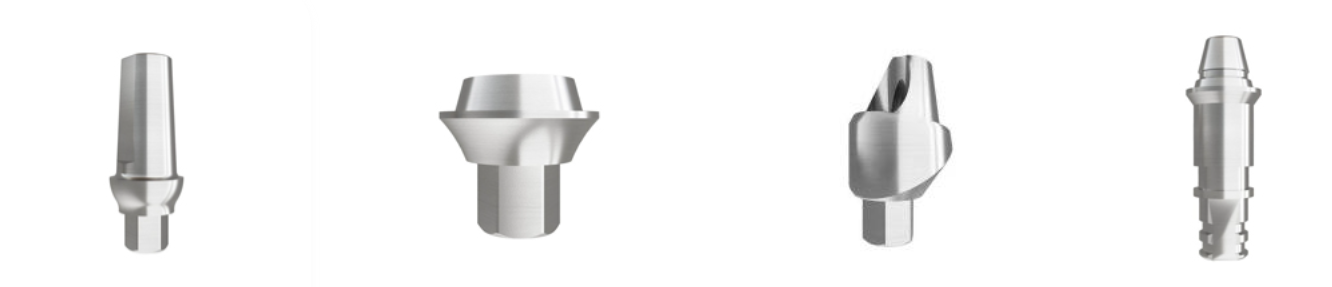
Swiss, German, Korean, Israeli, Chinese, Italian, or American origin may influence perception, but it does not automatically prove quality. A good buyer evaluates the actual system, factory control, documentation, and component support.
The implant body is only one part of the total system. Abutments, scan bodies, screws, tools, and support matter just as much.
Many implant failures in business relationships happen after placement, not before. If the lab cannot restore the implant easily, the system becomes inconvenient.
Compatibility must be checked carefully. A component may appear to fit but still have tolerance or screw-interface risks. Buyers should verify compatibility with drawings, samples, torque testing, and clinical feedback.
Dental implants stay in patients’ mouths for years. Replacement components may be needed long after the original surgery. A manufacturer must be able to support the system long term.
The most practical method is to create a scoring matrix. Buyers can score each manufacturer from 1 to 5 in the following categories:
Category | Score |
Clinical evidence | 1–5 |
Implant design | 1–5 |
Surface treatment | 1–5 |
Prosthetic system completeness | 1–5 |
Digital workflow support | 1–5 |
Manufacturing precision | 1–5 |
Regulatory documentation | 1–5 |
Price competitiveness | 1–5 |
Supply stability | 1–5 |
OEM/private-label support | 1–5 |
After-sales service | 1–5 |
This method prevents emotional decision-making. A famous brand may score high in clinical evidence but lower in price flexibility. An OEM manufacturer may score high in customization and margin potential but require more buyer-side verification. A mid-tier brand may offer the best overall balance for certain markets.
When buyers compare dental implant manufacturers, they usually think first about famous global brands. That is understandable, especially for clinics that want strong brand recognition.
However, distributors and private-label buyers often need something different: stable manufacturing, flexible cooperation, compatible component support, and a supplier who can help them build their own market position.
In this context, RE-TECH can be mentioned as an OEM/ODM-oriented dental implant manufacturing option for buyers who are evaluating implant systems, prosthetic components, and private-label supply. The key is not to claim that one manufacturer is universally better than another. The more credible message is that different buyers need different manufacturer models.
For a clinic, a premium brand may be the safest choice for high-end cases. For a distributor, a flexible OEM manufacturer may create better long-term margin and brand control. For a growing implant company, the right manufacturing partner may be more important than choosing a famous name.
There is no single best dental implant manufacturer for every buyer. Premium brands such as Straumann, Nobel Biocare, Dentsply Sirona, and Zimmer Biomet/ZimVie are often chosen for reputation and clinical documentation. Mid-tier and OEM manufacturers may be better for buyers who need cost control, private-label options, or flexible supply.
Not always. Premium brands often provide strong evidence, training, and recognition, but they are also more expensive. For many clinics and distributors, a well-documented mid-tier or OEM system may offer better commercial value.
Distributors should evaluate product range, prosthetic component availability, packaging, regulatory support, delivery stability, pricing, training materials, private-label options, and after-sales service.
Prosthetic compatibility affects restoration efficiency. If scan bodies, abutments, screws, analogs, and digital libraries are difficult to source, the implant system becomes harder for clinics and labs to use.
Branded companies sell under their own established names. OEM manufacturers produce implants or components for other brands, distributors, or private-label buyers. OEM supply can offer better customization and margin control but requires careful supplier verification.
Many clinics prefer one main system for efficiency, but some use multiple systems to serve different case types and patient budgets. The key is to avoid using too many systems without proper component management.
Buyers should request ISO 13485 certification, product documentation, material certificates, inspection reports, sterilization information, packaging validation, surface treatment details, and samples for evaluation.
No. Country of origin can influence market perception, but actual quality depends on design, manufacturing control, documentation, surface treatment, inspection, and long-term support.
OEM implants can compete in certain market segments if the manufacturer has strong quality control, stable production, proper documentation, and complete prosthetic support. However, famous brands usually have stronger recognition and clinical evidence.
Choose a premium brand if your main priority is reputation, clinical documentation, and high-end case acceptance. Choose an OEM manufacturer if your priority is private-label control, cost structure, customization, and distributor margin. The best choice depends on your business model.
Comparing dental implant manufacturers is not about finding one universal winner. It is about matching the manufacturer to the buyer’s clinical needs, business model, price level, and long-term strategy.
Premium brands offer strong reputation, clinical documentation, and advanced workflows. Mid-tier brands offer practical value and broader affordability. OEM/ODM manufacturers offer flexibility, private-label opportunities, and commercial control.
The best decision comes from evaluating the whole system: implant design, surface treatment, prosthetic compatibility, digital workflow, documentation, manufacturing precision, supply stability, and after-sales support.
For clinics, the right manufacturer makes treatment smoother and restoration easier. For distributors, the right manufacturer creates repeat orders and stronger market positioning. For OEM buyers, the right manufacturer becomes the foundation of a reliable implant brand.
In the end, a dental implant manufacturer should not be chosen only for its name. It should be chosen for its ability to support predictable treatment, stable supply, and long-term business growth.