![[slide:title]](/static/upload/other/20260512/1778551853592214.webp)
![[slide:title]](/static/upload/other/20260512/1778551954982306.webp)
Time:2026-03-09 Form:本站
Dental Implant Fixtures: Definition,Characteristics, Materials & Clinical Application
In the field of dental implantology, dental implant fixtures are the core and foundational component of the entire implant restoration system, often referred to as the “artificial tooth root”. Unlike traditional dentures or bridges, dental implant fixtures are surgically implanted directly into the patient’s alveolar bone, replacing the natural tooth root to provide a stable, durable, and functional foundation for the subsequent abutment and crown. For dentists, dental clinics, and even patients, a thorough understanding of dental implant fixtures—their structure, functions, clinical value, and key characteristics—is essential for ensuring successful implant outcomes and making informed decisions.
At its core, a dental implant fixture is a cylindrical or conical device made of biocompatible materials, designed to integrate seamlessly with the alveolar bone through a process called implant osseointegration. This osseointegration is what distinguishes implant fixtures from other dental restoration solutions: it creates a direct, rigid bond between the fixture and the surrounding bone, allowing the implant to bear occlusal force just like a natural tooth root. Without a high-quality, well-designed dental implant fixture, even the most advanced abutment or crown cannot guarantee long-term stability or clinical success.
The clinical value of dental implant fixtures is multifaceted.
First, they provide unparalleled stability: once osseointegration is achieved, the fixture remains firmly anchored in the alveolar bone, eliminating the looseness or displacement common with removable dentures.
Second, they preserve alveolar bone health: by mimicking the function of natural tooth roots, dental implant fixtures stimulate bone growth and prevent bone resorption, a common issue after tooth loss that can lead to facial sagging and further dental problems.
Third, they offer superior functionality and aesthetics: because the fixture supports a custom crown that matches the patient’s natural teeth, patients can chew, speak, and smile with confidence, without the discomfort or limitations of traditional restorations.
Key characteristics of high-quality dental implant fixtures include excellent biocompatibility (to avoid immune rejection), sufficient mechanical strength (to withstand daily occlusal force), precise dimensions (to ensure proper fit and osseointegration), and a surface structure that promotes bone adhesion. These characteristics are critical for clinical success and are the primary criteria for evaluating the quality of any dental implant fixture.
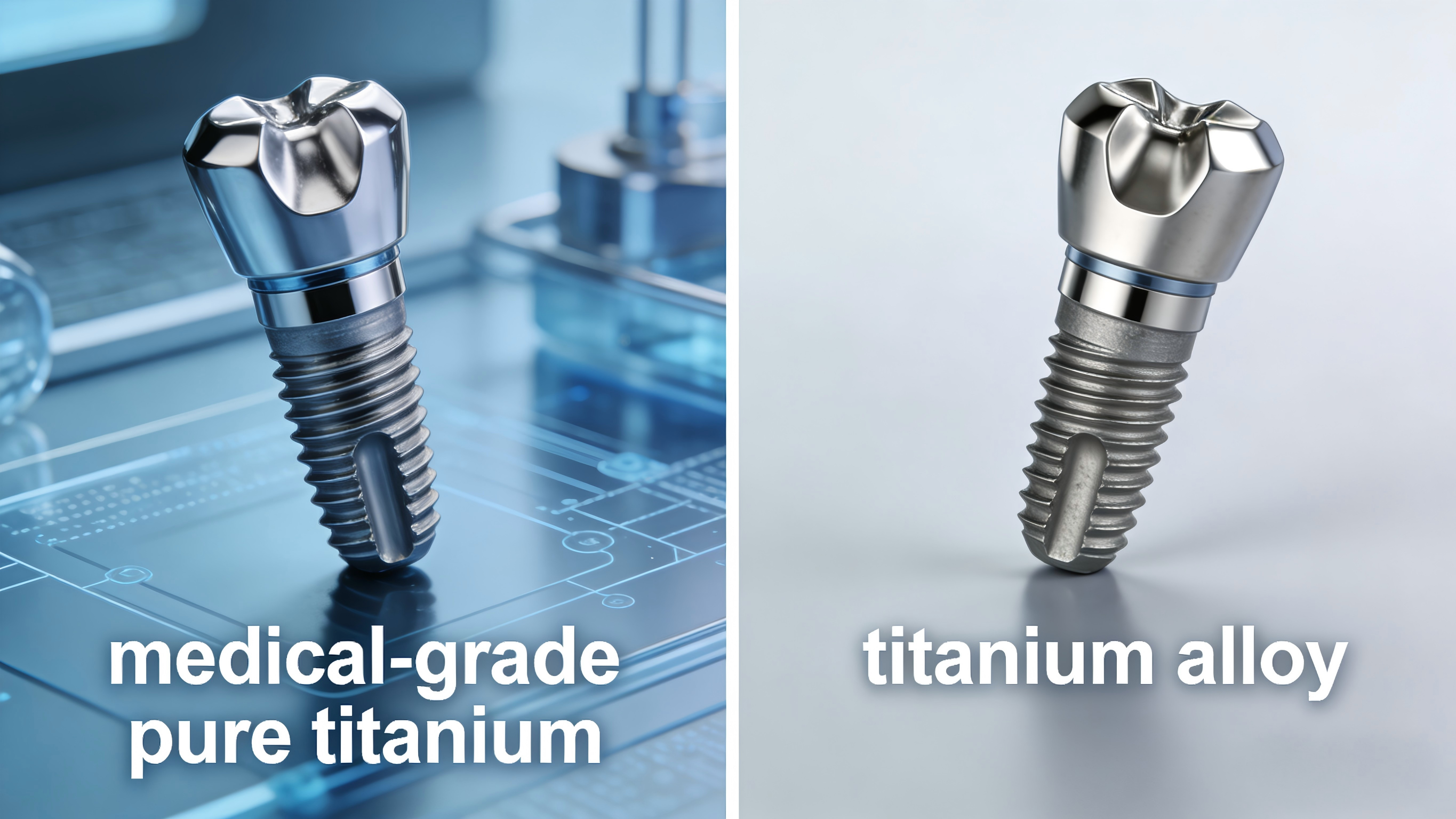
The material of dental implant fixtures is crucial to implant osseointegration and long-term use. The most commonly used materials in clinical practice are medical-grade pure titanium and titanium dental implant alloy (Ti-6Al-4V), which are widely recognized as the optimal materials for dental implant fixtures due to their excellent biocompatibility, corrosion resistance, and mechanical strength. These materials meet the strict requirements of ISO 13485 and FDA approved dental implant standards, providing a safe and reliable foundation for implant restoration.
Medical-grade pure titanium has good biocompatibility, which can effectively promote implant osseointegration and reduce the risk of immune rejection; it is suitable for most patients with normal alveolar bone conditions. Titanium dental implant alloy has higher mechanical strength than pure titanium, making it suitable for patients with high occlusal force, thin alveolar bone, or complex clinical conditions. Both materials have passed ISO 13485, CE, and FDA certifications, ensuring their safety and reliability in long-term clinical application.
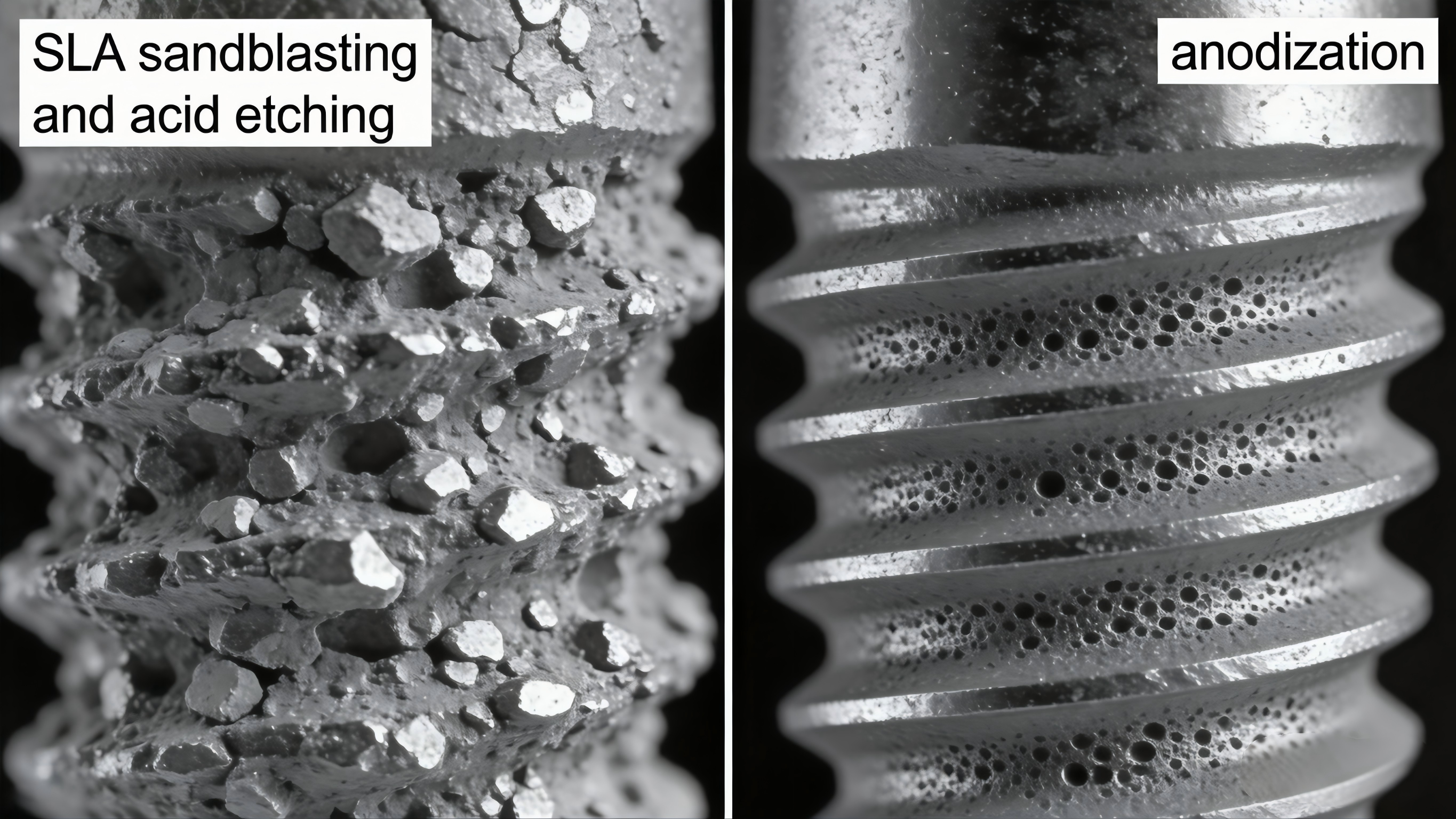
The dental implant surface treatment of dental implant fixtures directly affects the speed and quality of implant osseointegration. Two high-efficiencydental implant surface treatment technologies are widely used in clinical practice: sandblasting and acid etching (SLA) and anodization, both of which have been proven to significantly enhance implant osseointegration and long-term stability.
The SLA dental implant surface treatment forms a rough micro-porous structure on the surface of thedental implant fixture. This structure can greatly increase the contact area between the implant and the alveolar bone, promote the adhesion and proliferation of osteoblasts, and accelerate the process ofimplant osseointegration. The anodization treatment forms a uniform oxide film on the surface of the titanium dental implant, which enhances the corrosion resistance of the fixture and further improves its biocompatibility, laying a solid foundation for long-term osseointegration.
Compatibility is an important characteristic of dental implant fixtures, as it directly affects the convenience of clinical operation and the effect of implant restoration. High-quality dental implant fixtures can perfectly match most mainstream abutment brands on the market, as well as various types of crowns (such as zirconia crowns, porcelain-fused-to-metal crowns). This strong compatibility allows dentists to flexibly select matching components according to the patient’s specific clinical needs, reducing the risk of mismatching and improving clinical efficiency.
Beyond material selection and surface treatment, several critical factors directly impact the quality, service life, and clinical efficacy of dental implant fixtures. These factors are closely related to the success of implant osseointegration and the long-term stability of the implant system, making them important considerations for dentists and patients when selecting dental implant fixtures.
First, dimensional precision: The diameter, length, thread pitch, and taper of dental implant fixtures must meet strict precision standards. Accurate dimensions ensure that the fixture can be smoothly implanted into the alveolar bone without damaging the surrounding bone tissue, and form a tight, stable connection with the abutment—avoiding gaps that could lead to bacterial infection or implant loosening.
Second, biocompatibility: As a component implanted into the human body for a long time, the material of dental implant fixtures must have excellent biocompatibility. It should not trigger immune rejection, allergic reactions, or toxic side effects, which is the fundamental premise for successful implant osseointegration and long-term clinical safety.
Third, mechanical strength and wear resistance: dental implant fixtures need to bear long-term occlusal force during daily chewing. Therefore, they must have sufficient mechanical strength to resist deformation, fracture, or wear, ensuring that they can maintain stable performance even after years of use. This is particularly important for patients with high occlusal force or bruxism.
Choosing the right dental implant fixture is the first step to successful dental implantation. Our Re-tech dental implant fixtures are designed to meet all the core standards of high-quality implants. Compliant withISO 13485 and FDA approved standards, they are made of high-quality medical-grade pure titanium and titanium alloy (Ti-6Al-4V), ensuring excellent biocompatibility and strong mechanical strength. We adopt advanced SLA sandblasting and acid etching and anodization surface treatment to accelerate osseointegration and improve long-term stability. With precise dimensions and strong compatibility, they fit most mainstream abutments and crowns, bringing convenience to clinical use. Backed by strict quality control and comprehensive after-sales service, Ruitaike dental implants are trusted by dentists and patients worldwide. For more product details, please visit our official website: https://www.retechdental.com;