![[slide:title]](/static/upload/other/20260512/1778551853592214.webp)
![[slide:title]](/static/upload/other/20260512/1778551954982306.webp)
Time:2026-03-06 Form:本站
Complete Guide to Dental Implant Abutments: Types, Uses, and How to Choose the Right One
In the field of dental implantology, the abutment is a core component that connects dental implants to restorations (such as crowns). Its selection directly impacts the stability, aesthetics, and service life of dental implants. This article comprehensively analyzes the types and uses of various dental implant abutments, as well as how to select the right abutment based on clinical needs, providing professional reference for dentists, clinic technicians, and related practitioners.
A dental implant abutment is a connecting component installed on top of a dental implant. One end is fixed inside the implant with screws, while the other end supports and secures restorations like crowns and bridges. Equivalent to the "upper part of the tooth root" of a natural tooth, it transmits occlusal force and protects the tissues surrounding the implant.
Simply put, the abutment acts as the "intermediate bridge" of a dental implant. It must not only ensure a tight fit with the implant but also adapt to the shape of the restoration, while balancing biocompatibility and ease of clinical operation —— which is also the core principle for selecting an abutment.
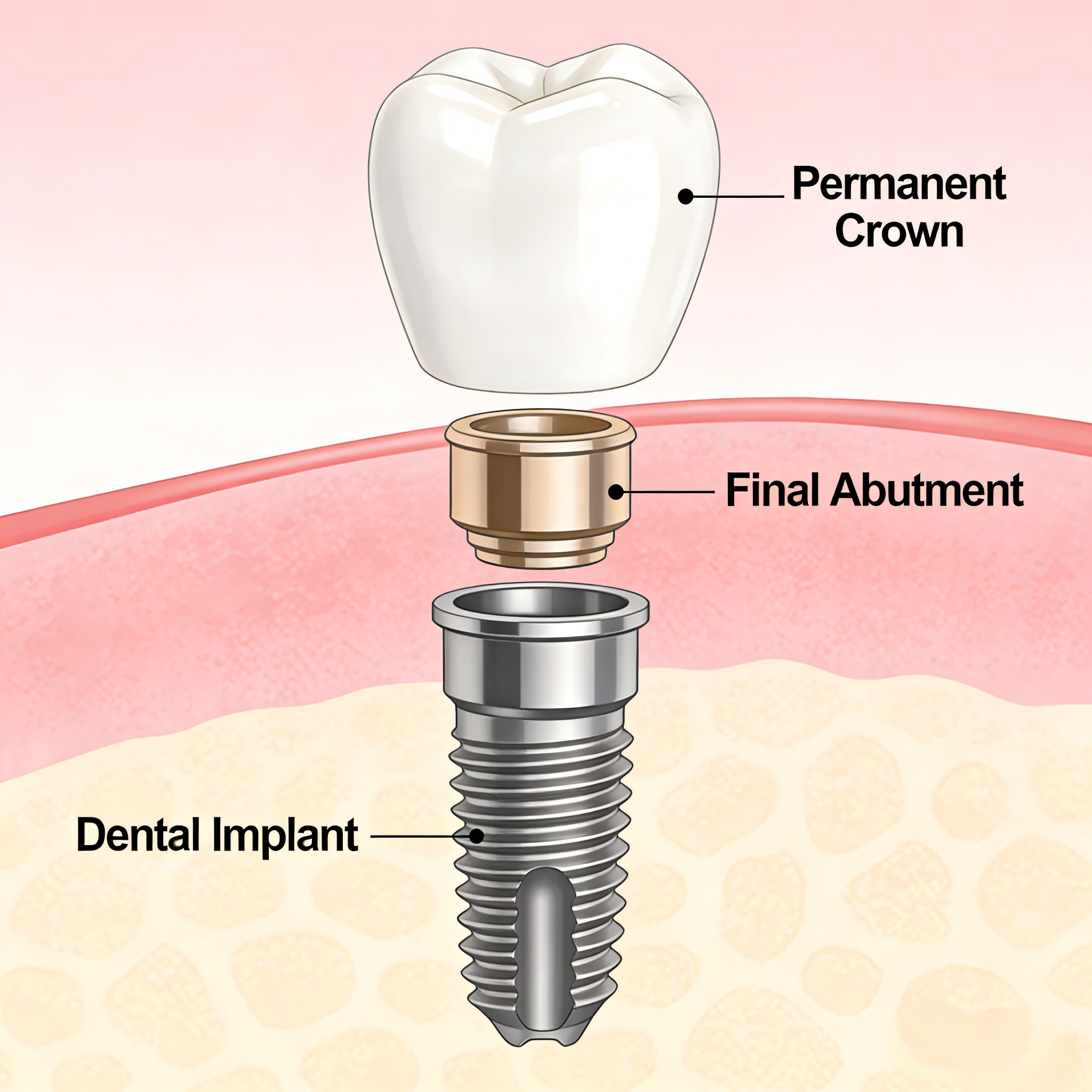
Based on clinical uses, shapes, and customization levels, dental implant abutments are mainly divided into the following categories, each with specific application scenarios to accurately meet different implant needs.
Also known as a healing cap, it is a temporary abutment used to guide the healing and shaping of gingival tissue after implant placement. Its main function is to form a stable soft tissue cuff between the implant and the gums, creating favorable conditions for the subsequent installation of the restoration, while protecting the threads on top of the implant to prevent soft tissue ingrowth.
Application scenario: The healing phase after implant placement, usually replaced with a temporary or final abutment 2-4 weeks after surgery.
It is used for temporary restoration in the later stage of implant healing and before the completion of the final restoration. It can support a temporary crown, maintain gingival shape to avoid collapse, and allow patients to chew normally and maintain aesthetics during the restoration period. Temporary abutments are usually prefabricated and can be easily adjusted according to the patient’s oral conditions.
Also referred to as a permanent abutment, it is a core component used with final restorations (crowns, bridges). Its material, shape, and angle are precisely designed to ensure a perfect fit with both the implant and the restoration, transmit occlusal force, and guarantee the long-term stability of the dental implant.
Comparison between healing and final abutments: Healing abutments focus on "guiding healing" and are for temporary use; final abutments focus on "long-term support" and are for permanent use, with different material and precision requirements.
Custom abutments are tailored through digital scanning and CAD/CAM technology based on the patient’s oral anatomy, implant position, and restoration needs. They can accurately adapt to the patient’s specific conditions, solve issues such as implant angle deviation and irregular gingival shape, and enhance the aesthetics and fit of the restoration.
Also known as a connected multi-unit abutment, it is used for bridge restorations of multiple dental implants. It can adjust angle and height to resolve positional deviations between multiple implants, ensuring the stability and aesthetics of the bridge restoration. It is often used in full-mouth implants, half-mouth implants, and other scenarios.
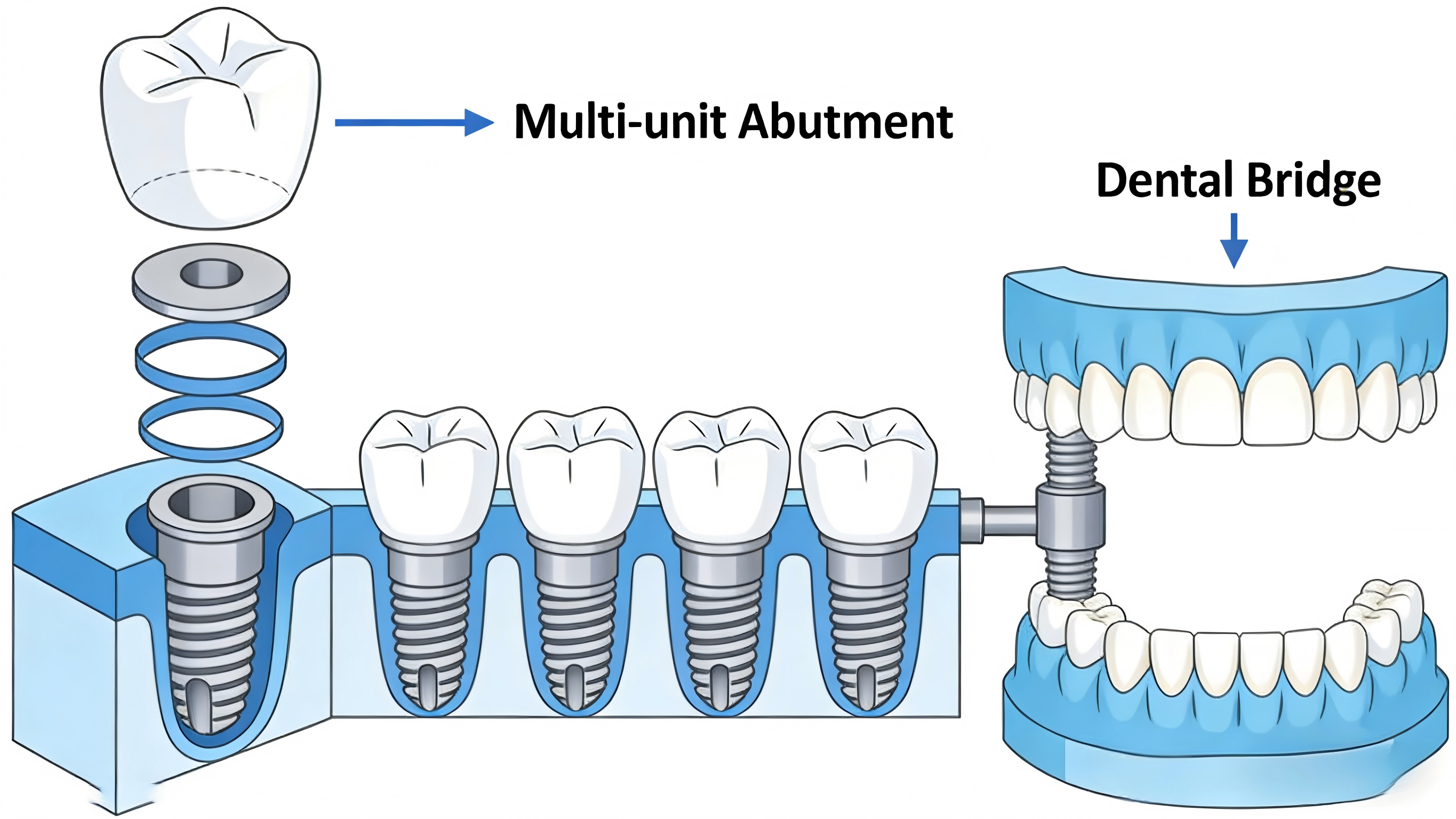
Also called an angled abutment, its screw channel is designed at an angle, making it suitable for scenarios where the implant placement angle is significantly deviated and a straight abutment cannot be used. It avoids conflict between the screw and the restoration, ensures a tight connection between the abutment and the implant, and improves restoration stability.
Selecting the right abutment requires considering various factors such as the patient’s oral conditions, implant type, and restoration needs to avoid blind selection that may lead to implant failure or shortened service life.
If the implant placement angle is significantly deviated, an angulated screw channel abutment should be selected; if the implant is placed deeply or the gums are thick, a heightened abutment is needed to ensure the restoration coordinates with adjacent teeth.
For patients with thin, irregular gums, a custom abutment is recommended to accurately fit the gingival contour; if gingival healing is poor, a healing abutment should first be used to guide soft tissue repair before replacing it with another abutment.
Common abutment materials include titanium alloy and zirconia. Among them, titanium alloy (such as Grade 4 medical titanium) has excellent biocompatibility and high strength, making it the most commonly used material in clinical practice; zirconia has high aesthetics, making it suitable for anterior tooth restoration as it can match the color of natural teeth.
The installation, maintenance, and supporting operations of the abutment directly affect the long-term effect of dental implants. Below are the key points to focus on in clinical practice.
The precise production of abutments relies on accurate impressions or digital scanning. Common impression methods are divided into open-tray and closed-tray impressions: open-tray impressions offer high precision and are suitable for custom and multi-unit abutments; closed-tray impressions are easy to operate and suitable for conventional straight abutments.
A scan body is required for digital scanning to accurately obtain the 3D data of the abutment; an impression coping is needed during the impression process to protect the top structure of the abutment and ensure impression accuracy.
Abutments are fixed to implants with dental implant screws. During installation, appropriate torque should be controlled to avoid implant damage caused by loose or over-tight screws; cover screws are used after implant placement and before abutment installation to protect the internal threads of the implant.
After surgery, the tightness of the abutment screws should be checked regularly, and good oral hygiene should be maintained to prevent bacterial growth around the abutment, which could lead to dental implant infection.
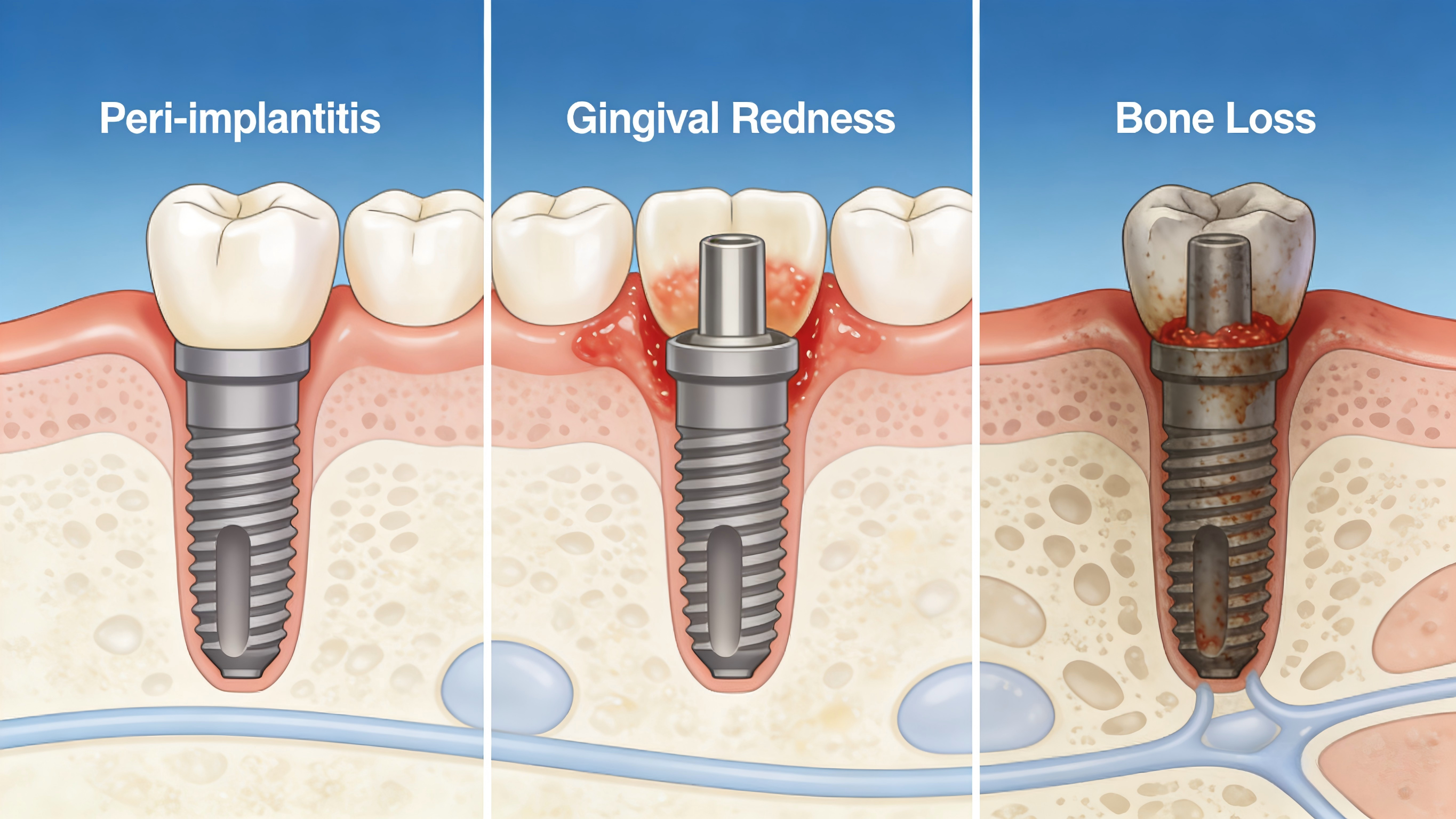
A common complication related to abutments is peri-implantitis, mainly caused by loose connections between the abutment and the implant, as well as inadequate oral hygiene. It is characterized by gingival swelling, bleeding, and bone resorption. Preventive measures include: selecting a precisely fitted abutment, standardizing installation operations, guiding patients to maintain good postoperative oral hygiene, and conducting regular re-examinations.
Combined with the abutment types, selection methods, and key clinical operation points introduced earlier, the following 5 high-frequency questions are sorted out to address common puzzles for dental practitioners and clinical practice, providing reference for clinical work.
Most dental implant abutments and implants are made of titanium alloy, a non-magnetic metal that does not affect magnetic resonance imaging (MRI) scans or produce artifacts. If the abutment or restoration is made of magnetic materials such as stainless steel, it may affect scan results. It is recommended to choose titanium alloy materials (titanium alloy has been mentioned earlier as a commonly used high-quality material for abutments).
Based on the key factors for abutment selection mentioned earlier, prioritize abutments produced by regular implant manufacturers to ensure compatibility with the implant. Then, select the appropriate abutment type and material according to the patient’s oral conditions, implant angle, and restoration needs. For complex oral conditions, custom abutments can be used to further improve restoration results.
The service life of an abutment is usually 10-15 years, depending on the abutment material mentioned earlier (titanium alloy abutments have a longer service life), installation accuracy, and the patient’s oral maintenance. If oral hygiene is inadequate and peri-implantitis (a common complication mentioned earlier) occurs, the service life of the abutment will be significantly shortened. Regular re-examinations and maintenance are recommended.
As introduced earlier, the biggest advantage of custom abutments is better adaptability. They can be precisely customized according to the patient’s oral anatomy, implant angle, and gingival shape, better solving issues such as implant angle deviation and irregular gingival contour, and enhancing the aesthetics and fit of the restoration. Conventional prefabricated abutments are easy to operate and low in cost but have limited adaptability, making them more suitable for patients with relatively regular oral conditions who do not require special adaptation.
Abutment loosening is mostly caused by improper screw fixation (poor torque control), bone resorption around the implant, or poor fit between the abutment and the implant, as mentioned earlier. If loosening is found, seek medical attention promptly for a doctor to check the cause: if only the screws are loose, re-tighten them and adjust the torque; if there is bone resorption or fit issues, the abutment should be replaced or bone repair should be performed to avoid further damage to the implant.
The dental implant abutment is a core component of dental implant restoration. With various types and uses, selecting the right abutment requires considering factors such as the patient’s oral conditions, implant type, and restoration needs. Meanwhile, standardizing clinical operations and maintaining good postoperative care are essential to ensure the long-term stability and aesthetics of dental implants. This article covers the core information of various abutment types and clinical precautions, providing comprehensive reference for dental practitioners.
In clinical practice, choosing a reliable and adaptable abutment product is key to improving restoration results. Re-tech, a professional brand focusing on the field of dental implants, offers a full range of abutment products, including healing abutments, temporary abutments, custom abutments, and multi-unit abutments. Made of Grade 4 medical titanium, these abutments combine excellent biocompatibility and high strength, and are accurately compatible with various implant systems to meet the needs of different clinical scenarios. For more details about Re-tech’s abutment products, visit the official website: https://www.retechdental.com. to get professional product support and solutions.