![[slide:title]](/static/upload/other/20260512/1778551853592214.webp)
![[slide:title]](/static/upload/other/20260512/1778551954982306.webp)
Time:2026-10-12 Form:本站
The global dental implant component market has undergone structural expansion in recent years. Product offerings have extended from conventional basic restorative accessories into segmented categories including multi-unit complex restoration parts, full-process digital components, angled correction abutments, high-load dedicated components and aesthetic soft-tissue-specific accessories. Continuous product diversification, refined specifications and technological iteration have greatly broadened procurement options for distributors and large clinics, enabling them to cover more complex cases and high-end clinical scenarios.
Nevertheless, category expansion is not entirely beneficial. A richer product line brings heightened selection complexity, heavier inventory burdens, higher administrative costs, greater compatibility risks, mounting compliance pressure and elevated professional thresholds for in-house teams on the buyer side. Many purchasers have transitioned from the dilemma of “lacking usable products” to a new set of troubles: too many products, poor selection accuracy, inefficient management and unstable clinical performance. Starting from genuine industry pain points triggered by product proliferation, this article dissects six core procurement challenges, supply-demand mismatches and hurdles in tiered management. It also delivers actionable solutions to help distributors and large dental clinics build scalable, standardised and efficient procurement and management systems for implant components.
Early implant component systems were simple and rudimentary. General abutments, standard screws and basic impression accessories satisfied most clinical requirements with limited product types, unified specifications and straightforward selection. Current industry advancement has fuelled comprehensive segmentation of components, driven by three major transformations.
Wide implementation of intraoral scanning, CAD/CAM milling, digital surgical guides and virtual abutment design has given rise to high-precision new categories such as scan bodies, digital implant analogues, CAD/CAM abutment blanks and data adaptation bases, greatly expanding the traditional product matrix of components.
Ongoing upgrades in volume-based procurement policies extend coverage from single-tooth restorations to multi-tooth and full-arch rehabilitation. This pushes manufacturers to complete full-category, full-specification and full-scene component portfolios. While market product diversity improves dramatically, procurement and selection complexity rises correspondingly.
With product matrix growth, procurement risks no longer centre merely on catastrophic quality failures. Instead, they evolve into systematic issues covering management efficiency, selection precision, inventory structure, team competence, cost control and supply-demand alignment — operational pain points prevalent among 90% of buyers today.
Proliferating Categories Boost Selection Difficulty, Prone to Scenario Mismatch
Component selection once relied simply on experience. Today, accessories with different load grades, soft tissue heights, version parameters and digital adaptation specifications look highly similar yet serve entirely distinct clinical purposes. The sheer volume of SKUs easily confuses procurement staff between provisional/definitive, universal/specialised and regular/high-load parts. This causes two-way mismatches: applying low-cost generic components to sophisticated high-end cases, or wasting high-precision parts on basic procedures, directly harming clinical outcomes and investment efficiency.
Massive SKU Growth Triggers Imbalanced Inventory Structure
After component segmentation and iteration, a single implant system can generate hundreds of SKUs. In multi-system clinical environments, SKU quantity surges exponentially. Full stockpiling results in heavy capital tie-up and stagnant sales for niche specifications; minimal inventory leads to stockouts and interrupted treatment for special cases. Most buyers are trapped in an inventory dilemma: overstocking leads to unsold goods while understocking causes supply shortages.
Overlapping New-and-Old Iteration Sharpens Version Compatibility Confusion
Category expansion coincides with continuous version upgrades. New components, revised parameters and improved manufacturing processes launch constantly while legacy parts are phased out. Mixed circulation of old and new products in the marketplace makes it hard for buyers to quickly verify compatible versions. Misplacement of new and old components, mismatched system parameters and incorrect purchasing of revised models create hidden risks of clinical rework.
Disconnect Between Procurement and Clinical Teams Creates Supply-Demand Misalignment
Segmented product lines require strong clinical knowledge for accurate demand matching. Distributor procurement teams lack familiarity with clinical scenarios, and clinic purchasing personnel struggle to keep up with product iterations. This leads to procurement decisions decoupled from real end-user needs: insufficient replenishment for fast-moving specifications, repeated purchasing of niche items, redundant stocking of premium precision parts and chronic shortages of essential segmented components.
Widely Divergent Quality Tiers Complicate Standardised Screening
Market expansion attracts numerous small and medium manufacturers, resulting in stark quality differentiation across implant components. The same component type exists as generic commodity versions, standard precision variants, clinically optimised iterations and premium customised options with huge price gaps and inconsistent quality. Buyers struggle to establish unified screening criteria, caught between two pitfalls: costly failures from cheap inferior goods and losses caused by overpriced premium products.
Extensive Compliance Documentation Raises Barriers to Systematic Management
Full-category components require independent qualification certificates, test reports, digital parameters and compatibility instructions. More product categories translate to heavier workloads managing compliance files, technical documentation and version ledgers. Without systematic archiving and regular updates, documents may expire, mismatch product versions or go missing, jeopardising clinical compliance and customs clearance for cross-border trade.
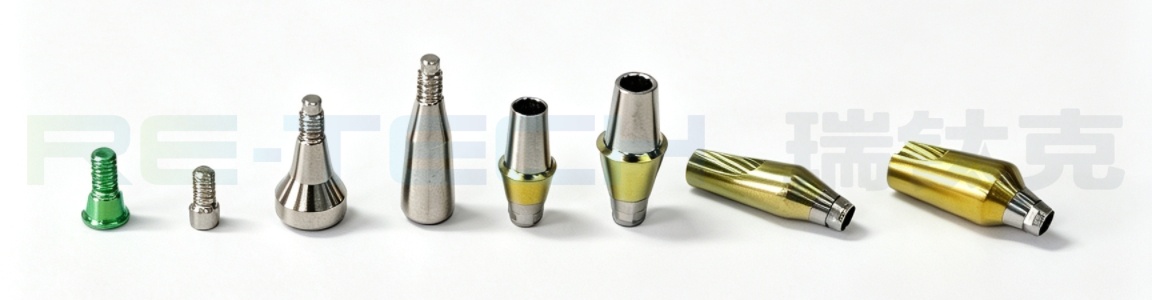
Enlarged product matrices have completely reshaped procurement logic. Traditional rough procurement methods are no longer suitable for today’s refined, full-category and fast-iterating market landscape.
| Procurement Dimension | Early Era with Limited Categories | Current Era of Full-Category Expansion |
| Selection Logic | Experience-based, universal fit, low entry threshold | Scenario-based selection, fine version segmentation, precise matching, high threshold |
| SKU Management | Streamlined SKUs, easy inventory control, low capital pressure | Massive SKUs, complex structure, prone to overstock and stockout |
| Compatibility Risk | Single version, extremely low cross-use risk | Mixed old and new iterations, drastically higher mismatch risk |
| Quality Framework | Homogenised market products, simple screening | Stratified quality levels requiring refined tiered screening |
| Team Requirements | No deep clinical knowledge needed; basic procurement staff suffice | Professional team with product, clinical, iteration and compliance expertise |
| Core Pain Points | Limited product range unable to cover complex cases | Product surplus, disorganised management, inaccurate selection, low efficiency |
For dental distributors, expanded product portfolios appear to enrich sales offerings yet substantially increase operational difficulty. Core pressures lie in three areas: channel distribution, customer education and inventory turnover.
Faced with abundant segmented components, clinics and dental laboratories struggle to rapidly identify suitable application scenarios, lengthening procurement decision cycles. Distributors spend excessive time on product education, selection guidance and version matching, pushing up pre-sales costs and reducing individual sales efficiency.
To satisfy one-stop purchasing demands from end customers, suppliers need to stock basic, precision, digital, high-load and aesthetic components. The total capital requirement for inventory rises sharply. Small and medium distributors with limited funds cannot deploy the full product portfolio and risk losing major clients; large-scale stocking creates combined pressure on capital turnover and unsold inventory risk.
Continuous product updates and version upgrades render older components obsolete quickly. If distributors fall behind stocking schedules, their inventory may carry outdated versions incompatible with new implant fixtures, forcing markdown liquidation and losses, and amplifying inventory depreciation risks.
Large chain clinics rely on full-component portfolios to cover all case types, yet product proliferation introduces new hurdles for in-hospital management and treatment standardisation.
Independent selection across multiple branches and clinician teams may result in different component specifications and quality tiers being used for comparable cases. Variable restorative outcomes damage the chain brand’s treatment standardisation and increase quality-control burdens.
Digital components, angled correction abutments and high-load dedicated parts operate very differently from conventional accessories. A broad product range raises clinicians’ learning curves. Insufficient proficiency may trigger operational errors and compatibility deviations that compromise restoration results.
High-priced, specially specified niche precision components suffer from arbitrary requisition, idle waste and loss without refined issuance management, gradually driving up the clinic’s consumable operating costs.
The core strategy for coping with component proliferation is not to shrink the product portfolio, but to establish a refined procurement and management system with tiered classification, scenario grouping and periodic planning, turning complexity into order.
Classify all components into four tiers: basic universal, standard definitive, high-load aesthetic and digital precision. Strictly assign each tier to provisional restoration, conventional restoration, complex rehabilitation and digital restoration scenarios respectively, with fixed selection rules to prevent random interchange and lower compatibility errors and clinical risks at source.
Maintain sufficient stock for high-frequency universal components, replenish medium-frequency precision parts on demand, utilise manufacturer warehousing for low-frequency niche SKUs, and dynamically liquidate outdated iterated products. This four-tier inventory model resolves the dilemma of overstocking and stockouts, balancing clinical treatment demands and capital pressure.
Partner with qualified manufacturers to build a cross-brand, cross-series, cross-year compatibility ledger, synchronising real-time updates of product iterations, model replacements and legacy product discontinuation. Unified compatibility standards are rolled out to both procurement and clinical teams to avoid mismatching between old and new versions.
Set fixed criteria for supplier qualification, quality inspection, compliance and iteration capability. Restrain uncontrolled addition of low-cost no-brand products to ensure consistent quality tiers within clinics and sales channels, cutting screening costs and after-sales risks.

Q1: As component categories multiply, which procurement link is most likely to get out of control?
A: SKU structural imbalance and scenario selection failures. Most buyers only track replenishment quantity rather than category structure and applicable scenarios, resulting in shortages of fast-selling items, backlog of niche SKUs and mismatches between components and clinical cases. This represents the biggest management loophole brought by category expansion.
Q2: How can small and medium distributors ease full-category stocking pressure?
A: Full SKU stocking is unnecessary. Adopt an asset-light model: self-stock mainstream high-volume items while letting manufacturers store niche segmented products. This meets customer one-stop procurement demands while greatly reducing inventory capital and unsold risks.
Q3: How do chain clinics resolve selection confusion across many categories and clinicians?
A: Implement in-house unified SOP for component selection, specifying dedicated component specifications for cases with varying occlusion and soft tissue conditions. Standardised rules for all staff deliver homogenised treatment and consistent quality control.
Q4: How to prevent inventory depreciation caused by new product iterations?
A: Establish long-term cooperation with original manufacturers featuring continuous R&D iteration capacity. Receive advance notice of product updates, dynamically adjust stocking structure and promptly liquidate discontinued legacy items to minimise losses from inventory depreciation.
Q5: What constitutes the core procurement competitiveness in the category expansion era?
A: It is no longer the ability to source goods at low prices, but systematic operational capabilities: refined category management, accurate scenario matching, inventory structure optimisation and tiered quality control. These are key differentiators to outperform competitors.
Continuous expansion of implant component categories is an inevitable outcome of industry refinement, digitalisation and professional advancement. It broadens the boundaries of clinical restoration and enriches channel product portfolios, yet completely overturns traditional rough procurement and management models. The primary procurement challenge today is not product shortage, but a series of systematic problems stemming from product surplus: selection chaos, inventory imbalance, misaligned iterations, complex administration and reduced efficiency.
For dental distributors, the key to escaping low-price competition and overcoming capital and inventory pressure lies in shifting from “full-category stocking” to “structured refined operation”. For large chain clinics, the core of lifting treatment standardisation and cutting rework and wastage is building a tiered, scenario-based component selection and control system.
In this new industry phase marked by constant product iteration and expanding categories, only enterprises that adapt to market changes, deploy standardised procurement management systems and leverage reliable, innovation-driven factory resources can convert complex product matrices into market competitiveness, achieving multiple improvements in procurement efficiency, clinical quality and operating profits.