![[slide:title]](/static/upload/other/20260512/1778551853592214.webp)
![[slide:title]](/static/upload/other/20260512/1778551954982306.webp)
Time:2026-06-23 Form:本站
Why Supply Chain Stability Matters: The Hidden Competitive Advantage in Dental Implant Manufacturing
The dental implant industry has changed dramatically over the past decade. Manufacturers are producing implants with higher precision than ever before, distributors are expanding into new markets, and clinicians expect shorter lead times without sacrificing quality.
Yet many companies continue to focus almost entirely on one factor when selecting suppliers: price.
Although pricing is important, experienced procurement managers know that the real cost of an implant is not determined by its purchase price. It is determined by whether the supplier can consistently deliver the same quality, at the promised time, with complete documentation and without interruption.
This is where supply chain stability becomes one of the most valuable—but often overlooked—competitive advantages.
A stable supply chain does much more than prevent delivery delays. It protects manufacturing schedules, reduces quality variation, supports regulatory compliance, minimizes inventory risk, and strengthens customer confidence.
In today's global market, supply chain stability is no longer simply an operational issue. It has become a strategic asset.
This article explores why supply chain stability matters specifically in dental implant manufacturing, what factors influence it, and how buyers can evaluate suppliers beyond price alone.
Many people assume supply chain stability simply means receiving products on time.
In reality, it is much broader.
A stable supply chain is the ability of a manufacturer to continuously provide consistent products despite market fluctuations, raw material shortages, transportation disruptions, or unexpected demand increases.
For dental implant manufacturers, stability usually involves five interconnected areas:
l Stable medical-grade raw material supply
l Consistent production capacity
l Reliable quality control systems
l Complete material traceability
l Predictable logistics and inventory management
These elements work together. Weakness in any single area can affect the entire production process.
For example, even the most advanced CNC machining center cannot produce qualified implants if medical-grade titanium is unavailable or inconsistent.
Likewise, a factory with excellent materials may still fail customers if international shipments become unreliable or production scheduling lacks flexibility.
Supply chain stability is therefore not a single capability—it is the result of many well-managed systems working together.
Several global events have fundamentally changed the way medical manufacturers evaluate suppliers.
During recent years, industries experienced:
l Raw material shortages
l Shipping container shortages
l Port congestion
l Rising freight costs
l Energy price fluctuations
l Regional trade restrictions
l Longer production lead times
Many dental companies discovered that suppliers offering the lowest prices were often the first to experience production delays.
Meanwhile, suppliers with stronger supply chains maintained deliveries with minimal disruption.
This experience changed purchasing priorities.
Today, procurement teams increasingly evaluate supplier resilience instead of focusing only on unit price.
The question has shifted from:
"Who offers the cheapest implant?"
to
"Who can reliably support our business for the next five years?"
Supply chain instability creates costs that rarely appear on quotations.
Instead, these costs accumulate gradually throughout the business.
Consider several common scenarios.
A distributor launches a new implant system but receives delayed deliveries.
Clinics begin postponing surgeries.
Sales representatives lose credibility.
Customers switch brands.
The immediate problem may appear to be logistics, but the long-term consequence is lost market share.
Now consider another example.
A manufacturer changes titanium suppliers because of lower pricing.
Although the material still meets specification, slight differences in microstructure require machining parameter adjustments.
Surface treatment results become less consistent.
Quality inspections become more frequent.
Scrap rates increase.
Production efficiency declines.
Again, the material itself may not be defective.
The instability introduces hidden operational costs.
Many companies underestimate these indirect losses because they are spread across production, purchasing, logistics, inventory, and customer service departments.
Product quality does not begin with machining.
It begins long before production starts.
Every dental implant is influenced by upstream factors including:
l Metal purity
l Melting technology
l Forging consistency
l Heat treatment
l Storage conditions
l Material inspection
l Documentation accuracy
When these upstream variables remain stable, downstream manufacturing becomes much more predictable.
Machine parameters remain consistent.
Surface treatments produce repeatable results.
Inspection standards become easier to maintain.
Operators gain confidence in the process.
The final implant benefits from every stable step that came before.
This explains why experienced implant manufacturers often maintain long-term partnerships with trusted raw material suppliers instead of constantly switching vendors for small price reductions.
Consistency frequently creates greater value than temporary savings.
The following comparison illustrates why procurement strategies are evolving.
Low-Cost Purchasing | Stable Supply Chain Strategy |
Lowest initial price | Lowest total ownership cost |
Frequent supplier changes | Long-term partnerships |
Variable lead times | Predictable delivery schedules |
Higher inventory risk | Optimized inventory planning |
More quality variation | Consistent production quality |
Higher emergency purchasing costs | Lower operational risk |
Difficult forecasting | Better production planning |
Reactive management | Proactive risk control |
For businesses manufacturing medical devices, long-term stability usually produces greater financial benefits than chasing the lowest quotation for every purchase.
Every implant begins with raw material.
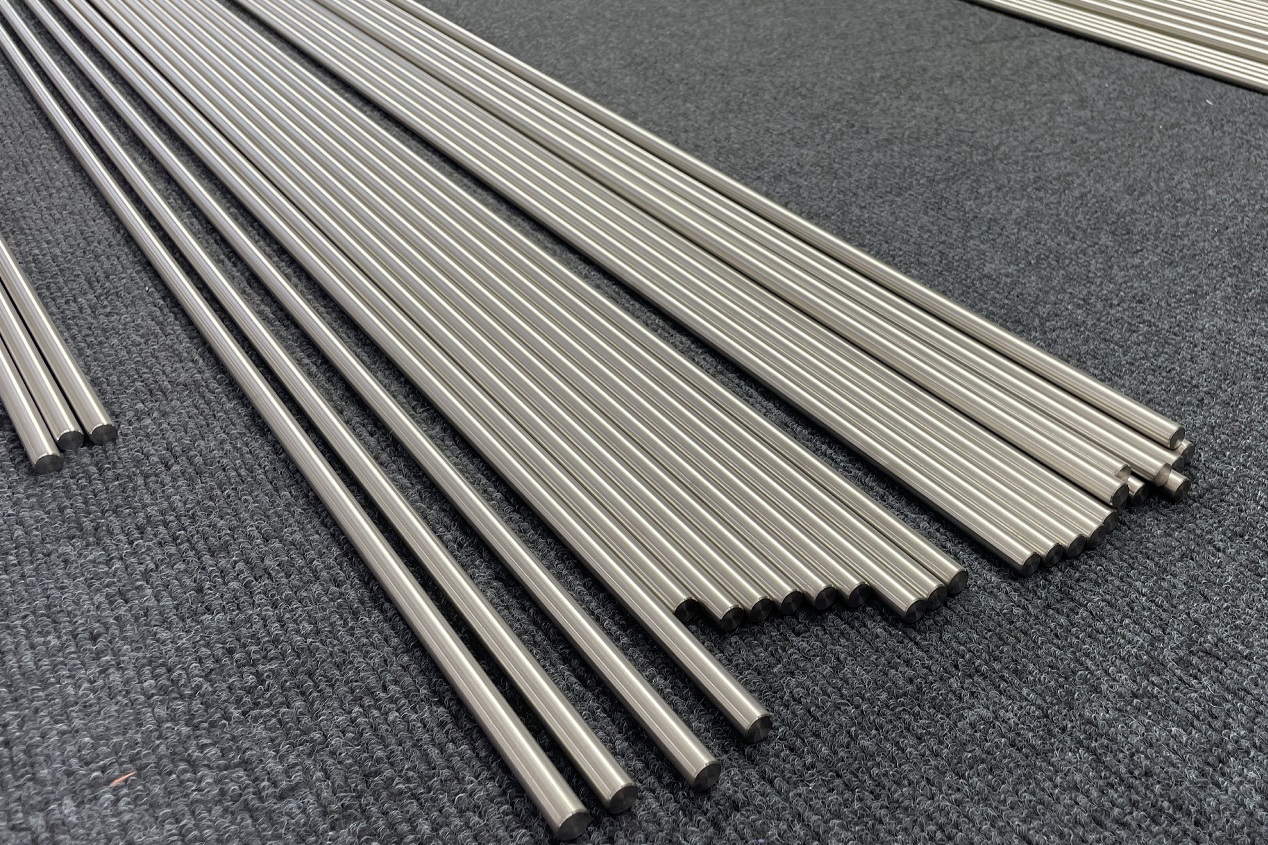
Titanium, titanium alloys, cobalt-chromium alloys, stainless steel, and specialty alloys must be consistently available with certified chemical composition and mechanical properties.
A reliable supplier does more than deliver metal.
They maintain inventory planning, multiple procurement channels, quality verification procedures, and production scheduling that minimizes disruption.
Factories serving the medical industry often establish strategic inventories specifically because they understand the importance of uninterrupted manufacturing.
Capacity planning is often overlooked during supplier evaluation.
A factory may produce excellent samples but struggle when order volumes increase.
This becomes particularly problematic when distributors expand rapidly.
A stable manufacturer should have:
l Flexible production scheduling
l Multiple machining resources
l Preventive equipment maintenance
l Backup manufacturing capability
l Skilled technical personnel
Capacity stability reduces delivery fluctuations during periods of rapid market growth.
Medical products require repeatability.
Every production batch should meet the same quality standards regardless of production date.
Consistency depends on standardized operating procedures, calibrated inspection equipment, process validation, employee training, and continuous monitoring.
Quality systems are therefore an essential component of supply chain stability rather than an independent department.
Medical device regulations increasingly emphasize traceability.
Manufacturers must know:
l Where raw materials originated
l Which production batch was used
l Which inspections were completed
l Which customer received each shipment
Complete documentation enables faster investigations if quality issues arise and significantly reduces regulatory risk.
Modern traceability systems have become a competitive advantage rather than merely a compliance requirement.
Even perfect manufacturing cannot compensate for poor logistics.
International shipping continues to face occasional disruptions.
Successful suppliers prepare for uncertainty through inventory planning, diversified shipping options, safety stock, and realistic production scheduling instead of relying on optimistic delivery promises.
Customers generally prefer honest lead times over unrealistic commitments followed by delays.
Experienced OEM buyers rarely begin supplier qualification by asking for a quotation.
Instead, they typically ask questions such as:
l Where does your titanium come from?
l How many approved material suppliers do you maintain?
l Can you provide complete material certificates?
l What is your average production lead time?
l How do you manage sudden increases in demand?
l What is your batch traceability process?
l How do you prevent production interruptions?
These questions reveal an important reality.
Professional buyers understand that reliable manufacturing depends more on operational systems than on pricing alone.
For OEM projects, especially those involving customized implant systems, changing suppliers midway through development can introduce significant technical, regulatory, and commercial challenges. As a result, buyers often prioritize long-term manufacturing stability over short-term cost savings.
When discussing dental implant quality, conversations often focus on CNC machining accuracy, implant design, or surface treatment technologies such as SLA or anodization. While these processes are certainly important, they all depend on something much more fundamental—the quality and consistency of the raw material.
A high-precision machine cannot compensate for unstable material chemistry. Likewise, even the best-designed implant may experience manufacturing inconsistencies if every batch of titanium behaves differently during machining or surface processing.
This is why experienced implant manufacturers spend considerable time qualifying their material suppliers.
Medical-grade materials are expected to provide much more than compliance with a specification sheet. Buyers increasingly look for suppliers that can offer:
l Stable chemical composition across production batches
l Consistent mechanical properties
l Complete mill certificates and traceability records
l Reliable delivery schedules
l Long-term production capability
l Support for international regulatory documentation
These factors reduce uncertainty throughout the manufacturing process.
For example, many implant manufacturers today prefer working with specialized suppliers that focus on medical-grade metals rather than general industrial materials. Materials such as commercially pure titanium Grade 4, Ti-6Al-4V ELI (Grade 23), 316LVM stainless steel, CoCrMo alloys, MP35N, and other implant-grade alloys require strict process control to ensure consistent performance in medical applications.
RE-TECH, for instance, supplies a range of medical metal materials used in dental implants, orthopedic implants, surgical instruments, and precision medical components. Rather than positioning materials as commodities, the company emphasizes consistency, documented traceability, and stable manufacturing support—qualities that many OEM manufacturers increasingly value when building long-term supply chains.
This approach reflects a broader trend across the medical manufacturing industry: reliability has become as important as material performance itself.

Medical devices operate within one of the world's most highly regulated industries.
Whether products are sold in Europe, North America, the Middle East, Southeast Asia, or Latin America, manufacturers are expected to demonstrate consistent quality management and documented production controls.
A stable supply chain makes regulatory compliance significantly easier.
For example, stable suppliers are generally able to provide:
l Material certificates
l Heat numbers
l Batch records
l Inspection reports
l Mechanical property reports
l Chemical analysis reports
l Production traceability documentation
When auditors request documentation months or even years after production, organized suppliers can retrieve these records quickly.
By contrast, manufacturers that frequently switch suppliers often face documentation gaps, inconsistent certifications, or unnecessary delays during audits.
For companies pursuing ISO 13485 certification, CE marking, FDA registration, or local regulatory approvals, supply chain stability becomes part of the overall quality management system rather than simply a purchasing concern.

Many procurement teams still compare suppliers using quotations and delivery promises alone.
However, experienced buyers typically conduct a much broader evaluation.
Below are several questions worth asking before selecting a long-term manufacturing partner.
Understanding the origin of medical-grade metals helps buyers evaluate consistency and long-term availability.
Ask whether the supplier relies on a single source or maintains multiple qualified material channels.
Multiple qualified sources often reduce supply interruption risks while maintaining consistent specifications.
A supplier operating entirely on make-to-order production may struggle when customer demand suddenly increases.
Strategic inventory planning often indicates stronger operational maturity.
This does not necessarily mean maintaining excessive stock but rather having an organized inventory strategy based on production forecasts and customer demand.
Business growth rarely follows a straight line.
Distributors may suddenly secure new tenders.
Implant brands may launch new product lines.
OEM projects may require larger production volumes.
A stable supplier should be able to explain how additional capacity can be added without compromising product quality or delivery performance.
Traceability should extend from raw material receipt through machining, inspection, packaging, and shipment.
Buyers should confirm whether production records remain accessible throughout the product lifecycle.
Good traceability protects both manufacturers and distributors when investigating any future quality concerns.
No supply chain is completely immune to disruption.
The real question is how suppliers respond.
Professional manufacturers usually prepare contingency plans covering:
l Alternative raw material sourcing
l Backup equipment
l Secondary logistics providers
l Production scheduling adjustments
l Safety inventory policies
Companies with these systems recover much faster from unexpected events.
One interesting trend in the dental implant industry is the growing preference for long-term supplier relationships.
Instead of requesting quotations from new suppliers for every order, many manufacturers now establish strategic partnerships.
This approach creates several advantages.
The supplier develops a deeper understanding of product requirements.
Quality expectations become standardized.
Communication becomes more efficient.
Engineering improvements can be implemented more quickly.
Production planning becomes more predictable.
Most importantly, both companies begin investing in each other's long-term success rather than negotiating every transaction independently.
This collaborative approach often reduces costs over time despite slightly higher initial purchasing prices.
Supply chains continue to evolve rapidly.
Several emerging trends are expected to influence the dental implant industry over the next decade.
Rather than depending on one country or one supplier, manufacturers are increasingly building diversified sourcing networks.
This strategy reduces geopolitical risks and improves resilience during market disruptions.
Digital manufacturing systems continue replacing manual documentation.
Barcode systems, ERP integration, MES platforms, and digital quality records improve production visibility while simplifying regulatory compliance.
Future implant manufacturing will likely rely even more heavily on real-time production monitoring.
Manufacturers are moving away from maintaining excessive inventory while also avoiding dangerously low stock levels.
Instead, companies are using demand forecasting and production analytics to optimize inventory throughout the supply chain.
Better data leads to more efficient purchasing decisions.
Rather than acting as independent businesses, material suppliers and implant manufacturers increasingly collaborate on product development, quality improvement, and production optimization.
This closer relationship reduces technical risks and accelerates innovation.
Because it directly affects product quality, delivery reliability, production planning, regulatory compliance, and customer satisfaction. Stable supply chains reduce operational risks throughout manufacturing.
Yes.
Consistent raw materials, standardized production processes, and reliable quality control all contribute to producing implants with repeatable performance.
Common causes include raw material shortages, transportation disruptions, supplier changes, inaccurate demand forecasting, limited production capacity, and geopolitical events.
By qualifying multiple suppliers, improving inventory planning, strengthening traceability systems, investing in production capacity, and building long-term supplier relationships.
Not necessarily.
Lower purchasing prices may increase hidden costs through delayed deliveries, inconsistent quality, emergency purchasing, production interruptions, and customer dissatisfaction.
Medical-grade titanium, titanium alloys, cobalt-chromium alloys, 316LVM stainless steel, MP35N, and other implant-grade alloys are among the most critical materials requiring stable sourcing.
Traceability allows manufacturers to identify materials, production batches, inspections, and shipments quickly. It simplifies regulatory compliance and reduces investigation time if quality issues occur.
OEM projects often involve long production cycles and strict quality requirements. Reliable supply chains reduce manufacturing risks and ensure consistent support throughout the product lifecycle.
Yes.
Although stable suppliers may not always offer the lowest unit price, they often reduce total operating costs by minimizing delays, scrap, production interruptions, and emergency purchases.
Beyond product pricing, distributors should examine material sourcing, manufacturing capability, quality systems, inventory management, traceability, delivery performance, technical support, and long-term production capacity.
Supply chain stability is no longer a background operational issue—it has become one of the defining characteristics of successful dental implant manufacturers.
As global markets become more interconnected and regulatory expectations continue to rise, businesses can no longer afford to evaluate suppliers based solely on pricing or production capacity. The ability to deliver consistent materials, maintain predictable lead times, provide complete documentation, and adapt to changing market conditions has become a key measure of manufacturing excellence.
For implant brands, distributors, and OEM partners, a stable supply chain translates into fewer production interruptions, stronger customer confidence, lower operational risk, and more sustainable long-term growth.
Perhaps the most important lesson is that supply chain stability begins long before an implant reaches the production line. It starts with dependable raw materials, disciplined quality systems, transparent traceability, and reliable partnerships built over time.
Companies that invest in these foundations are often better positioned to navigate market uncertainty while maintaining consistent product quality. Material suppliers that specialize in medical-grade metals—such as commercially pure titanium, Ti-6Al-4V ELI, CoCrMo alloys, and 316LVM stainless steel—also play an essential role in strengthening this foundation. By providing stable material quality, documented traceability, and dependable delivery, suppliers like RE-TECH contribute to a more resilient manufacturing ecosystem without becoming the center of the story.
Ultimately, in an industry where precision, reliability, and patient safety are paramount, supply chain stability is not simply about moving products efficiently. It is about creating the confidence that every production batch, every shipment, and every partnership can support sustainable success for years to come.