![[slide:title]](/static/upload/other/20260512/1778551853592214.webp)
![[slide:title]](/static/upload/other/20260512/1778551954982306.webp)
Time:2026-06-22 Form:本站
How to Audit a Dental Implant Factory: A Practical Guide for OEM Buyers and Global Distributors
Finding a reliable dental implant manufacturer is no longer as simple as comparing prices or checking whether a supplier has an ISO certificate. As the global dental implant market continues to grow, more distributors, private-label brands, and OEM buyers are looking for manufacturing partners that can deliver consistent quality, regulatory compliance, and long-term stability.
This is where factory audits become essential.
A factory audit is not about trying to catch a supplier making mistakes. Instead, it is a systematic way to understand how a company manages quality, controls manufacturing processes, and reduces production risks before a long-term partnership begins.
Many first-time buyers make the same mistake. They visit a factory, see rows of modern CNC machines, take photos in a clean reception area, and leave convinced they have found an excellent supplier. Unfortunately, attractive facilities do not always reflect manufacturing capability. Some factories invest heavily in equipment but lack process control, while others operate with fewer machines but maintain outstanding production consistency.
An effective audit goes far beyond checking certificates on the wall. It focuses on how quality is built into every production step—from incoming raw materials to final packaging.
This guide explains how experienced OEM buyers evaluate dental implant factories, what documents deserve the closest attention, and which warning signs should never be ignored.
Certifications such as ISO 13485, ISO 9001, CE, or FDA registrations provide confidence that a manufacturer has implemented a quality management system. They are important, but they are only the beginning.
A certificate tells you that a system exists.
A factory audit tells you whether that system actually works.
Imagine two manufacturers.
Both hold ISO 13485 certification.
Both export products internationally.
Both own modern machining equipment.
At first glance, they appear equally qualified.
However, during an audit, significant differences emerge.
Factory A cannot locate inspection records from six months ago. Production operators cannot explain how nonconforming products are handled. Calibration stickers on measuring equipment have expired.
Factory B immediately provides batch records, raw material certificates, calibration reports, employee training files, and corrective action reports. Every document matches actual production activities.
Although both companies possess identical certifications, their manufacturing maturity is very different.
A professional audit reveals these differences before they become costly problems.
For distributors building their own implant brand, this distinction can determine whether future customer complaints remain isolated incidents or develop into serious reputation risks.

The quality of an audit depends largely on the preparation completed before arriving at the factory.
Experienced purchasing teams rarely arrive with a generic checklist. Instead, they gather as much information as possible in advance.
Useful documents include:
l Company profile
l Manufacturing process overview
l Product catalog
l ISO certificates
l Material standards
l Export markets
l Regulatory approvals
l Organization chart
l Quality manual
Reviewing these documents beforehand allows buyers to spend more time verifying production instead of collecting basic information during the visit.
It is also important to understand what products the factory actually manufactures.
A company producing implant fixtures requires different technical capabilities than one specializing in surgical instruments or prosthetic components.
The audit should always reflect the products being purchased.
Every successful dental implant begins with high-quality raw material.
No amount of precision machining can compensate for poor material quality.
When auditing a factory, the first question should not be:
"Which titanium grade do you use?"
Instead, ask:
"How do you verify every incoming material batch?"
Reliable manufacturers should maintain complete documentation for every material shipment, including:
l Mill Test Certificates
l Chemical composition reports
l Mechanical property reports
l Heat numbers
l Supplier information
l Incoming inspection records
For titanium implants, buyers should confirm compliance with recognized standards such as ASTM F67 or ASTM F136, depending on the material being used.
Material traceability deserves special attention.
A finished implant should always be traceable back to the original titanium bar used during production.
If a manufacturer cannot establish this connection, future investigations become extremely difficult if product issues arise.
Another important observation involves storage conditions.
Titanium bars should be clearly identified, organized by batch number, and protected from contamination.
Mixed storage without proper identification increases the possibility of production errors.
Some factories also perform independent incoming inspections rather than relying solely on supplier certificates. These additional inspections demonstrate a stronger commitment to quality assurance.
One of the easiest ways to evaluate manufacturing maturity is simply to ask:
"Can you explain your complete production process?"
Well-managed factories usually present a standardized manufacturing flow that every employee understands.
A typical dental implant production sequence may include:
Raw Material Inspection
↓
Cutting
↓
CNC Turning
↓
Thread Machining
↓
Milling
↓
Deburring
↓
Ultrasonic Cleaning
↓
Surface Treatment
↓
Inspection
↓
Laser Marking
↓
Packaging
↓
Final Release
While this process appears straightforward, each stage should include documented quality controls.
Ask who approves each process before production continues.
Ask what happens if defects are discovered.
Ask whether production data is recorded electronically or manually.
The objective is not to memorize the process but to understand whether quality is monitored continuously rather than only at final inspection.
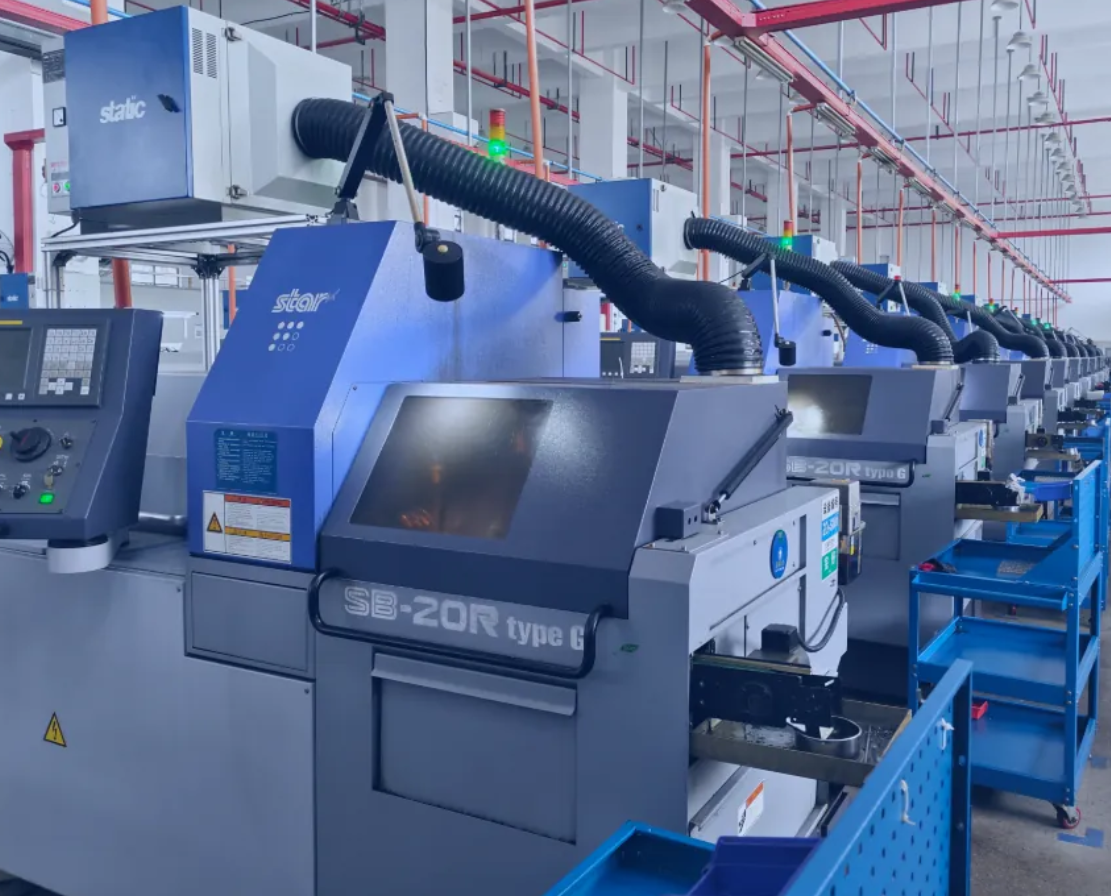
Many factory tours emphasize machine brands.
Visitors often hear names such as Citizen, Star, Tsugami, or DMG MORI.
Although advanced equipment certainly helps, machine brands alone do not guarantee manufacturing precision.
The more important questions include:
How frequently are cutting tools replaced?
How is dimensional stability monitored during production?
What statistical methods are used for process control?
How often are machines calibrated?
How are machining programs validated before production begins?
Experienced manufacturers continuously monitor dimensions instead of waiting until production has finished.
For example, operators may inspect critical dimensions every fixed number of parts to detect tool wear before tolerances drift outside specifications.
This proactive approach significantly reduces scrap rates while improving product consistency.
Another useful observation concerns machine maintenance.
Well-maintained equipment usually reflects disciplined manufacturing management.
Maintenance schedules should be documented rather than performed only after equipment failures occur.
Surface treatment is one of the most technically sensitive stages in dental implant manufacturing.
Whether the factory uses SLA, RBM, anodizing, or another surface technology, consistency matters far more than simply having the equipment.
Instead of asking:
"What surface treatment do you use?"
Consider asking:
How do you verify surface roughness?
How frequently are process parameters monitored?
How do you prevent contamination?
How are chemicals controlled?
What happens if one production batch fails inspection?
Reliable manufacturers monitor every critical variable rather than assuming equipment always performs correctly.
Surface treatment should also be separated from unrelated production activities to minimize contamination risks.
Environmental cleanliness plays an important role in maintaining surface integrity before packaging.
Perhaps the most revealing part of any factory audit is observing how quality inspections are integrated throughout production.
Strong manufacturers do not rely on final inspection alone.
Instead, quality control occurs at multiple stages.
Incoming inspection verifies raw materials.
In-process inspection confirms machining accuracy.
Final inspection validates finished products.
Outgoing inspection ensures correct packaging and documentation before shipment.
Each inspection should produce records.
Inspection without documentation provides little evidence that quality requirements were actually met.
Ask to review actual inspection reports rather than sample templates.
Compare inspection results with production dates and batch numbers.
This simple cross-check often reveals whether documents are genuinely generated during production or prepared only for customer visits.
Modern factories may also use digital quality systems that improve record retrieval and reduce documentation errors.
Regardless of whether records are electronic or paper-based, consistency remains the most important factor.
Quality systems should support production—not exist only for external audits.
One of the biggest differences between an average manufacturer and an excellent one is traceability.
Many suppliers can provide a material certificate when asked. Far fewer can trace every finished implant back through each production stage with complete documentation.
A robust traceability system is essential because dental implants are medical devices. If a quality issue is discovered months or even years after shipment, the manufacturer should be able to identify exactly:
l Which raw material batch was used
l Which CNC machine produced the implant
l Which operator handled each process
l Which inspection reports approved the product
l Which cleaning and surface treatment batch it belonged to
l Which packaging lot it was assigned to
l Which customer received the shipment
Without this information, investigating customer complaints becomes extremely difficult.
During an audit, ask the factory to randomly select one finished implant and demonstrate its complete production history.
A mature manufacturer should be able to retrieve records within minutes rather than hours.
An example of a complete traceability flow looks like this:
Titanium Bar → Incoming Inspection → CNC Machining → Surface Treatment → Cleaning → Final Inspection → Laser Marking → Packaging → Shipment
Every stage should be linked by batch numbers or electronic records.
If documentation is incomplete at any point, traceability becomes unreliable.
For OEM customers, this level of transparency is particularly valuable because it reduces business risk. Even if quality problems occur, clear traceability allows both supplier and customer to identify the root cause quickly and implement corrective actions without affecting unrelated production batches.
Cleaning is often overlooked during supplier evaluations, yet it plays a critical role in implant manufacturing.
Microscopic particles left on an implant surface can affect product quality and may create unnecessary risks during clinical use.
A factory audit should therefore examine how implants are cleaned after machining and before packaging.
Questions worth asking include:
l What cleaning process is used?
l How often is cleaning equipment validated?
l How is cleaning effectiveness verified?
l How are cleaned products protected from contamination?
Many manufacturers use ultrasonic cleaning combined with multiple rinsing stages.
However, having ultrasonic equipment alone is not enough.
Buyers should understand how the cleaning process is controlled and documented.
Packaging deserves equal attention.
Good packaging is much more than placing products into sterile pouches.
A professional packaging process typically includes:
l Cleanroom operations
l Product identification
l Label verification
l Sterility protection (when applicable)
l Packaging integrity testing
l Shelf-life validation
l Final visual inspection
One useful observation during an audit is employee behavior.
Do operators consistently follow gowning procedures?
Are gloves replaced appropriately?
Is packaging material stored correctly?
Small details often reveal how seriously a factory approaches quality management.
Even the most advanced inspection equipment cannot produce reliable results if calibration is neglected.
During an audit, buyers should verify whether measuring instruments are calibrated according to a documented schedule.
Examples include:
l Coordinate Measuring Machines (CMM)
l Optical measuring systems
l Micrometers
l Digital calipers
l Thread gauges
l Surface roughness testers
Check the calibration labels.
Do they display the last calibration date?
Is the next calibration date clearly indicated?
Can the factory provide calibration certificates?
If measuring equipment is overdue for calibration, all inspection results generated by that equipment become questionable.
Machine maintenance is equally important.
Rather than asking whether maintenance is performed, ask to review maintenance records.
Preventive maintenance schedules indicate a proactive quality culture, while reactive maintenance often suggests that equipment is repaired only after failures occur.
Many factories prepare attractive PowerPoint presentations for visitors.
While these presentations introduce the company, they reveal very little about daily manufacturing operations.
The most valuable information is found in production documents.
Examples include:
l Work instructions
l Standard Operating Procedures (SOPs)
l Batch production records
l Inspection reports
l Corrective and Preventive Action (CAPA) records
l Internal audit reports
l Employee training records
l Risk assessments
Do not simply ask whether these documents exist.
Ask to review documents from actual production batches completed several months earlier.
This approach makes it much harder for suppliers to prepare documents specifically for customer visits.
Consistency over time is one of the strongest indicators of a mature quality management system.
Some of the most valuable audit information comes from simple conversations rather than formal checklists.
Consider asking questions such as:
What happens if a production batch fails inspection?
Strong manufacturers should explain their nonconforming product procedure clearly, including segregation, investigation, corrective action, and disposition.
How are customer complaints handled?
Look for structured investigation methods rather than informal discussions.
How often do you perform internal audits?
Regular internal audits demonstrate continuous improvement rather than compliance only during external inspections.
How do you train new operators?
Well-trained employees usually produce more consistent products.
How long are quality records retained?
Medical device manufacturers typically maintain documentation for many years.
What production metrics do you monitor?
Leading manufacturers often track indicators such as defect rates, on-time delivery, process capability, and customer complaint trends.
These questions encourage meaningful conversations and often reveal far more than a factory tour alone.
Even well-organized factory visits may reveal warning signs that deserve careful attention.
Some common red flags include:
Red Flag | Why It Matters |
Material certificates cannot be matched to production batches | Weak traceability |
Inspection reports contain missing information | Poor documentation control |
Measuring equipment has expired calibration | Unreliable inspection results |
Operators cannot explain production procedures | Insufficient training |
Different departments provide conflicting answers | Weak process communication |
Quality records appear recently created | Possible audit preparation rather than daily practice |
Production areas are disorganized | Increased risk of contamination and errors |
Customer complaints are not analyzed systematically | Weak continuous improvement culture |
A single red flag does not necessarily mean a supplier should be rejected.
However, multiple issues occurring together often indicate deeper management problems.
When evaluating several manufacturers, relying on memory can lead to inconsistent decisions.
A simple scoring system helps compare suppliers objectively.
Audit Category | Weight |
Raw Material Control | 20% |
Manufacturing Process | 15% |
Surface Treatment | 15% |
Quality Control | 20% |
Traceability | 15% |
Documentation | 10% |
Continuous Improvement | 5% |
Suggested interpretation:
90–100 Points: Excellent supplier suitable for long-term strategic cooperation.
80–89 Points: Qualified supplier with only minor improvement opportunities.
70–79 Points: Acceptable but requires corrective actions before large-scale cooperation.
Below 70 Points: Significant quality risks. Additional evaluation is recommended before proceeding.
Using a standardized scorecard also makes it easier to compare audit results over time.
An international distributor was evaluating two manufacturers to produce a private-label dental implant system.
Factory A had an impressive showroom, more than 100 CNC machines, and several international certificates displayed throughout the building.
Factory B was smaller, with fewer production lines and a more modest facility.
At first glance, Factory A appeared to be the obvious choice.
However, the audit revealed a different picture.
Factory A struggled to retrieve historical inspection records. Material traceability stopped after machining, and several calibration certificates had expired.
Factory B, despite its smaller size, provided complete production documentation within minutes. Every implant could be traced back to the original raw material batch. Operators understood quality procedures clearly, and corrective actions from previous audits had been fully documented and verified.
The distributor ultimately selected Factory B.
The decision was not based on the number of machines but on confidence in long-term manufacturing consistency.
This example illustrates an important lesson:
The best supplier is not always the largest supplier.
The best supplier is the one that consistently controls quality throughout the manufacturing process.
For many OEM customers, a factory audit marks the beginning of a long-term business relationship rather than the end of a supplier evaluation.
Manufacturers that welcome detailed audits usually demonstrate greater confidence in their production systems.
At RE-TECH, customer audits are supported with the same production records used in daily manufacturing—not documents prepared specifically for visitors. Depending on customer requirements and confidentiality agreements, audit activities may include reviewing raw material certificates, production records, inspection reports, equipment calibration records, and product traceability documentation.
This level of transparency helps customers understand how quality is managed in everyday operations while allowing both parties to establish realistic expectations before cooperation begins.
Rather than trying to present a perfect factory, the objective is to provide clear evidence that manufacturing processes are controlled, repeatable, and continuously improving.
 Frequently Asked Questions
A comprehensive on-site audit typically takes one full day, although larger facilities or first-time supplier evaluations may require two days.
ISO 13485 is generally considered the foundation for medical device manufacturing. Depending on the target market, manufacturers may also hold CE certification, FDA registration, or other country-specific approvals.
Traceability allows every finished implant to be linked back to its original raw material and production history, making investigations faster and more accurate if quality issues arise.
Yes. Production consistency, documentation, and quality management are usually more important than factory size.
Focusing only on equipment and certificates while overlooking process control, documentation, and traceability.
Most companies perform a full supplier audit before initial approval and then conduct follow-up audits every one to three years, depending on supplier performance and business volume.
A successful factory audit is not about finding the newest machines or the most impressive office building.
It is about understanding how quality is created, documented, verified, and maintained every day.
The strongest dental implant manufacturers share several common characteristics:
l They control raw materials carefully.
l They monitor every critical manufacturing process.
l They maintain complete traceability.
l They document inspections consistently.
l They encourage continuous improvement instead of simply meeting minimum regulatory requirements.
For OEM buyers, distributors, and private-label brands, investing time in a thorough factory audit before signing a supply agreement can prevent expensive quality issues later.
Ultimately, choosing the right manufacturing partner is not about who makes the best presentation.
It is about who can consistently deliver the same level of quality—batch after batch, year after year.