![[slide:title]](/static/upload/other/20260512/1778551853592214.webp)
![[slide:title]](/static/upload/other/20260512/1778551954982306.webp)
Time:2026-06-16 Form:本站
What to Look for in a Chinese Implant Factory Before You Place Your First Order
If you're sourcing dental implants from China for the first time, the biggest risk isn't choosing the wrong implant design.
It's choosing the wrong manufacturing partner.
Many distributors spend weeks comparing prices, reviewing catalogs, and requesting samples. Yet some still end up changing suppliers within a year. The reason is rarely a single product issue.
More often, the problem comes from inconsistent delivery times, weak technical support, poor communication, or a supplier that cannot keep up as the business grows.
On paper, many implant manufacturers look similar.
Most have ISO certifications. Many claim international registrations. Nearly all promise competitive pricing and reliable quality.
The challenge is understanding what happens after the first order arrives.
For distributors, private-label brands, and procurement teams, selecting a factory is not simply a purchasing decision. It is a business decision that can affect reputation, profitability, and long-term growth.
When buyers first enter the implant market, pricing often becomes the main focus.
This is understandable.
Margins matter.
However, experienced distributors know that the cheapest implant is not always the most profitable one.
Imagine two suppliers.
The first offers implants at a slightly lower price. The second charges a little more.
At first glance, the cheaper option appears attractive.
But six months later, the lower-cost supplier begins experiencing delivery delays. Product availability becomes inconsistent. Technical questions take weeks to answer. Inventory planning becomes difficult.
Now clinics are waiting.
Sales teams are frustrated.
Customers start looking at competing brands.
The few dollars saved on each implant quickly become insignificant.
In reality, the total cost of a supplier includes much more than the purchase price.
It includes reliability, support, responsiveness, and the supplier's ability to help your business grow.
One of the first things buyers check is certification.
This is important.
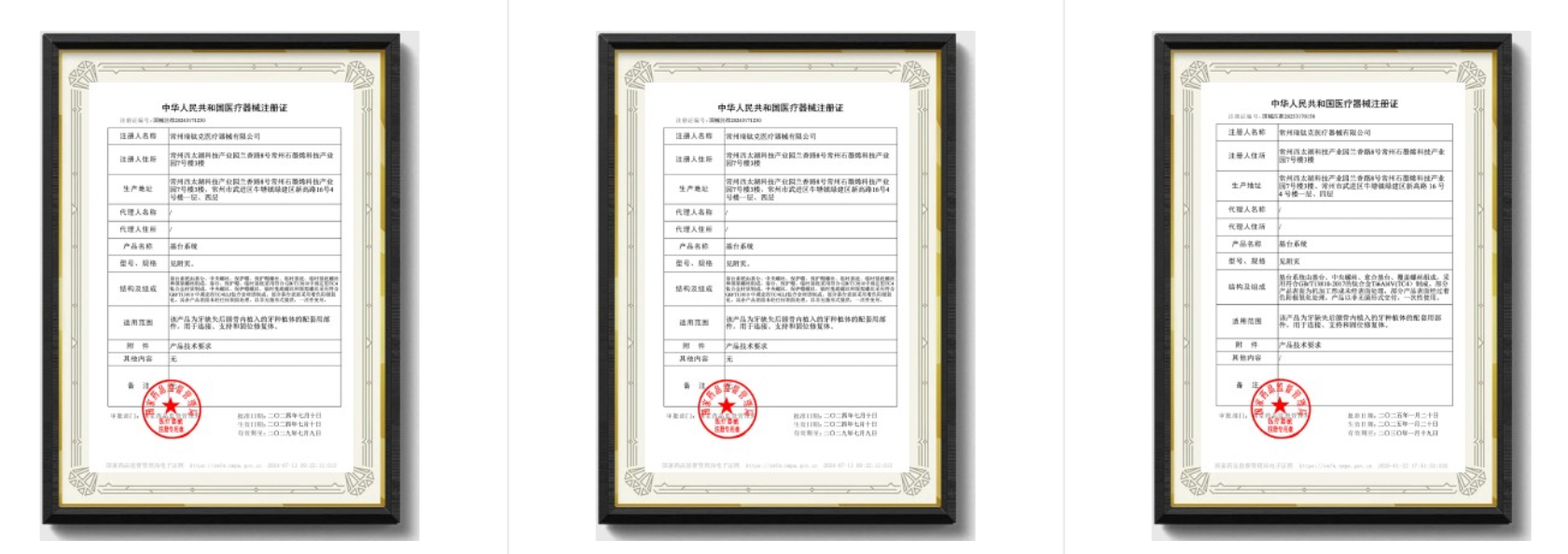
Every legitimate implant manufacturer should be able to provide relevant quality and regulatory documentation.
However, certifications alone do not guarantee a good partnership.
Many factories hold similar certifications while delivering completely different customer experiences.
Certificates demonstrate that a quality management system exists.
They do not tell you:
l How quickly problems are solved
l Whether production remains consistent
l How inventory is managed
l How technical questions are handled
l How the supplier performs during periods of high demand
Think of certifications as a minimum requirement rather than a final decision-making factor.
They help eliminate unsuitable suppliers.
They do not automatically identify the best one.

Many distributors focus on the first purchase order.
Experienced buyers focus on the tenth.
A factory may successfully produce a small trial order.
The real test begins when demand increases.
As your customer base grows, your supplier must be able to grow with you.
Before selecting a manufacturing partner, ask questions such as:
l What is your monthly production capacity?
l How much inventory is maintained?
l How are production schedules managed?
l How quickly can capacity be expanded?
These questions may seem simple.
However, they often reveal whether a supplier is prepared for long-term cooperation or only capable of handling small orders.
A reliable factory should be able to explain not only what it can produce today but also how it plans to support future growth.
Many implant catalogs look impressive.
Beautiful photos and technical drawings are easy to create.
What matters more is the manufacturing system behind the product.
When evaluating a factory, buyers should understand:
l Which processes are completed in-house
l Which processes are outsourced
l How production quality is monitored
l How traceability is maintained
The more control a factory has over critical production processes, the easier it becomes to maintain consistency.
This is particularly important for implant manufacturing because even small variations can affect product performance and customer confidence.
Factories with strong internal production capabilities often respond faster when modifications, quality investigations, or custom projects are required.
When discussing implants, buyers frequently focus on implant design.
Design is important.
However, surface treatment often plays an equally important role.
The challenge is that surface quality cannot always be evaluated visually.
Two implants may appear identical while having very different manufacturing characteristics.
This is why experienced buyers ask questions about:
l Surface treatment methods
l Validation procedures
l Surface consistency
l Contamination control
l Quality inspection processes
A supplier should be able to explain how surface quality is monitored and maintained from batch to batch.
The goal is not simply producing an implant that looks good.
The goal is producing implants that remain consistent over time.
Consistency is what protects a distributor's reputation in the market.
During supplier evaluations, discussions usually focus on:
l Price
l MOQ
l Lead time
l Product range
l Certifications
Yet one of the most important questions is often ignored.
What happens when something goes wrong?
Every supplier performs well when everything runs smoothly.
The real difference appears when challenges arise.
For example:
l A shipment is delayed.
l Documentation is missing.
l Packaging requires modification.
l A customer raises a product concern.
How quickly does the factory respond?
Who takes ownership of the issue?
How transparent is the communication?
In our experience, a supplier's response during a problem often tells you more than months of normal operations.
This is why many successful distributors evaluate communication quality as carefully as manufacturing quality.
As implant markets become more regulated, documentation requirements continue to increase.
Distributors often need support with:
l Product registrations
l Technical documentation
l Material certificates
l Testing reports
l Regulatory submissions
Unfortunately, some factories focus heavily on manufacturing while investing very little in regulatory support.
The result is delays.
Projects that should take weeks can take months.
Before selecting a supplier, ask how documentation requests are handled and how much regulatory experience the team has with your target market.
Strong regulatory support may not seem important during the first order.
It becomes extremely important when expanding into new regions.
Poor communication creates expensive problems.
Many sourcing challenges begin with simple misunderstandings.
Questions are not answered clearly.
Technical details are interpreted differently.
Deadlines become unclear.
Over time, small issues become larger problems.
This is why communication should be evaluated from the very beginning.
Pay attention to:
l Response speed
l Technical knowledge
l Transparency
l Willingness to discuss challenges
l Ability to provide clear answers
Good communication often indicates a mature organization.
It also makes future cooperation significantly easier.
Many distributors start by selling existing implant systems.
Eventually, most want something more.
They want stronger brand differentiation.
This often leads to requests for:
l Custom packaging
l Private-label branding
l Customized surgical kits
l Product modifications
l Market-specific solutions
Not every factory can support these requirements.
Before making a long-term commitment, buyers should understand the supplier's OEM capabilities.
Can they support packaging customization?
Can they adapt products for specific markets?
Can they provide branding support as the business expands?
Many distributors today prefer working with specialized implant manufacturers that combine manufacturing expertise with flexible OEM services.
Companies such as RE-TECH have gained attention in international markets partly because they can support both standard implant supply and private-label development projects.
For growing distributors, this flexibility can become a significant competitive advantage.
A factory visit often reveals information that brochures never will.
Experienced buyers usually pay attention to several areas.
Is the factory clean and well organized?
Are materials properly identified and stored?
Do processes appear standardized?
How long have key team members worked there?
Stable teams often indicate stable operations.
Can the factory trace a product back to:
l Raw material batches
l Production records
l Inspection records
l Packaging records
Strong traceability reflects manufacturing maturity.
Do employees understand quality procedures?
Or are procedures followed only because auditors require them?
Factories with strong quality cultures tend to perform more consistently over the long term.
Every distributor wants competitive pricing.
There is nothing wrong with that.
However, pricing should never be the only factor.
The hidden costs of choosing the wrong supplier often include:
l Inventory shortages
l Delivery delays
l Customer complaints
l Additional quality inspections
l Lost business opportunities
For distributors, reputation is difficult to rebuild once damaged.
A reliable manufacturing partner should therefore be viewed as an investment rather than simply an expense.
The goal is not finding the lowest-priced implant.
The goal is finding the supplier that creates the most value for your business.
Yes. Many Chinese implant manufacturers operate under internationally recognized quality systems and supply products to global markets. The key is carefully evaluating manufacturing capabilities, quality controls, and long-term reliability.
ISO 13485 is generally considered a minimum requirement. Depending on your market, additional registrations and supporting technical documentation may also be necessary.
OEM capability becomes increasingly important as distributors seek to differentiate their brands through custom packaging, branding, and product customization.
Whenever possible, yes. A factory visit provides valuable insights into production systems, quality management, traceability, and company culture.
Many buyers focus primarily on price. Experienced distributors evaluate the supplier's ability to provide consistent quality, reliable communication, regulatory support, and long-term growth capacity.
Finding a Chinese implant factory is relatively easy. Finding a manufacturing partner that can support your business for the next five years is much more difficult. The factories that create the most value for distributors are rarely chosen because of price alone. They are selected because they consistently deliver quality, communication, regulatory support, and operational reliability.
Before placing your first order, take time to evaluate how the factory operates, not just what appears in its catalog. The right supplier can become a long-term competitive advantage.
The wrong one can become a constant source of operational challenges.
For most distributors, that difference is worth far more than a few dollars saved per implant.