![[slide:title]](/static/upload/other/20260512/1778551853592214.webp)
![[slide:title]](/static/upload/other/20260512/1778551954982306.webp)
Time:2026-03-25 Form:本站
Top 12 Dental Implant Manufacturers in India (2026 In-Depth Market & Sourcing Guide)
India’s dental implant market is evolving rapidly—not just in clinical demand, but in manufacturing, sourcing strategies, and global competition. For distributors, dental brands, and procurement managers, understanding this landscape is no longer optional—it directly impacts cost, quality consistency, and long-term profitability.
Key Market Reality (Critical Insight)
l Over 55% of the market is non-premium (value segment)
l Titanium implants dominate with over 90% material share
l Endosteal implants account for 60%+ of procedures
👉 This means India is fundamentally a price-sensitive, volume-driven market, where cost-performance balance matters more than brand prestige.
Unlike many superficial rankings, this guide provides a deep, structured, and comparative analysis of the top dental implant manufacturers influencing the Indian market, along with practical sourcing insights.
Before looking at manufacturers, it’s important to clarify one misconception:
India is not dominated by Indian manufacturers.
Instead, the market is composed of four layers:
l Premium global brands (Europe & USA)
l Mid-range Asian manufacturers (South Korea, Israel)
l Domestic Indian companies
l OEM/ODM manufacturing partners
Key Insight
Most high-end implant procedures in India still rely on imported systems, while domestic brands compete primarily in cost-sensitive segments.
Below is a realistic market-based ranking, not just a list of local factories.

Straumann is widely considered the benchmark for premium dental implants globally, and its influence in India reflects the demand for high-end clinical outcomes.
What differentiates Straumann is its material innovation and surface science. The Roxolid alloy (titanium-zirconium) offers higher strength than traditional titanium, while the SLActive surface accelerates osseointegration—especially important in compromised bone conditions.
Best suited for:
l High-end clinics
l Complex cases
l Immediate loading protocols
Limitation:
l High cost restricts accessibility in price-sensitive markets
Nobel Biocare is one of the most historically influential companies in implantology. Its biggest contribution is the All-on-4 concept, which is widely adopted in full-arch restorations.
The company integrates implants deeply into digital workflows, making it attractive for clinics investing in CAD/CAM systems.
Best suited for:
l Full-arch restorations
l Digital dentistry clinics
Limitation:
l Requires higher clinical expertise and investment

Dentsply Sirona combines implant systems with a broader digital dentistry ecosystem, which is increasingly important in modern workflows.
Its Astra Tech implants are known for soft tissue stability and aesthetic outcomes, making them popular in anterior restorations.
Best suited for:
l Aesthetic-focused clinics
l Digital workflow integration

Zimmer stands out for its trabecular metal technology, designed to mimic natural bone structure and enhance biological integration.
This makes it particularly useful in challenging bone conditions.
Best suited for:
l Complex surgical cases
l Bone-deficient patients
BioHorizons differentiates itself through Laser-Lok microchannel technology, which supports soft tissue attachment and long-term stability.
It is often chosen by clinicians who prioritize biological integration over cost.
Best suited for:
l Long-term clinical predictability
l Soft tissue management cases
Osstem is arguably the most widely used implant system in India by volume.
Its success comes from a strong balance between:
l Reliable quality
l Competitive pricing
l Extensive training programs
Osstem has built an ecosystem that supports dentists—not just with products, but with education and clinical support.
Best suited for:
l General clinics
l High-volume practices

Dentium offers a similar positioning to Osstem but with a slightly stronger emphasis on engineering consistency and simplicity.
Its implant systems are known for:
l Predictable performance
l Ease of use
l Cost efficiency
Best suited for:
l Growing clinics
l Cost-conscious but quality-aware buyers
MegaGen is more innovation-driven compared to other Korean brands.
Its AnyRidge system features:
l Aggressive thread design
l Strong primary stability
This makes it particularly effective in immediate loading scenarios.
Best suited for:
l Immediate placement cases
l Clinics focusing on advanced protocols
Adin positions itself as a cost-effective global supplier, with strong experience in OEM manufacturing.
Its implants are widely used in:
l Emerging markets
l Budget-conscious clinics
Best suited for:
l Entry-level implant systems
l Price-driven distribution markets
Equinox is one of the more established Indian implant manufacturers with a relatively complete product portfolio.
It focuses on:
l Affordability
l Domestic distribution
l Standard implant systems
Best suited for:
l Local Indian clinics
l Entry-to-mid-level markets
Limitation:
l Limited global brand recognition
Simpladent is unique because it focuses on basal implantology, which differs from conventional implant systems.
It is heavily used in:
l Immediate loading protocols
l Dental tourism cases
Best suited for:
l Specialized surgical approaches

Backed by a hospital group, Sii aims to deliver affordable implant solutions at scale.
It focuses on:
l Standardized production
l Cost accessibility
Best suited for:
l Large clinic chains
l Budget-sensitive markets
Instead of looking only at brands, buyers should focus on core differences that impact outcomes:
Dimension | Premium Brands | Korean Brands | Indian Brands |
Surface Technology | Advanced | Mature | Basic–Moderate |
Manufacturing Precision | Extremely high | High | Variable |
Clinical Evidence | Extensive | Moderate | Limited |
Cost | High | Medium | Low |
Consistency | Very stable | Stable | Inconsistent (varies by supplier) |
The key takeaway:
The real gap is not price—it is consistency and technology depth.
A major trend reshaping the dental implant industry is the move toward OEM (Original Equipment Manufacturing).
Instead of relying solely on branded implants, more distributors are choosing to:
l Build their own implant brands
l Control pricing and margins
l Customize implant systems
l Increasing price competition
l Need for brand differentiation
l Demand for scalable supply chains
OEM suppliers are not always visible in rankings, but they play a critical role behind the scenes.
Compared with many regional manufacturers, export-oriented OEM factories often focus more on:
l Precision manufacturing
l Process standardization
l Customization capability
For example, companies like RE-TECH represent a category of manufacturers that emphasize:
l High-precision CNC machining
l Stable large-scale production
l Flexible OEM/ODM solutions
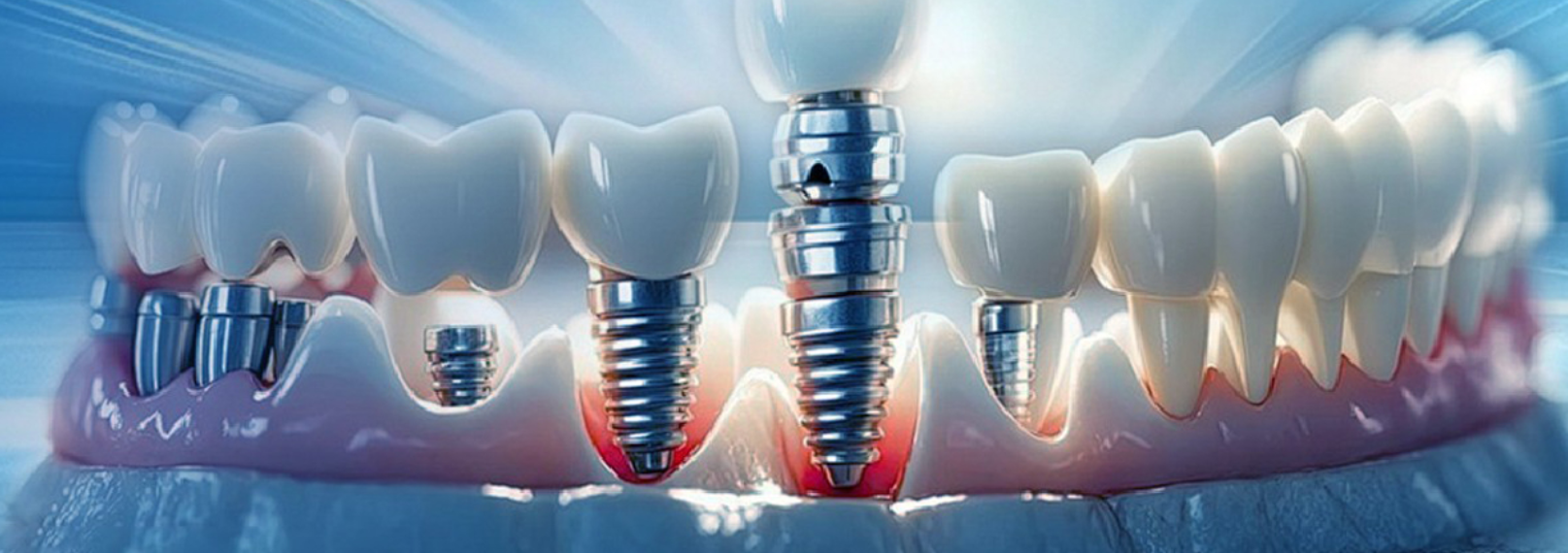
Rather than being “better” in all cases, OEM manufacturers are typically more suitable for:
l Distributors building private-label brands
l Buyers requiring customization
l Companies scaling across multiple markets
However, they may involve:
l Higher minimum order quantities
l Longer initial development cycles
This makes them a strategic option, not a universal replacement for branded systems.
Factor | Indian Manufacturers | OEM Manufacturers (e.g., RE-TECH) | Premium Global Brands |
Cost | Low | Competitive | High |
Quality Stability | Medium | High | Very High |
Customization | Limited | Strong | Limited |
Technology | Moderate | Advanced (process-driven) | Leading |
Brand Value | Low | Customizable | Strong |
They can be reliable, but quality varies significantly. Buyers should evaluate manufacturing standards, certifications, and consistency, not just price.
Lower labor costs, local manufacturing, and reduced regulatory overhead contribute to lower prices.
The biggest risk is inconsistent manufacturing quality, which can affect clinical outcomes.
Generally, Korean implants offer better consistency and technology, while Indian implants compete more on price.
OEM is ideal when you want:
l Your own brand
l Better cost control
l Custom implant systems
Not necessarily. Premium brands still lead in clinical validation, while OEM excels in flexibility and scalability.
India’s dental implant market is complex, competitive, and rapidly evolving. While local manufacturers offer affordability, and global brands deliver proven performance, the real opportunity lies in understanding how to combine different sourcing strategies effectively.
For modern distributors and dental brands, success increasingly depends on:
l Choosing the right technology level
l Ensuring manufacturing consistency
l Leveraging OEM partnerships where appropriate
This balanced approach allows businesses to stay competitive—not just in India, but in the global implant market.