![[slide:title]](/static/upload/other/20260512/1778551853592214.webp)
![[slide:title]](/static/upload/other/20260512/1778551954982306.webp)
Time:2026-03-27 Form:本站
Top 10 Dental Implant Manufacturers in Germany |2026 Deep Industry Guide
Germany has built a global reputation in dentistry for one simple reason: engineering discipline translated into clinical reliability. From precision machining to long-term clinical validation, German dental implant manufacturers represent a benchmark that many global suppliers still aim to reach.
But for today’s distributors, private-label brands, and procurement managers, the question is no longer just “Who are the top German implant brands?”
A more relevant question is:
What can we learn from them—and where are the emerging opportunities beyond them?
This guide answers both.
Before comparing manufacturers, it’s important to understand the structural advantages behind German implant systems.
German implant systems are typically built around:
l Conical or tube-in-tube connections
l Platform switching concepts
l Optimized thread geometry for primary stability
These are not marketing features—they directly influence:
l Initial stability in low-density bone
l Long-term bone preservation
l Prosthetic sealing performance
German manufacturers operate under:
l ISO 13485 medical device standards
l CE (MDR) regulatory compliance
l High-precision CNC machining environments
The result is:
Extremely tight tolerances and repeatable quality
This is especially critical in implant-abutment connections, where micron-level deviations can affect outcomes.
Unlike many emerging brands, German systems are often supported by:
l 5–10+ year clinical studies
l University-backed research
l Structured treatment protocols
This creates strong trust among clinicians, particularly in Europe.
Positioning: Legacy premium manufacturer
Core Strength: Metallurgy expertise + long-term clinical validation
BEGO is one of the most historically established dental companies in Germany, with roots dating back over a century. Unlike many implant brands that evolved purely from clinical demand, BEGO’s foundation in dental metallurgy and material science gives it a distinct advantage in understanding how alloys behave under long-term biomechanical stress.
Its Semados® implant system is designed with a conservative philosophy, prioritizing:
l Predictable osseointegration
l Stable load distribution
l Reduced crestal bone loss
The implant geometry typically features well-balanced thread depth and pitch, making it suitable for a wide range of bone densities without being overly aggressive.
From a procurement perspective, BEGO represents:
l Low clinical risk
l Strong brand recognition in Europe
l High trust among experienced clinicians
However, its traditional positioning also means:
l Less flexibility in customization
l Higher price sensitivity in emerging markets
Positioning: Precision prosthetic compatibility leader
Core Strength: Tube-in-tube connection stability
Camlog stands out for its engineering approach to implant-abutment connection integrity. Its signature tube-in-tube connection provides a combination of:
l High rotational stability
l Even force distribution
l Reduced micro-movement at the interface
This has direct clinical implications:
l Lower risk of screw loosening
l Improved long-term prosthetic stability
l Better outcomes in multi-unit restorations
Camlog is also known for its strong collaboration with academic institutions, which has resulted in extensive clinical documentation and standardized treatment protocols.
From a distributor’s point of view:
l It is a high-trust system for premium clinics
l Particularly strong in aesthetic zones and complex restorations
The limitation lies in:
l Cost structure
l Limited OEM/private label opportunities
Positioning: Digital workflow and full-arch specialist
Core Strength: Immediate loading protocols + prosthetic integration
Bredent takes a system-based approach rather than focusing solely on implants. Its SKY implant line is deeply integrated into a broader ecosystem that includes:
l Prosthetics
l Materials (e.g., BioHPP polymer)
l Digital workflows
This allows clinicians to implement:
l Immediate loading protocols
l Full-arch restorations
l Digitally planned implant treatments
One of bredent’s distinguishing features is its focus on reducing treatment time, which is increasingly important in modern implantology.
For distributors:
l Strong appeal in full-arch and All-on-X markets
l Differentiation through workflow integration rather than implant alone
However:
l Requires more training and system adoption
l Not always ideal for simple, standalone implant sales
Positioning: Premium-compatible implant system
Core Strength: Cross-brand prosthetic compatibility
Medentika operates in a very strategic position within the market. As part of the Straumann Group, it benefits from high-level manufacturing standards, but its real strength lies in:
Compatibility with widely used implant systems
Its conical connection designs are engineered to:
l Mimic leading premium systems
l Ensure prosthetic interchangeability
l Reduce switching costs for clinics
This makes Medentika especially attractive for:
l Labs and distributors handling multiple implant brands
l Clinics seeking flexibility without committing to one ecosystem
From a business standpoint:
l Lower barrier to adoption
l Strong scalability potential
The trade-off:
l Less brand prestige compared to flagship premium systems
Positioning: Cost-performance balanced system
Core Strength: Scalable and accessible implant solutions
ICX has positioned itself as a high-efficiency alternative within the European implant market. Its strategy is not to compete at the ultra-premium level, but to deliver:
l Reliable implant geometry
l Consistent surface treatment
l Competitive pricing
Its implant designs typically focus on:
l Good primary stability
l Straightforward surgical protocols
l Ease of use for general practitioners
ICX is particularly strong in:
l Large distributor networks
l Price-sensitive European regions
For procurement:
l Excellent volume scalability
l Predictable supply chain
However:
l Limited differentiation in high-end clinical innovation
Positioning: Engineering-driven niche manufacturer
Core Strength: Advanced implant geometry design
Argon Dental’s K3Pro system is built with a focus on mechanical optimization, particularly in challenging bone conditions. The implant design emphasizes:
l High primary stability
l Optimized thread engagement
l Efficient load transfer
This makes it suitable for:
l Immediate placement cases
l Lower-density bone scenarios
Although not as globally recognized, Argon appeals to:
l Experienced implantologists
l Clinics seeking alternative systems with strong mechanical performance
From a distribution perspective:
l Niche but technically credible
l Opportunity for differentiation in saturated markets
Positioning: Budget-friendly and OEM-oriented manufacturer
Core Strength: Flexibility and accessibility
MeDent focuses on market accessibility, offering implant systems that are:
l Cost-effective
l Broadly applicable
l Easy to integrate into distribution channels
Unlike premium brands, MeDent is more open to:
l OEM partnerships
l Private-label collaborations
l Custom packaging solutions
This makes it particularly attractive for:
l Distributors building their own implant brands
l Emerging markets with price sensitivity
However:
l Limited clinical branding power
l Less emphasis on innovation

Positioning: Emerging flexible manufacturer
Core Strength: Adaptability and product diversity
Bio3 represents a new generation of implant companies that prioritize:
l Flexible product lines
l Faster response to market trends
l Broader customization options
Its systems are designed to cover:
l Standard implant indications
l Basic prosthetic compatibility
l Scalable distribution needs
For distributors:
l Opportunity to enter less competitive brand spaces
l Potential for strategic partnerships
The limitation:
l Lower global recognition
l Limited long-term clinical data
Positioning: Stable mid-tier supplier
Core Strength: Consistency and straightforward systems
Alpha Dent focuses on delivering simple, reliable implant solutions without overcomplicating system design.
Key characteristics include:
l Conventional implant geometry
l Standard prosthetic components
l Predictable surgical workflows
This makes it suitable for:
l General practitioners
l Markets where simplicity and cost control are priorities
From a procurement perspective:
l Easy integration
l Low operational complexity
Positioning: Traditional implant manufacturer
Core Strength: Simplified implant systems
ZL Microdent follows a minimalist design philosophy, focusing on:
l Essential implant functionality
l Straightforward clinical protocols
l Reduced system complexity
This approach appeals to:
l Clinics seeking no-frills solutions
l Distributors targeting entry-level markets
While it lacks strong differentiation, it offers:
l Stability
l Ease of adoption
l Cost efficiency
Category | Representative Brands | Key Advantage | Limitation |
Premium Tier | BEGO, Camlog | Clinical validation | High pricing |
Hybrid Tier | Medentika | Compatibility + balance | Brand dependence |
Value Tier | ICX, MeDent | Cost efficiency | Lower differentiation |
German implant systems are often considered “safe choices.” However, from a business perspective, they present structural constraints:
l Labor cost
l Regulatory overhead
l Production scale limitations
Most premium brands:
l Do not support private labeling
l Offer limited customization
Compared to newer manufacturers, product iteration cycles are often longer.
In recent years, the implant industry has begun shifting:
From:
Brand-driven purchasing (doctor preference)
To:
Supply chain-driven decisions (distributor strategy)
This shift is driven by:
l Rising treatment demand
l Price sensitivity in emerging markets
l Growth of private-label brands
Instead of directly competing with German brands, many successful distributors are now:
Maintaining:
l Conical connections
l Proven thread designs
While optimizing:
l Cost
l Production efficiency
Clinics increasingly prefer:
l Multi-brand prosthetic compatibility
l CAD/CAM integration
This is where newer manufacturers are gaining traction.
Without positioning it as a direct replacement, it is worth noting that some modern implant manufacturers—particularly in Asia—are now able to deliver:
l Comparable titanium materials (Grade 4 / Grade 5)
l Advanced surface treatments
l More flexible OEM/ODM solutions
l Shorter lead times
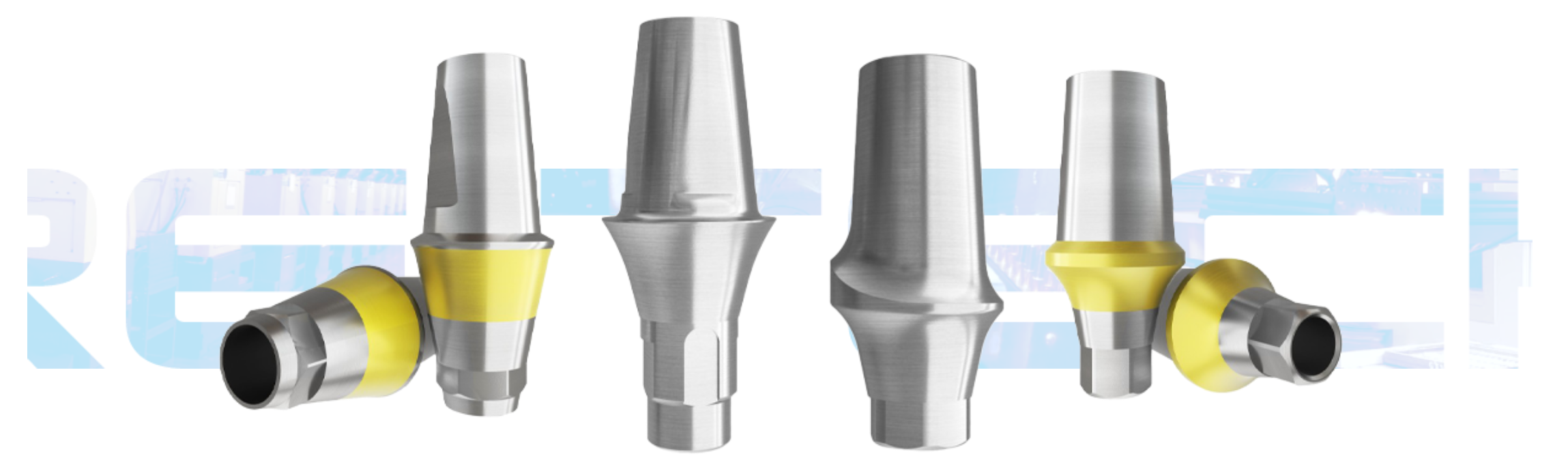
Companies such as RE-TECH are part of this evolving landscape, especially for distributors building private-label implant brands or cost-optimized product lines.
For distributors and procurement managers, selection should go beyond reputation.
l Micron-level fit
l Long-term mechanical stability
l SLA / sandblasted acid-etched
l Osseointegration speed
l Abutment availability
l Digital workflow compatibility
l Lead time consistency
l Inventory scalability
l Custom branding
l Packaging flexibility
l Design modification support
German implants are among the most reliable due to engineering precision and clinical validation, but they are not always the most cost-effective option for every market.
Higher costs come from:
l Manufacturing standards
l Regulatory compliance
l Labor and operational expenses
In most cases, OEM or private-label cooperation is limited, especially with premium brands.
Yes. Many distributors now work with international manufacturers that replicate proven implant designs while offering greater flexibility and cost efficiency.
Some suppliers, including RE-TECH, focus specifically on supporting OEM clients and private-label implant brands, making them suitable for scalable distribution strategies.
For clinics → brand matters
For distributors → supply chain efficiency often matters more
German implant manufacturers represent the gold standard of the past decades—built on precision, discipline, and clinical trust.
But the future of the implant industry is being shaped by a different equation:
Quality + Flexibility + Cost Efficiency + Speed
For distributors, the competitive advantage no longer comes from simply choosing the “best brand,” but from building the most effective supply chain.