![[slide:title]](/static/upload/other/20260512/1778551853592214.webp)
![[slide:title]](/static/upload/other/20260512/1778551954982306.webp)
Time:2026-05-21 Form:本站
Tips for Choosing the Right Dental Implant Manufacturer: A Practical Guide for B2B Buyers
Choosing the right dental implant manufacturer is not simply about finding the lowest price or the most famous brand name. For dental distributors, clinic groups, laboratories, and private-label implant brands, the manufacturer behind the product can directly affect clinical confidence, long-term supply stability, inventory pressure, regulatory preparation, and customer trust.
A dental implant system is not a single screw. It is a complete ecosystem: implant bodies, abutments, cover screws, healing caps, scan bodies, impression copings, prosthetic screws, surgical kits, packaging, labeling, documentation, and after-sales technical support. A weak link in any part of this system can create problems later, even if the implant itself looks acceptable at first glance.
This guide explains how to evaluate a dental implant manufacturer from a practical B2B perspective. Instead of only asking “How much is the implant?”, buyers should ask a more important question:
Can this manufacturer support my market, my customers, and my long-term business model?
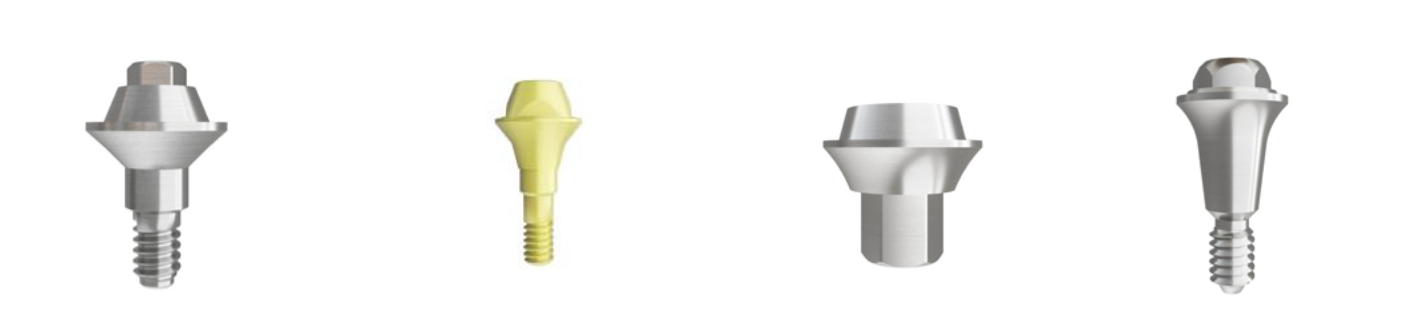
Many dental implant buyers compare manufacturers mainly by price, brand reputation, or surface treatment claims. These factors matter, but they are not enough.
A distributor may buy a low-cost implant system and later discover that prosthetic components are incomplete, packaging documents are inconsistent, delivery is unstable, or compatibility is poorly explained. A clinic group may switch to a new implant supplier to reduce costs, but if the surgical kit design is unfamiliar, prosthetic support is limited, or torque recommendations are unclear, the transition becomes difficult. A private-label brand may choose a factory quickly, only to realize later that the manufacturer cannot support customized packaging, batch traceability, or long-term product line expansion.
The best dental implant manufacturer is not always the biggest company. It is the company whose product system, quality control, documentation, communication, and production capability match your business model.
For B2B buyers, the real goal is not only to buy implants. The goal is to build a reliable supply chain that allows you to sell, support, and grow with confidence.
Before evaluating manufacturers, define what kind of buyer you are. Different buyers need different types of manufacturing support.
A dental distributor usually needs a complete product range, stable inventory, training materials, competitive pricing, and market protection. A clinic group may focus more on surgical convenience, clinical predictability, prosthetic simplicity, and consistent delivery. A private-label brand needs OEM or ODM support, packaging customization, branding flexibility, technical documentation, and long-term cooperation. A laboratory or digital workflow provider may care more about scan body accuracy, prosthetic compatibility, CAD/CAM support, and component availability.
This is why copying another company’s supplier choice can be risky. A manufacturer that works well for a premium brand may not be suitable for a price-sensitive emerging market. A factory that is excellent at titanium machining may not be strong in packaging, regulatory documentation, or prosthetic system design.
A good manufacturer should be evaluated against your commercial strategy. Are you building a premium implant brand? Are you entering a mid-range market? Are you trying to replace imported systems with a more cost-effective alternative? Are you expanding your product catalog with compatible prosthetic parts? These questions will help you choose a manufacturer based on fit, not just price.
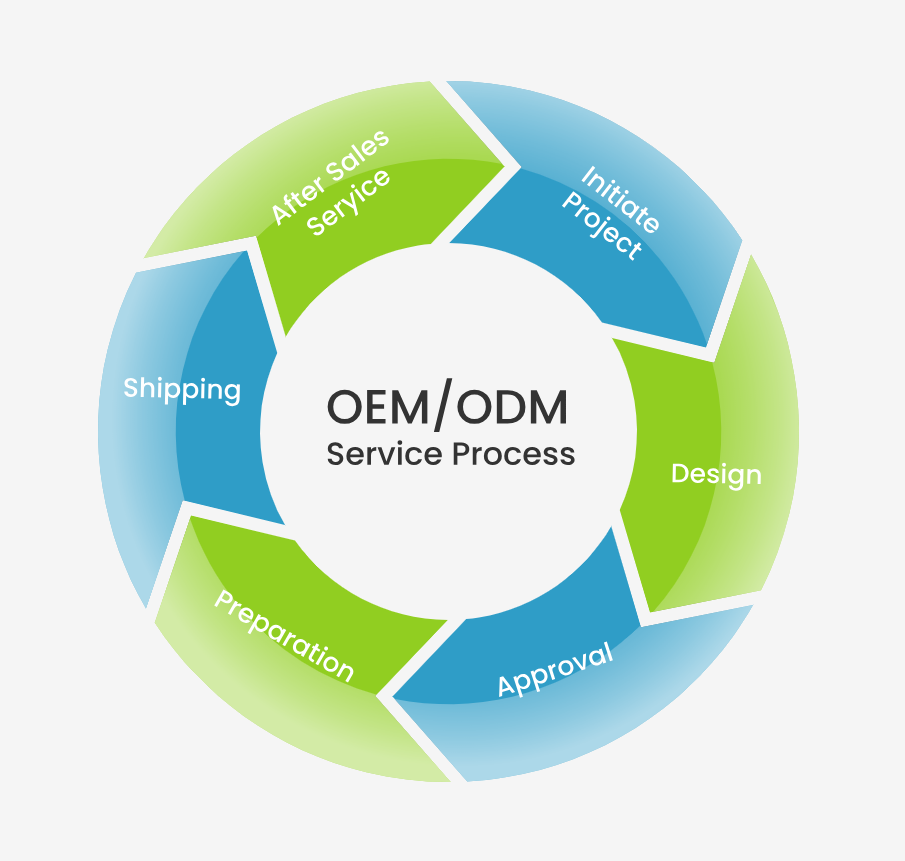
One common mistake is evaluating only the implant body. In real clinical and commercial use, the implant body is only the beginning.
A reliable dental implant manufacturer should offer a complete and logically organized system, including:
Product Category | Why It Matters |
Implant bodies | Core surgical product and long-term osseointegration platform |
Healing abutments | Needed for soft tissue shaping and clinical convenience |
Cover screws | Required for submerged healing protocols |
Straight and angled abutments | Essential for prosthetic flexibility |
Multi-unit abutments | Important for full-arch and screw-retained restorations |
Impression copings | Needed for traditional impression workflows |
Scan bodies | Critical for digital implant dentistry |
Prosthetic screws | Small component, but very important for stability |
Surgical instruments | Affects user experience and clinical adoption |
Packaging and labels | Supports traceability, storage, and regulatory preparation |
A manufacturer with an incomplete system may create hidden costs. For example, the implant price may be attractive, but if scan bodies or multi-unit abutments are unavailable, your customers may hesitate to adopt the system. If prosthetic screws are not consistently supplied, even small cases can become difficult to complete.
For distributors, a complete product ecosystem is especially important because customers do not only buy implants; they buy convenience and confidence. If dentists need to search for third-party components after every order, the system becomes harder to sell.
Dental implants are medical devices, so quality cannot be judged by surface appearance alone. A clean-looking implant may still have poor dimensional consistency, weak documentation, unstable packaging control, or insufficient batch traceability.
A serious manufacturer should have a structured medical device quality management system. ISO 13485 is widely recognized as the quality management system standard for medical devices, and it is specifically designed for organizations involved in medical device design, production, installation, and servicing.
For buyers, this does not mean you should only ask, “Do you have ISO 13485?” You should go deeper:
l Is the certificate valid and issued by a recognized certification body?
l Does the certificate scope actually include dental implants or related medical devices?
l Can the manufacturer provide batch records and inspection reports?
l Are raw materials traceable?
l Are critical dimensions inspected consistently?
l Are nonconforming products controlled?
l Is packaging validated and controlled?
l Is there a complaint-handling process?
The purpose of quality management is not to decorate a quotation sheet. It is to reduce risk in every batch. For B2B buyers, stable quality means fewer complaints, fewer returns, fewer chairside problems, and stronger trust from downstream customers.
Most modern dental implants are made from commercially pure titanium or titanium alloys, depending on design, regulatory pathway, and manufacturer strategy. The material itself is only part of the story. The more important question is whether the manufacturer can prove material consistency and traceability.
A professional manufacturer should be able to provide material certificates, batch traceability, incoming inspection records, and clear documentation for implant-grade raw materials. This matters because dental implants are placed into the human body for long-term function. Buyers should not accept vague claims such as “medical titanium” without supporting documents.
Traceability is also important for distributors and private-label brands. If a market complaint occurs, you need to trace the affected batch, check production records, review inspection data, and respond professionally. Without traceability, even a small problem can become a serious business risk.
When comparing manufacturers, ask how they manage raw material sourcing, batch identification, machining records, surface treatment batches, sterilization batches, and final inspection reports. A manufacturer that answers these questions clearly is usually more reliable than one that only sends a low price.
Surface treatment is one of the most frequently promoted features in dental implant marketing. You may see terms such as SLA, RBM, sandblasted and acid-etched, hydrophilic surface, bioactive surface, or nano-surface. These descriptions can be useful, but they should not be accepted blindly.
The key is whether the manufacturer can explain the surface process clearly and provide consistent quality control. A surface treatment should support predictable osseointegration, but for B2B buyers, consistency is just as important as the surface name.
Ask the manufacturer:
l What surface treatment process is used?
l How is surface cleanliness controlled?
l Are surface morphology and roughness monitored?
l How is contamination prevented after treatment?
l Is the packaging process designed to protect the surface?
l Can the manufacturer provide sample inspection images or reports?
A manufacturer that only says “Our surface is the best” but cannot explain process control may not be the safest choice. In contrast, a manufacturer that gives a clear, technical explanation is more likely to be suitable for long-term cooperation.
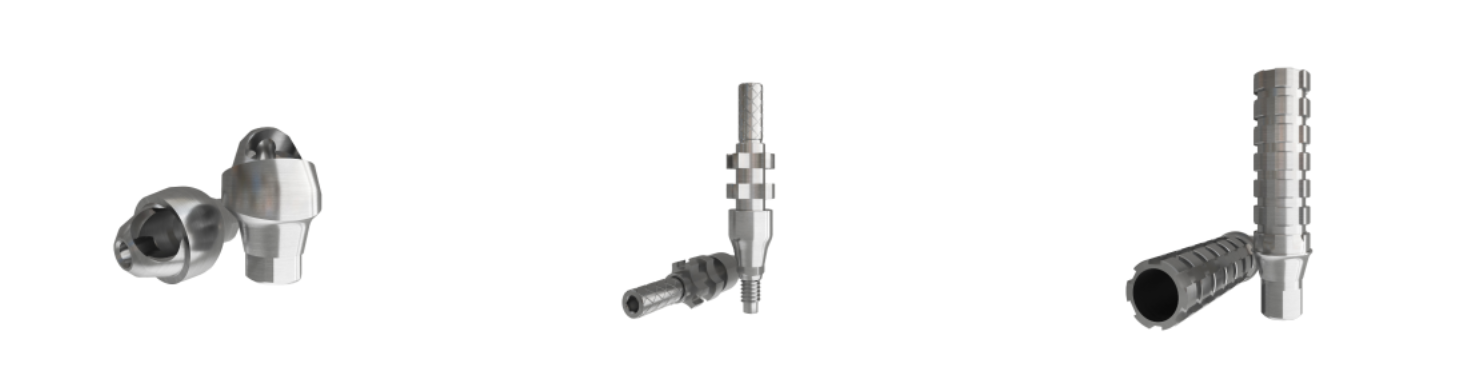
Compatibility is one of the biggest practical issues in implant distribution. Dentists and labs often ask whether an implant system is compatible with certain prosthetic workflows, digital scan bodies, torque drivers, or abutment platforms.
A good manufacturer should clearly explain connection type, platform sizes, prosthetic options, torque recommendations, and component matching rules. This is especially important if you are selling in a market where dentists already use systems such as Straumann, Nobel Biocare, Zimmer Biomet, Osstem, Dentium, MegaGen, MIS, or other well-known implant platforms.
However, compatibility should be handled carefully. Buyers should not rely on vague statements like “compatible with all systems.” Implant connections are precise engineering interfaces. Even small differences in internal geometry, screw design, platform height, or machining tolerance can affect fit and long-term prosthetic performance.
A trustworthy dental implant manufacturer should provide technical charts, component matching tables, and clear instructions for use. If you are building a private-label system, the manufacturer should also help you organize the catalog logically so your sales team and customers can understand the system easily.
This is where OEM-focused manufacturers such as RE-TECH can be considered by buyers looking for a balance between implant manufacturing capability, prosthetic component supply, and private-label flexibility. The key is not only whether the factory can produce implants, but whether it can support a complete and understandable system for your market.
Not all suppliers are the same. Understanding the difference can save buyers from wrong expectations.
Supplier Type | Main Advantage | Possible Limitation | Best For |
Premium implant brand | Strong clinical reputation, established education, high market trust | Higher cost, limited branding flexibility | Premium clinics, brand-driven markets |
OEM/ODM manufacturer | Flexible cooperation, private label support, competitive pricing, custom packaging | Requires buyer to build market education and brand trust | Distributors, private-label brands, growing markets |
Trading company | Fast communication, broad sourcing options | Less control over production, traceability may be weaker | Small test orders or mixed product sourcing |
Low-cost unknown supplier | Attractive initial price | Higher risk in consistency, documentation, and support | Usually risky for serious B2B buyers |
A premium brand may be ideal when market recognition is the most important factor. An OEM manufacturer may be better when you want to build your own implant brand, improve margins, or serve a mid-range market. A trading company may help with small mixed orders, but it may not offer enough control for long-term implant system development.
The right choice depends on your business model. For many distributors, the strongest strategy is not replacing premium brands completely, but adding a reliable OEM implant line to serve customers who need stable quality at a more accessible price point.
Regulatory requirements vary by country and region, so a manufacturer does not need to hold every global approval to be useful. But the manufacturer must understand documentation and be able to support your target market.
For example, in the United States, endosseous dental implants are regulated as medical devices, and FDA classification information identifies root-form endosseous dental implants under 21 CFR 872.3640 as Class II devices. In the European Union, medical devices are regulated under Regulation (EU) 2017/745, commonly known as the MDR.
For B2B buyers, the practical point is this: do not assume that one certificate is enough for every country. Instead, ask the manufacturer what documents they can provide, such as:
l ISO 13485 certificate
l CE-related documents, if applicable
l Free sale certificate, if available
l Technical files or selected technical summaries
l Material certificates
l Sterilization records
l Biocompatibility-related documentation
l Packaging and labeling information
l Instructions for use
l Declaration documents
l Batch inspection reports
The manufacturer should not exaggerate regulatory claims. A supplier that says “No problem, we can sell anywhere” without discussing local registration requirements may be oversimplifying. A more reliable manufacturer will explain what they have, what they can support, and what must be handled by the local importer, distributor, or registration holder.

Communication is not a small detail. In B2B implant business, communication quality often predicts cooperation quality.
A good manufacturer should respond clearly to technical questions. If you ask about implant connection, platform diameter, surface treatment, packaging, torque value, or component matching, the supplier should provide organized answers, not random screenshots or vague promises.
Before placing a large order, test the manufacturer with specific questions:
l Can you provide the full product catalog?
l Which implant diameters and lengths are available?
l What prosthetic components match each platform?
l Can you provide packaging artwork support?
l What is the MOQ for OEM packaging?
l What documents are available for registration?
l What is the normal production lead time?
l How do you handle complaints or damaged shipments?
l Can you provide samples for evaluation?
The way a manufacturer answers these questions tells you a lot. A reliable partner will not only sell products; they will help you reduce uncertainty.
Price matters. No serious B2B buyer can ignore it. But dental implant pricing should be evaluated through total cost, not unit price alone.
A very cheap implant may become expensive if it causes high complaint rates, requires urgent replacement shipments, lacks prosthetic components, creates customer confusion, or forces you to keep too many SKUs in stock. A slightly higher-priced implant may be more profitable if it offers stable supply, complete components, better packaging, stronger documentation, and fewer after-sales problems.
When comparing quotations, check whether the price includes:
l Implant body only or implant with cover screw
l Sterile packaging
l Labeling
l OEM box design
l Prosthetic components
l Surgical kit support
l Documentation
l Sample support
l Shipping terms
l Lead time stability
For distributors, margin is not only created by buying cheaper. Margin is created by selling confidently, reducing complaints, improving reorder rates, and building customer trust. The lowest price is not always the most profitable option.
Samples are useful, but only if you evaluate them systematically. Do not simply look at the product and decide whether it “feels good.”
A proper sample evaluation should include:
l Packaging appearance and sealing quality
l Label clarity and batch information
l Surface appearance under magnification, if possible
l Implant thread machining quality
l Connection fit with matching components
l Screw seating and torque feel
l Surgical kit compatibility
l Prosthetic workflow usability
l Catalog clarity
l Documentation completeness
If you are a distributor, ask a trusted dentist or technician to evaluate the sample from a practical workflow perspective. Sometimes the implant body is acceptable, but the prosthetic system is confusing. Sometimes the packaging looks professional, but the catalog lacks clear platform matching. These details affect future sales.
A sample is not just a product check. It is a preview of the manufacturer’s system thinking.
A strong manufacturer should not only sell what they have today. They should also be able to support future product line development.
For example, you may start with standard internal connection implants and basic abutments. Later, your market may require narrow implants, short implants, tissue-level options, multi-unit abutments, digital scan bodies, guided surgery kits, or customized packaging.
If the manufacturer cannot grow with you, you may need to change suppliers later, which can be costly and confusing for your customers.
Ask the manufacturer about future development plans, available R&D support, new component development, OEM customization, and whether they can help build a more complete implant portfolio over time. For private-label buyers, this is especially important because your brand value depends on system continuity.
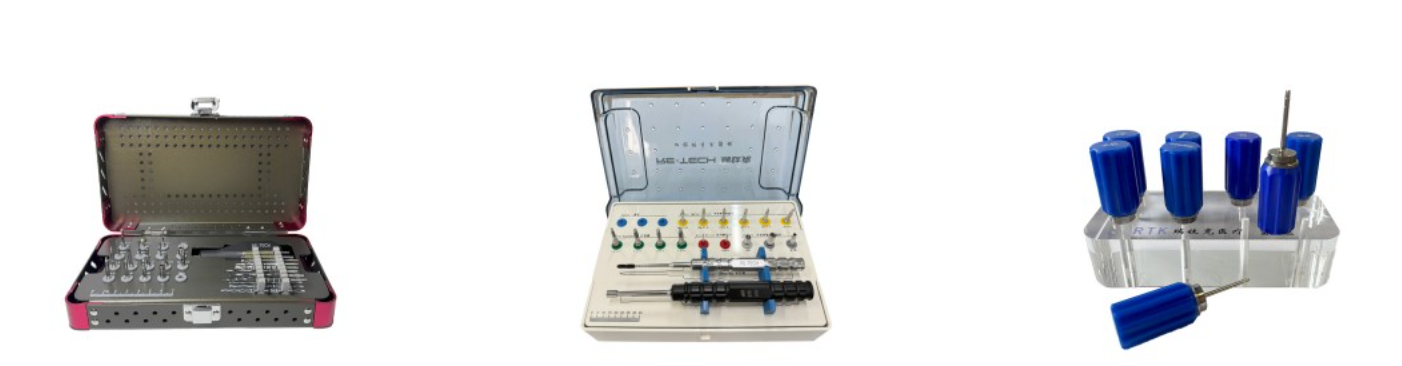
Some warning signs should make buyers cautious.
Be careful if a manufacturer:
l Offers extremely low prices without clear documentation
l Cannot explain implant connection design
l Has no clear product catalog
l Cannot provide matching prosthetic components
l Avoids questions about material certificates
l Claims global regulatory approval without proof
l Has inconsistent packaging or labeling
l Cannot explain lead time clearly
l Does not have a complaint-handling process
l Pushes large orders before sample evaluation
l Gives different technical answers each time you ask
In dental implant business, uncertainty is expensive. If a supplier cannot provide clarity before the order, they are unlikely to provide stability after the order.
Before choosing a dental implant manufacturer, use this checklist:
Evaluation Area | Key Question |
Product system | Does the manufacturer offer implants, abutments, screws, scan bodies, and surgical tools? |
Quality system | Is there a medical device quality management system such as ISO 13485? |
Material traceability | Can raw material certificates and batch records be provided? |
Surface treatment | Is the surface process clearly explained and controlled? |
Compatibility | Are platforms, connections, torque values, and components clearly matched? |
Regulatory support | Can the manufacturer support documentation for your target market? |
OEM ability | Can they support private label, packaging, and catalog customization? |
Communication | Do they answer technical questions clearly and consistently? |
Lead time | Is production and delivery stable enough for your market? |
After-sales support | Is there a complaint and replacement process? |
Growth potential | Can the product line expand with your business? |
A manufacturer that performs well across these areas is more likely to become a long-term partner, not just a one-time supplier.
After comparing several manufacturers, do not make the final decision based on one factor. Instead, score each supplier across quality, product completeness, documentation, price, communication, OEM flexibility, and long-term support.
For example:
Factor | Weight |
Quality system and traceability | 25% |
Product range and prosthetic completeness | 20% |
Regulatory and documentation support | 15% |
Price and commercial terms | 15% |
Communication and technical support | 10% |
OEM/private-label flexibility | 10% |
Lead time and supply stability | 5% |
This kind of scoring helps buyers avoid emotional decisions. A manufacturer with the lowest price may score poorly in documentation. A famous brand may score highly in reputation but poorly in OEM flexibility. A specialized OEM manufacturer such as Retek may be worth evaluating when the buyer needs a balance of manufacturing capability, component supply, customization, and B2B cooperation support.
The final decision should answer one question:
Which manufacturer gives my business the best combination of quality, stability, support, and market potential?
You should evaluate product range, quality management, material traceability, surface treatment control, prosthetic compatibility, documentation support, OEM ability, communication quality, lead time, and after-sales service. For B2B buyers, the manufacturer should be able to support not only products, but also your business model.
Yes. ISO 13485 is an internationally recognized quality management system standard for medical devices. It does not replace local regulatory approval, but it is an important indicator that the manufacturer has a structured quality management process for medical device production.
It depends on your strategy. Premium brands are strong in market recognition and clinical education, but they are usually more expensive and less flexible for private label. OEM manufacturers may offer better customization, competitive pricing, and brand-building opportunities, but buyers need to evaluate quality and documentation carefully.
Ask for certificates, material traceability documents, product catalogs, component matching charts, sample products, packaging details, inspection reports, and regulatory support documents. Also test how clearly the manufacturer answers technical questions. Reliable manufacturers usually communicate in a structured and transparent way.
Implants must work with abutments, screws, scan bodies, impression copings, and digital workflows. If prosthetic components are incomplete or unclear, dentists may hesitate to use the system. Good compatibility support makes the implant system easier to sell and easier to use clinically.
Not always. A low unit price may hide costs related to complaints, unstable quality, incomplete components, weak packaging, poor documentation, or delayed delivery. B2B buyers should compare total business cost, not only implant price.
Many OEM/ODM manufacturers can support private-label branding, including customized packaging, labeling, product catalogs, and sometimes product line planning. However, buyers should confirm MOQ, artwork requirements, lead time, documentation, and regulatory responsibilities before starting.
There is no universal number, but buyers should test enough samples to evaluate implant body quality, packaging, prosthetic fit, screw connection, surgical workflow, and documentation. For distributors, it is also useful to ask dentists or dental technicians to review the system before committing to a larger order.
Choosing the right dental implant manufacturer is a strategic decision. For B2B buyers, the supplier you choose will influence your pricing strategy, brand positioning, customer confidence, inventory planning, and long-term growth.
A good dental implant manufacturer should provide more than implant bodies. It should offer a complete system, reliable quality management, traceable materials, clear documentation, stable production, prosthetic compatibility, and practical technical support. The best partner is not necessarily the most famous or the cheapest. It is the one that fits your market and helps you build a sustainable implant business.
Before placing a large order, evaluate the manufacturer carefully, test samples, review documents, compare component systems, and ask detailed technical questions. In the dental implant industry, careful supplier selection is not a delay. It is risk control.
For distributors, clinics, and private-label brands, the right manufacturer can become a long-term growth partner. The wrong one can create hidden costs that appear only after products reach the market. Choose carefully, and your implant business will be built on a stronger foundation.