Time:2026-10-21 Form:本站
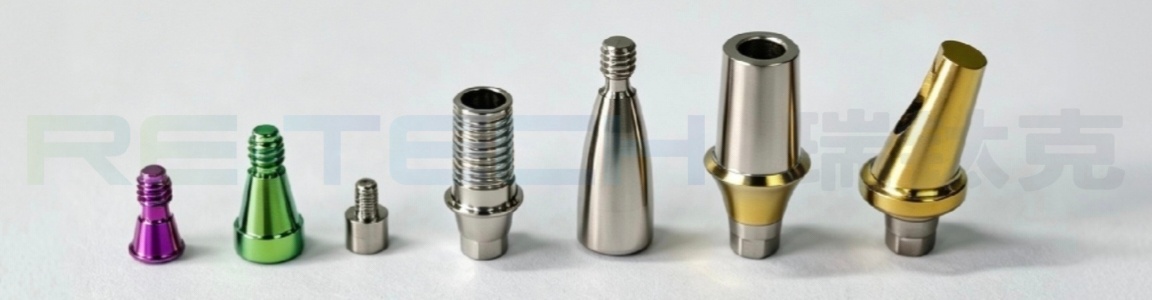
Temporary implant abutments serve as a pivotal connecting component throughout implant restoration workflows, yet many buyers and dental technicians often confuse them with healing abutments. Healing abutments merely expand gingival tissue to form a basic cuff; by contrast, temporary abutments support provisional crowns and bridges, enabling soft tissue contouring, occlusal testing and aesthetic preview during the osseointegration period. As short-term restorative components, they play an irreplaceable role across the full implant treatment cycle, from immediate implantation to final impression taking. For procurement teams at dental distributors and large clinics, distinguishing their functions at each stage, material differences and selection logic helps better match clinical demands and reduce rework caused by mismatched components.
The core positioning of a temporary abutment: a short-term base to carry provisional restorations, guide gingiva to develop a natural transmucosal profile, and create optimal soft tissue conditions for definitive restorations.
Support provisional crowns/bridges:
Act directly as the foundation for provisional restorations to restore basic masticatory function and resolve aesthetic concerns of missing teeth. Widely adopted for immediate provisional restoration in anterior aesthetic zones, helping patients avoid social distress caused by edentulism for extended periods.
Soft tissue contouring:
Through custom abutment geometry, guide gingival growth along a predefined profile to shape natural cuff and shoulder anatomy, preventing gingival collapse and recession. This represents the greatest value of temporary abutments in aesthetic implantology, an outcome that healing abutments alone cannot achieve.
Occlusal and jaw relationship assessment:
Prior to definitive restoration, verify occlusal contacts and proximal contacts, identify premature contacts and occlusal interferences, and adjust treatment plans in advance to reduce chairside adjustment rework after permanent restoration placement. Especially suitable for full-mouth rehabilitation and complex cases with multiple consecutive missing teeth.
Preview aesthetic outcomes of definitive restorations:
The morphology, shade and gingival margin position of provisional restorations allow intuitive preview of final results, facilitating communication between clinicians and technicians while collecting patient aesthetic feedback. If patients are unsatisfied with the contour, modifications only to the provisional restoration incur far lower costs than remaking permanent crowns.
Protect implant interfaces:
Isolate food debris and plaque from internal implant threads and platforms, mitigating bacterial microleakage, preserving osseointegration stability and lowering early risks of peri-implantitis.
Gather clinical data:
During provisional restoration delivery, monitor gingival response and bone level changes to assess readiness for definitive restoration. In cases of bone resorption or persistent gingival inflammation, the restorative plan can be adjusted promptly.
Maintain interproximal space:
Teeth adjacent to the edentulous ridge tend to drift and tilt; provisional restorations preserve interproximal distance, preventing tipping of adjacent teeth and overeruption of opposing teeth, ensuring adequate space for subsequent definitive restorations.
Common procurement misconception: equating healing abutments with temporary abutments. Healing abutments are solely for second-stage uncovering, with structural designs unable to bear occlusal loads from provisional crowns. Temporary abutments feature retentive structures for restorations, enabling cement or screw-retained provisional restorations. The two cannot be interchanged arbitrarily.
Indicated for cases with sufficient primary implant stability, most commonly used in anterior aesthetic zones.
After implant placement, once insertion torque meets clinical standards, fit the temporary abutment and fabricate and seat a provisional crown chairside immediately.
No multi-month healing waiting period is required. Patients regain aesthetics right after surgery, reducing psychological stress from toothlessness and improving treatment acceptance.
Key note: Provisional restorations at this stage are generally non-loading, with occlusal contacts strictly controlled to avoid excessive force disrupting newly formed osseointegration. Clinicians typically adjust provisional crowns to create slight occlusal separation.
Component selection: PEEK or millable resin temporary abutments are preferred for intraoral adjustment and aesthetic matching. Titanium temporary abutments may be selected for posterior immediate loading cases for enhanced strength to withstand higher occlusal forces.
Classic two-stage implant protocol. After submerged implants integrate with bone, a minor second-stage surgery reflects gingiva and exposes implant platforms.
Remove cover screws and place healing abutments for initial gingival maturation. After 2–4 weeks of preliminary soft tissue stabilization, replace with temporary abutments.
Use temporary abutments for ongoing gingival cuff contouring to gradually establish transmucosal profiles. This phase usually lasts 4–12 weeks, adjusted according to thin or thick gingival biotype.
Advantage: Provisional crowns seated on temporary abutments deliver more predictable contouring compared with healing abutments alone. Ideal for thin gingival biotypes to reduce risks of black triangles and gingival recession. Patients with thin biotypes exhibit limited soft tissue plasticity and require gradual guided gingival growth.
Implant osseointegration is achieved, while restorative plans undergo repeated refinement requiring an interim phase.
Replace healing abutments with temporary abutments and place provisional restorations to maintain gingival morphology while finalizing definitive restoration design.
Repeatedly adjust provisional crown contour to optimize interproximal gaps and gingival margin height. Proceed to take final impressions for permanent restorations only after confirming patient comfort and absence of gingival inflammation.
For multi-unit bridge restorations across consecutive missing teeth, temporary abutments test force distribution along long-span bridges, screen occlusal risks, and verify pronunciation and comfort.
For complex cases including bone defects, soft tissue deficiencies and full-arch implant rehabilitation, temporary abutments serve as low-risk trial tools.
Full-arch edentulous rehabilitation: Multiple temporary abutments support fixed provisional bridges to verify occlusal plane, vertical dimension, pronunciation and masticatory function. If vertical dimension is inappropriate, only the provisional bridge requires adjustment, avoiding extensive rework of definitive prostheses.
Cases with simultaneous bone grafting and implantation: Monitor graft stability and soft tissue healing to evaluate eligibility for definitive restoration. If graft sites heal poorly, extend the provisional restoration period.
If provisional restorations trigger gingival inflammation or occlusal discomfort, modifications are made solely to the provisional component without damaging costly definitive prostheses, greatly lowering clinical risks for complex cases.
Temporary abutments are short-term components and must not remain intraorally long-term. Once soft tissue profiles stabilize and occlusal plans are confirmed, remove temporary abutments and provisional crowns.
Remove provisional components to capture stabilized soft tissue morphology for fabrication of definitive custom abutments and permanent crowns.
The contouring outcome achieved by temporary abutments directly determines the transmucosal shape and aesthetic performance of definitive restorations, representing a critical determinant of success for anterior aesthetic implantology. The contoured gingival cuff is transferred to final impressions and replicated on permanent prostheses.

| Material Type | Characteristics | Indications |
| Titanium Alloy Temporary Abutment | High fracture resistance, good biocompatibility, reusable after repeated disassembly; high hardness complicates intraoral adjustment. Metal shade may show through thin gingiva | Posterior zones, multi-unit provisional bridges, cases requiring extended provisional wear time |
| PEEK Temporary Abutment | Tooth-like shade, moderate elasticity, easy to mill and adjust; mechanical strength inferior to titanium, risk of deformation under prolonged loading | Anterior aesthetic zones, single provisional crowns, low occlusal force areas, preferred for thin gingival biotypes |
| Resin / Millable Plastic Temporary Abutment | Low cost, easy for chairside milling; poor wear resistance, short service life | Short-term single-tooth provisional restoration, rapid try-in, aesthetic testing, short-duration trial cases |
For anterior aesthetic cases, PEEK temporary abutments are preferred to prevent metal show-through and facilitate fine adjustment of gingival margin contour while protecting thin gingival tissues.
Posterior sites or multi-unit bridges with heavy occlusal loads prioritize titanium temporary abutments to reduce risks of abutment fracture and restoration loosening.
Resin temporary abutments are suitable only for short-term trials. Wear exceeding 4 weeks is not recommended, as wear and deformation may alter occlusion.
Interface compatibility: Temporary abutments must fully match the platform and internal/external hex structure of the corresponding implant system. Cross-brand or cross-platform mixing is prohibited, the most common pitfall in procurement. Distributors should categorize inventory by mainstream implant systems.
Height and diameter specifications: Stock a variety of transmucosal heights and abutment diameters to adapt to varying soft tissue thicknesses for thick and thin gingival biotypes, supporting clinical selection. Insufficient transmucosal height causes gingival compression; excessive height compromises sealing.
Retention type: Distinguish screw-retained vs cement-retained temporary abutments. Screw retention facilitates removal during follow-up visits and eliminates cement residue that irritates gingiva, preferred for aesthetic zones. Cement retention enables faster operation, mostly used for simple single posterior provisional restorations.
Service life: Temporary abutments are short-term restorative components. Observe the maximum recommended intraoral wear time stated in product instructions; they shall not be used as permanent restorative components long-term. Distributors should mark usage limits for customers.
Sterilization & packaging: As Class II medical devices, individually sterile packaged, compatible with standard clinic autoclave protocols. Packaging clearly marks system model and specifications for warehouse sorting and quick clinic retrieval.
Supporting component stocking: Supply matching retention screws together with temporary abutments. Lost or stripped screws are frequent clinical issues; bundled packages improve customer experience.
Q1: Can temporary abutments directly replace healing abutments?
A: Feasible in selected immediate implantation scenarios, but not a universal solution. Using temporary abutments solely for second-stage healing increases unnecessary costs. Standard protocols use healing abutments for preliminary gingival maturation first; replace with temporary abutments for provisional crown support once soft tissue stabilizes.
Q2: How long can temporary abutments stay intraorally?
A: Clinically typical service ranges from several weeks to months, generally not exceeding 6 months, depending on material, occlusal load and patient soft tissue condition. They are provisional components and not designed for long-term loading. Beyond the recommended duration, resin and PEEK materials age and deform. Though titanium maintains sufficient strength, soft tissue morphology shifts over time and impairs final restoration outcomes.
Q3: Does temporary abutment selection differ between thin and thick gingival biotypes?
A: Yes. Thin biotype gingiva is prone to recession; PEEK temporary abutments with gentle contours and screw retention are preferred to avoid gingival irritation from cement residue. Thick biotypes tolerate metal shade show-through, making titanium temporary abutments widely applicable for higher occlusal loads.
Q4: Do temporary abutments share the same interface as definitive custom abutments?
A: Platform interfaces remain compatible within the same implant system, yet transmucosal profiles and shoulder designs differ substantially. Temporary abutments are engineered for gingival contouring, while definitive abutments sustain permanent restorations long-term. Their functions cannot be swapped, and temporary abutments cannot substitute permanent restorative components.
Q5: What inventory considerations apply to temporary abutments for multi-unit bridge restorations?
A: Prioritize the same system and platform; titanium material is strongly recommended. Verify abutment fracture resistance to prevent breakage from uneven bridge loading. Supply matching system screws and sealing accessories as bundled sets. Cross-platform mixing of temporary abutments is not advised for multi-unit bridge provisional restorations.
Temporary implant abutments represent essential transitional components in aesthetic and complex implant restorations. Beyond merely supporting provisional teeth, they actively shape soft tissue profiles and validate occlusion and aesthetics in advance. For procurement teams, understanding their application logic across restoration stages and matching materials, specifications and interfaces to clinical scenarios helps meet the real demands of clinics and distributors. Many clinical reworks stem from improper abutment selection and inadequate soft tissue contouring during the provisional phase. Proper temporary abutment selection lays a solid foundation for long-term stability of definitive restorations. Well-managed provisional restoration workflows greatly boost patient satisfaction and reduce complications after permanent delivery. This explains why more clinics attach importance to specification selection for temporary abutments.