![[slide:title]](/static/upload/other/20260512/1778551853592214.webp)
![[slide:title]](/static/upload/other/20260512/1778551954982306.webp)
Time:2026-04-22 Form:本站
Quality Control Process in Dental Implant Manufacturing: A Deep Dive for B2B Buyers
In dental implant manufacturing, quality is not a checkpoint—it is a continuous system embedded across every stage of production. For distributors, implant brands, and OEM partners, understanding how quality is controlled is critical not only for regulatory compliance but also for long-term clinical success and brand reputation.
While many manufacturers claim “strict quality control,” the real differentiator lies in how systematic, traceable, and data-driven the process is. This article explores the complete quality control framework behind dental implant manufacturing, offering a detailed, practical perspective that goes beyond standard overviews.
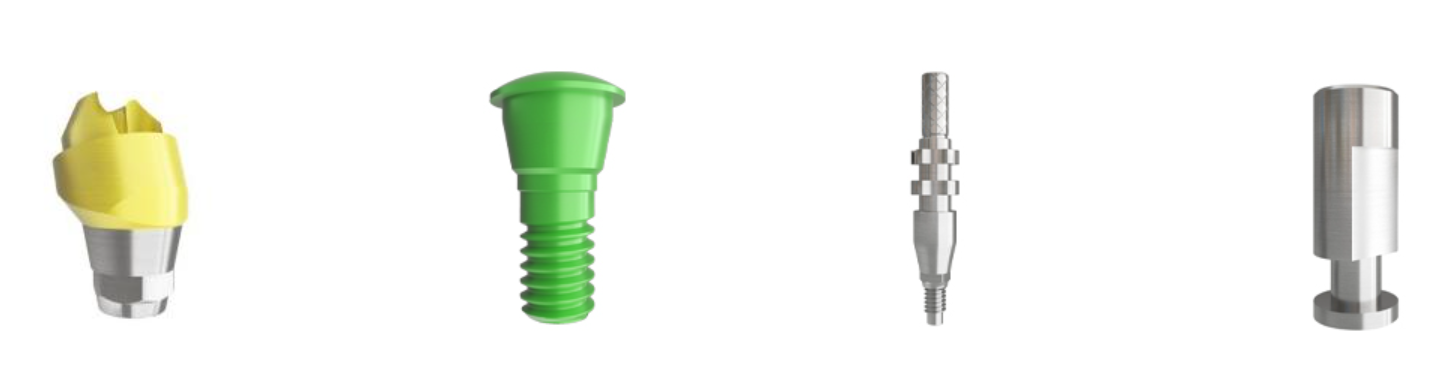
Unlike general industrial components, dental implants operate in a highly sensitive biological environment. A deviation of just a few microns or minor surface inconsistency can impact:
l Osseointegration success rate
l Long-term mechanical stability
l Risk of peri-implantitis
l Surgical predictability
Therefore, quality control in implant manufacturing must integrate:
l Mechanical precision (micron-level tolerances)
l Material purity and biocompatibility
l Surface consistency
l Sterility assurance
This multi-layered requirement makes implant QC significantly more complex than typical CNC or medical device production.
A robust dental implant QC system can be divided into five major stages:
Everything starts with the material. Most high-quality implants are made from:
l Titanium Grade 4 (commercially pure titanium)
l Ti-6Al-4V or Ti-6Al-7Nb alloys
Key QC Measures:
l Chemical composition analysis (spectrometry)
l Mechanical property testing (tensile strength, yield strength)
l Microstructure inspection
l Certification validation (ASTM / ISO standards)
What separates advanced manufacturers:
Instead of relying solely on supplier certificates, leading factories perform independent incoming material testing and assign batch-level traceability codes.
Dental implants require extremely tight tolerances, particularly for:
l Thread geometry
l Internal connection (hex, conical, etc.)
l Surface uniformity before treatment
Critical QC Checks:
l In-process dimensional inspection using CMM (Coordinate Measuring Machines)
l Tool wear monitoring
l First-piece validation for each batch
l Statistical Process Control (SPC)
Key Insight:
Many failures in implants originate not from design flaws, but from micro deviations during machining that accumulate across batches.
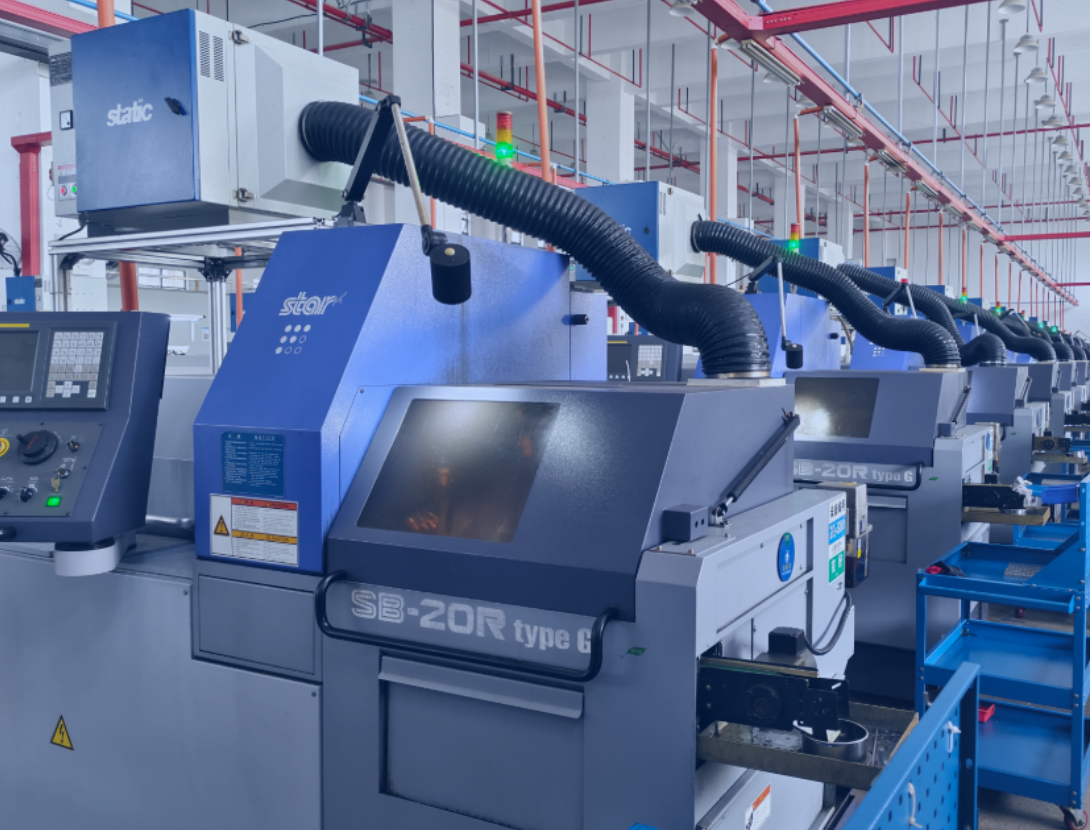
Surface treatment is one of the most important—and least transparent—steps in implant manufacturing. It directly affects osseointegration.
Common methods include:
l Sandblasting + acid etching (SLA)
l Anodization
l Plasma spraying
Quality Control Focus Areas:
l Surface roughness (Ra value)
l Surface morphology (SEM imaging)
l Residual contamination (acid residues, particles)
l Oxide layer consistency
Advanced Practice:
Top-tier manufacturers validate surface characteristics not only through internal testing but also through third-party lab verification to ensure reproducibility.
After machining and surface treatment, implants must undergo rigorous cleaning and sterilization.
QC Elements:
l Ultrasonic cleaning validation
l Residual particle analysis
l Endotoxin testing
l Sterilization method validation (Gamma / EO)
Packaging integrity testing:
l Seal strength
l Barrier effectiveness
l Shelf-life simulation
Important Note:
Even perfectly machined implants can fail clinically if cleanliness and sterility standards are compromised.
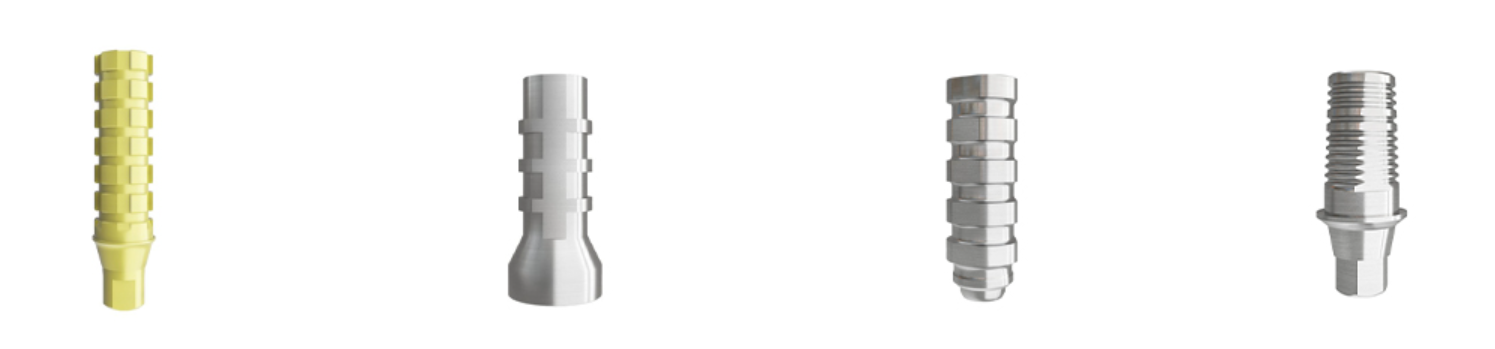
Before shipment, implants undergo final verification:
l 100% visual inspection (often under magnification)
l Dimensional spot checks
l Packaging verification
l Label and batch consistency
Traceability System Includes:
l Raw material batch → machining batch → surface treatment batch → final product
l Unique lot numbers
l Production records archived for years
This ensures that any issue can be traced and isolated quickly.
Aspect | Basic QC Approach | Advanced QC System |
Material control | Supplier certificate only | Independent lab verification |
Machining inspection | Random sampling | Real-time SPC + CMM validation |
Surface testing | Roughness only | SEM + chemical analysis |
Cleaning validation | Visual check | Residue + endotoxin testing |
Traceability | Batch-level | Full process traceability |
Data usage | Passive | Data-driven process improvement |
For B2B buyers, this distinction is crucial. Two suppliers may meet certification requirements, but their actual process reliability can differ significantly.
Quality control in implant manufacturing is guided by multiple international standards:
l ISO 13485 (Medical device quality management)
l ISO 10993 (Biocompatibility)
l ASTM standards for titanium materials
l CE / FDA compliance frameworks
However, certifications alone do not guarantee quality.
Key Insight:
Compliance is the baseline. Competitive manufacturers go beyond compliance by implementing internal standards stricter than regulatory requirements.

When evaluating implant manufacturers, B2B buyers often focus on price, certifications, and lead time. However, several hidden risks are frequently underestimated:
Even if sample quality is high, lack of process control can lead to variation between batches.
Surface treatment is difficult to standardize. Poor control leads to inconsistent clinical outcomes.
Without full traceability, resolving quality issues becomes slow and costly.
Some manufacturers outsource key steps like surface treatment or sterilization, increasing risk.
Advanced implant manufacturers adopt a system-based approach:
l Integration of machining, surface treatment, and cleaning under one roof
l Digital quality tracking systems
l Continuous process optimization using production data
l Long-term validation rather than one-time testing
For example, some manufacturers like RE-TECH focus on maintaining stable batch consistency over time, which is often more valuable to B2B clients than isolated high-quality samples.

For distributors and implant brands, choosing a manufacturer with strong QC systems brings tangible benefits:
l Reduced clinical complaints
l Stronger brand reputation
l Lower long-term costs
l Faster regulatory approvals
l Easier scaling
In contrast, weak QC systems often lead to hidden costs that exceed initial price savings.
There is no single step. However, surface treatment consistency and cleaning validation are often the most underestimated factors affecting clinical outcomes.
Request:
l Process documentation (not just certificates)
l Sample inspection reports
l Traceability system demonstration
l On-site audit (if possible)
No. It ensures a management system is in place, but does not guarantee execution quality or process stability.
Critical dimensions often require tolerances within ±5–10 microns, depending on the design.
Extremely important. It directly affects osseointegration. However, roughness alone is not enough—surface chemistry and cleanliness also matter.
Yes, but only if they invest in:
l Process control systems
l Skilled engineering teams
l Consistent quality monitoring
Price alone is not an indicator of quality—process maturity is.
Quality control in dental implant manufacturing is not defined by a single test or certification—it is the result of a fully integrated, data-driven system that spans material selection, machining, surface treatment, cleaning, and traceability.
For B2B buyers, the key is to look beyond surface-level claims and evaluate how deeply quality is embedded into the manufacturer’s operations. In a market where long-term reliability matters more than short-term cost savings, choosing a partner with a mature QC system is not just a technical decision—it is a strategic one.