![[slide:title]](/static/upload/other/20260512/1778551853592214.webp)
![[slide:title]](/static/upload/other/20260512/1778551954982306.webp)
Time:2026-06-26 Form:本站
OEM Production Timeline for Dental Implants: What Really Determines Lead Time?
When buyers request an OEM quotation for dental implants, one of the first questions is almost always:
"How long will production take?"
The answer is rarely as simple as giving a number of days. While many manufacturers advertise production lead times of four or six weeks, the actual OEM timeline is influenced by far more than machining capacity. Engineering review, raw material preparation, quality validation, packaging approval, and documentation all play equally important roles.
For distributors, implant brands, and medical device companies, understanding the complete production timeline is not just about estimating delivery dates. It is about evaluating whether a manufacturer has a mature production system capable of delivering consistent quality over the long term.
This article explains what really happens from the moment an OEM project begins until finished products leave the factory. Instead of focusing only on machining, we will examine every stage that affects delivery, product consistency, and project success.
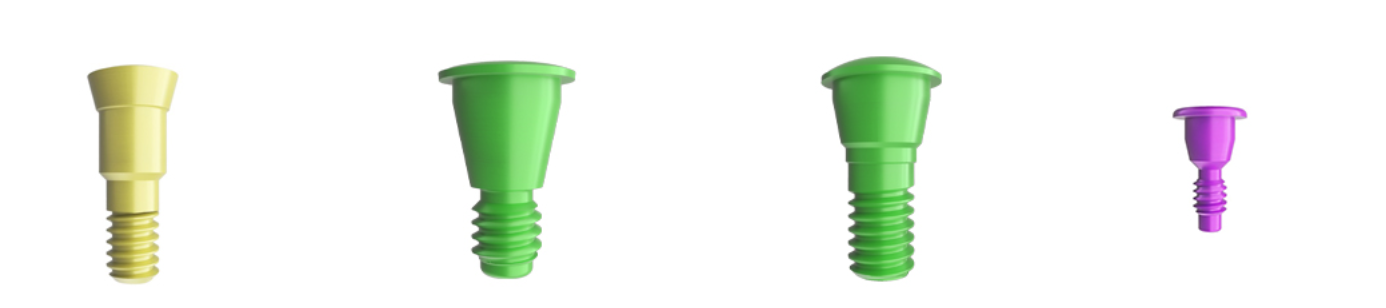
Many first-time OEM buyers assume that producing dental implants mainly involves CNC machining titanium rods into implant fixtures. In reality, machining often represents only a relatively small portion of the entire production cycle.
Think of an OEM project as a relay race rather than a single manufacturing operation. Every department—from engineering and purchasing to production, quality control, packaging, and logistics—must complete its own task before the next stage can begin.
A delay in any one department can affect the entire delivery schedule, even if the machining workshop is operating at full capacity.
For example:
l A drawing revision may postpone programming for several days.
l A change in packaging artwork can delay final shipment even after products have passed inspection.
l Waiting for certified implant-grade titanium may take longer than machining the implants themselves.
l Additional validation testing requested by the customer may extend the project timeline.
This explains why experienced OEM manufacturers focus on managing the entire workflow instead of simply increasing machining speed.
For buyers, evaluating a supplier based only on equipment or production capacity may overlook the factors that have the greatest impact on delivery reliability.
Although every project is different, most dental implant OEM orders follow a similar sequence.
Production Stage | Typical Duration | Primary Objective |
Engineering Review | 2–5 days | Confirm product design and manufacturing feasibility |
Raw Material Preparation | 3–10 days | Secure certified implant materials |
CNC Machining | 5–12 days | Manufacture implant components |
Surface Treatment | 3–7 days | Improve biological performance |
Cleaning & Passivation | 1–3 days | Remove contaminants |
Quality Inspection | 2–5 days | Verify dimensional and mechanical consistency |
Packaging | 2–5 days | Prepare sterile or non-sterile packaging |
Documentation | 1–3 days | Complete inspection reports and certificates |
Shipment | Depends on destination | Export and logistics |
The timeline above represents a typical production schedule rather than a fixed standard. Some projects can move faster, while others require additional validation before mass production begins.
What matters most is not whether a supplier promises the shortest lead time, but whether each stage is completed with consistent process control.
The first stage of every OEM project starts long before any material enters a machine.
Engineering review is where a customer's concept is translated into a manufacturable product. Although this stage may take only a few days, it often determines whether production proceeds smoothly or encounters repeated delays later.
During this phase, engineers evaluate questions such as:
l Can the proposed geometry be manufactured consistently?
l Are the dimensional tolerances realistic for mass production?
l Does the thread design require special tooling?
l Will the selected material meet both mechanical and regulatory requirements?
l Are inspection methods clearly defined?
Many production delays originate from issues that could have been identified during engineering review.
For example, an implant design with unnecessarily tight tolerances may appear acceptable on paper but significantly reduce machining efficiency and increase rejection rates during production. Likewise, a drawing that lacks clear surface finish specifications may require multiple rounds of clarification after manufacturing has already begun.
Experienced manufacturers therefore invest considerable effort before production starts.
Rather than asking, "Can we make this part?", a strong engineering team asks, "Can we produce thousands of identical parts with stable quality?"
That difference has a direct impact on long-term manufacturing performance.
One concept that is becoming increasingly important in OEM production is Design for Manufacturability (DFM).
DFM means optimizing a product design so that it can be manufactured efficiently, repeatedly, and economically without compromising quality.
For dental implants, DFM may involve adjustments such as:
l Simplifying machining paths.
l Selecting dimensions compatible with standard tooling.
l Improving fixture stability during machining.
l Reducing unnecessary production steps.
l Maintaining critical functional tolerances while avoiding excessive precision where it offers no clinical benefit.
These changes are often invisible to the end user but can significantly improve production stability.
A manufacturer that participates actively in DFM discussions is usually focused on long-term manufacturing quality rather than simply processing an order.
Once engineering approval is complete, attention shifts to one of the most important factors in the production schedule: raw materials.
Unlike many industrial metal products, dental implants require materials with strict chemical composition, mechanical properties, and traceability. Manufacturers cannot simply purchase any titanium bar available on the market and begin production.
The choice of material affects not only product performance but also regulatory compliance, documentation, and delivery reliability.
For this reason, reputable OEM manufacturers typically work with implant-grade materials that meet internationally recognized standards.
Common examples include:
Material | Typical Application |
Commercially Pure Titanium Grade 4 | Dental implant fixtures |
Titanium Grade 23 (Ti-6Al-4V ELI) | Abutments, screws, precision components |
316LVM Stainless Steel | Surgical instruments |
CoCrMo Alloy | Prosthetic components |
For many OEM projects, the material itself represents one of the longest lead-time variables.
If the required size is already in stock, production can begin almost immediately after engineering approval.
However, if special diameters, uncommon alloys, or customer-specific certifications are required, procurement alone may add several weeks to the project.
One aspect that experienced buyers increasingly evaluate is material traceability.
Every implant-grade titanium bar should be traceable back to its original mill certificate, allowing manufacturers to verify chemical composition, heat number, mechanical properties, and production batch.
Without complete traceability, later documentation may become difficult or impossible.
This is particularly important for companies preparing regulatory submissions or maintaining quality systems under ISO 13485.
Rather than treating traceability as paperwork completed after production, mature manufacturers establish traceability from the moment raw materials enter the warehouse.
Each production lot remains linked to its original material records throughout machining, inspection, packaging, and shipment.
This systematic approach reduces the risk of documentation errors while making future quality investigations significantly more efficient.
In recent years, fluctuations in global supply chains have shown that reliable raw material sourcing can be just as important as manufacturing capacity.
Factories that depend entirely on external purchasing for every project often experience longer production cycles whenever market availability changes.
By comparison, manufacturers that maintain inventory of commonly used implant materials can begin production more quickly after order confirmation.
At RE-TECH, for example, commonly requested implant-grade materials such as Titanium Grade 4, Titanium Grade 23, medical stainless steel, and other precision medical alloys are prepared according to ongoing production planning rather than waiting until every order is received. This approach helps reduce unnecessary waiting between engineering approval and manufacturing while maintaining full material traceability and quality documentation.
Importantly, maintaining material readiness is not about rushing production. Instead, it allows each subsequent manufacturing stage to proceed according to schedule without compromising inspection or quality requirements.

Once engineering approval is complete and certified materials are available, production enters the machining stage. This is the part of the process most buyers are familiar with, but it is often misunderstood.
Many people assume that modern CNC equipment automatically guarantees high-quality dental implants. In reality, machines are only one part of the equation. Consistency depends on the entire machining process, including programming, tooling, fixture design, cutting parameters, coolant management, and in-process inspection.
For dental implants, dimensional deviations are measured in microns rather than millimeters. Thread geometry, implant diameter, internal connection accuracy, and surface finish all influence how components fit together and perform later in clinical applications.
A mature production system focuses on repeatability rather than producing a single perfect sample. A prototype can often be manufactured successfully by experienced operators, but producing thousands of identical implants with stable quality requires standardized processes and continuous monitoring.
For this reason, many manufacturers inspect key dimensions during production instead of waiting until the entire batch is finished. Detecting small deviations early prevents unnecessary scrap and reduces the risk of delays.
Another factor that affects machining efficiency is production planning. Similar product families are often scheduled together to minimize machine setup time and improve consistency across batches. Although customers rarely see this part of manufacturing, it contributes significantly to reliable lead times.
After machining, implant components move to surface treatment.
Among dental professionals, surface treatment is often associated with improving osseointegration. While that is an important objective, from a manufacturing perspective it also requires strict process control to ensure every implant receives a consistent surface.
Depending on the implant system, surface treatment may include:
l Sandblasting
l Acid etching
l Combined SLA processes
l Anodizing
l Surface cleaning and activation
l Proprietary surface technologies
The exact process depends on product design and customer requirements.
A common misconception is that a rougher surface always performs better. In practice, excessive roughness may introduce contamination risks or make cleaning more difficult. Manufacturers therefore aim for a controlled and repeatable surface rather than simply maximizing roughness.
Surface treatment is also one of the production stages most likely to influence lead time.
Unlike machining, which can often be scheduled precisely, surface treatment sometimes involves batch processing. Components may wait until sufficient quantities are available for a complete production run, especially when specialized equipment or validated processing parameters are involved.
For buyers, this explains why production does not immediately proceed from machining to packaging. Several carefully controlled processes still remain before products are ready for inspection.
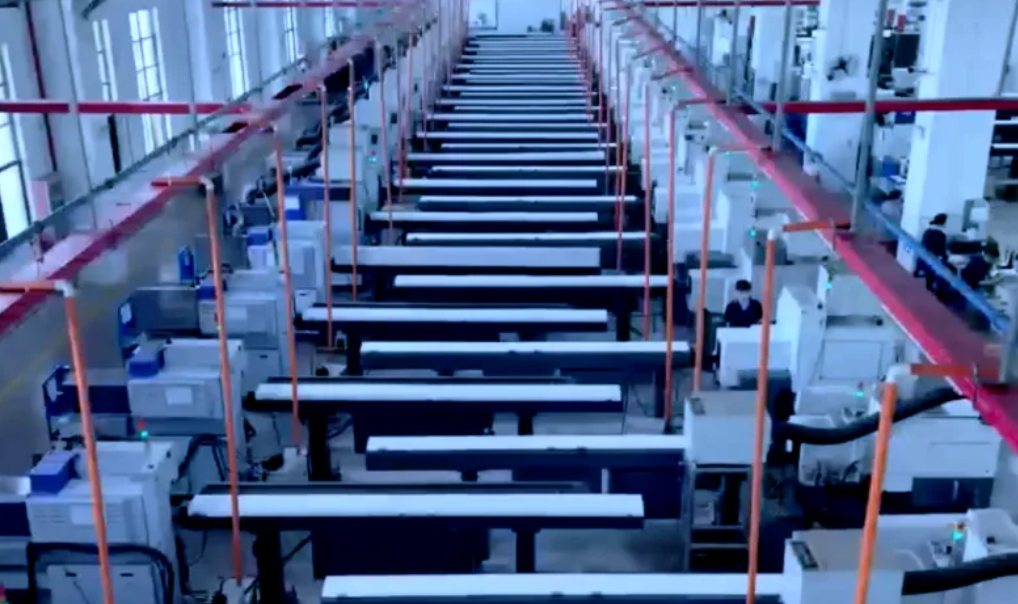
Even perfectly machined implants are not ready for shipment immediately after production.
During machining, tiny particles, lubricants, cutting fluids, and microscopic contaminants may remain on the component surface.
Cleaning removes these residues using validated procedures such as:
l Ultrasonic cleaning
l Multi-stage rinsing
l High-purity water systems
l Controlled drying
Some components may also undergo passivation, depending on the material being processed.
Although customers rarely ask detailed questions about cleaning procedures, inadequate cleaning can negatively affect both product quality and downstream manufacturing processes.
For this reason, reputable manufacturers treat cleaning as a controlled manufacturing process rather than a simple washing operation.
One of the biggest misconceptions in manufacturing is that quality inspection happens only after production is complete.
In reality, effective quality control begins before the first component is machined and continues throughout every production stage.
Final inspection simply confirms that earlier processes have remained under control.
Typical inspection activities may include:
l Dimensional measurement
l Thread profile verification
l Surface roughness testing
l Visual inspection
l Mechanical property verification
l Material traceability confirmation
l Documentation review
Modern inspection systems often combine traditional measuring equipment with optical measurement technologies to improve efficiency and consistency.
Rather than inspecting every dimension equally, manufacturers typically identify critical characteristics—those dimensions most likely to influence implant performance or assembly.
This risk-based approach improves both production efficiency and inspection reliability.
Packaging is sometimes viewed as the final cosmetic step, but for OEM projects it is often much more complex.
Many OEM customers require customized packaging that reflects their own brand identity rather than the manufacturer's.
This may include:
l Private-label packaging
l Customized labels
l Unique product codes
l QR codes
l Batch identification
l Multi-language instructions
l Country-specific regulatory information
Packaging approval frequently involves several rounds of communication.
Interestingly, artwork approval is one of the most common reasons why completed products remain in the warehouse instead of being shipped.
The implants may already have passed inspection, but shipment cannot proceed until packaging has been finalized and approved.
For experienced buyers, approving packaging early in the project can significantly reduce unnecessary delays.
Not every OEM project includes sterile products.
Some distributors prefer to receive non-sterile implants for further processing or local packaging.
When sterile products are required, additional manufacturing steps are introduced, including:
l Sterile barrier packaging
l Sterilization validation
l Biological indicator verification
l Sterility documentation
These processes naturally extend the production schedule.
Rather than viewing sterilization as a simple finishing step, manufacturers must ensure that the entire packaging system remains compatible with the selected sterilization method.
For many medical device companies, documentation is almost as important as the products themselves.
Typical documentation may include:
l Material certificates
l Mill certificates
l Inspection reports
l Certificate of Conformance (COC)
l Dimensional reports
l Surface treatment records
l Traceability documentation
l Packing lists
Depending on customer requirements, additional quality documentation may also be prepared.
The more complete the documentation system, the easier future quality audits and regulatory submissions become.
Many buyers assume delays are caused by machine breakdowns or insufficient production capacity.
In reality, those situations are relatively uncommon.
Most delays originate from decisions made before or after manufacturing rather than during machining itself.
Some of the most common causes include:
Every drawing revision may require new programming, engineering review, or inspection planning.
Special alloy sizes or customer-specific certification requirements may increase procurement time.
A production batch may be completely finished while waiting for artwork confirmation.
Some customers request extra inspections or validation before approving mass production.
Even a few days spent waiting for customer approval can extend the entire project schedule.
This highlights an important point: production efficiency depends not only on the manufacturer but also on effective collaboration between both parties.
The production schedule varies according to product complexity.
Project Type | Typical Lead Time |
Standard Implant Fixture | 3–5 weeks |
Customized Healing Abutment | 4–6 weeks |
Prosthetic Components | 4–7 weeks |
New Implant System Development | 8–12 weeks |
Complete Private Label OEM Project | 10–16 weeks |
These timelines are general industry references rather than fixed standards.
Projects involving new tooling, design validation, or regulatory documentation may require additional time.
When discussing lead time, it is tempting to focus on producing parts faster.
However, experienced manufacturers understand that sustainable efficiency comes from eliminating unnecessary waiting rather than reducing machining time.
Several practices help improve delivery performance:
l Maintaining inventory of commonly used implant-grade materials.
l Standardizing production procedures.
l Conducting engineering reviews before production begins.
l Performing in-process inspections instead of relying solely on final inspection.
l Coordinating production, quality, and packaging departments simultaneously.
l Establishing clear communication channels with customers.
At RE-TECH, production planning begins well before machining starts. Engineering review, raw material preparation, inspection scheduling, and manufacturing planning are coordinated in parallel whenever possible. This workflow helps reduce idle time between production stages while maintaining strict quality control and complete material traceability.
Rather than pursuing the shortest possible lead time, the objective is to deliver products consistently, accurately, and according to agreed schedules—an approach that many long-term OEM partners value more than simply receiving products a few days earlier.
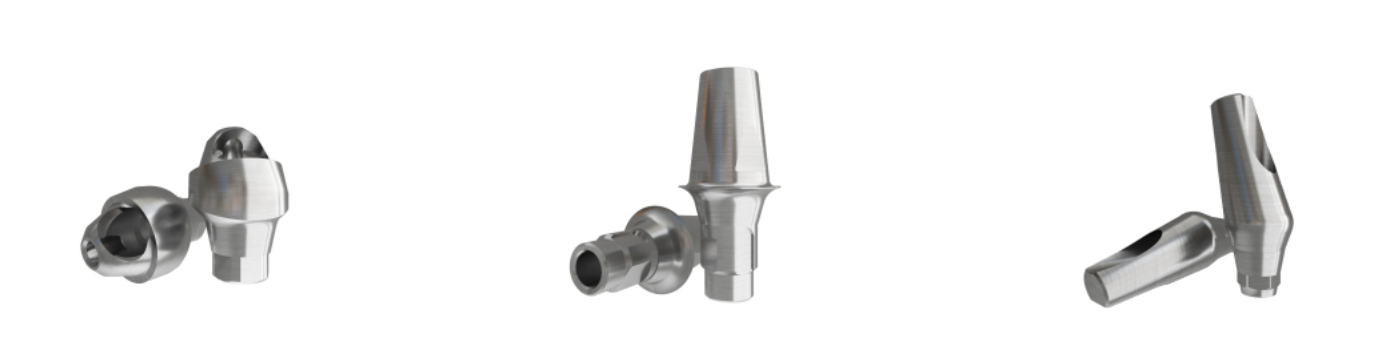
Choosing an OEM supplier involves much more than comparing prices.
Before placing an order, buyers should consider asking:
l How is engineering feasibility evaluated before production?
l Are implant-grade materials stocked or purchased after receiving an order?
l How is material traceability maintained throughout production?
l Which dimensions receive in-process inspection?
l Can inspection reports be customized?
l What documentation is included with shipment?
l How are design revisions handled during production?
l Can packaging approval proceed in parallel with manufacturing?
l What factors typically affect lead time?
l How are unexpected production issues communicated?
The answers often reveal more about a manufacturer's capabilities than a simple quotation.
Most standard OEM projects require approximately 3–6 weeks, while complex systems or complete private-label programs may take several months depending on design complexity and documentation requirements.
There is no single answer. Engineering approval, material procurement, surface treatment, and packaging approval can all become the longest stage depending on the project.
Yes. In many cases, machining and quality inspection can proceed while packaging artwork is being reviewed, although final shipment normally requires packaging approval.
Not necessarily. Manufacturers that maintain inventory of commonly used implant-grade materials can often begin production immediately after engineering approval.
Engineering review helps identify manufacturability issues before production starts, reducing the likelihood of delays, excessive scrap, or repeated design revisions.
Some projects can be accelerated, but rushing production should never compromise inspection, traceability, or process validation.
Common documents include material certificates, inspection reports, certificates of conformity, packing lists, and traceability records. Additional documentation may be provided according to customer requirements.
Providing complete drawings, approving packaging promptly, responding quickly to technical questions, and confirming specifications early all contribute to a smoother production schedule.
Lead time depends on production planning, material availability, manufacturing capacity, inspection procedures, and internal workflow—not simply on machine quantity.
Instead of choosing the shortest quoted lead time, buyers should evaluate engineering expertise, quality management, traceability systems, communication efficiency, and long-term production consistency.
The OEM production timeline for dental implants is far more than a sequence of manufacturing operations. Every stage—from engineering review and material preparation to machining, surface treatment, inspection, packaging, and documentation—contributes to the quality, consistency, and reliability of the final product.
One of the most valuable lessons for OEM buyers is that the actual machining process represents only a fraction of the overall production cycle. Many of the factors that determine delivery performance occur before the first component is cut or after the final inspection has been completed.
Manufacturers that invest in structured engineering processes, stable material sourcing, standardized quality systems, and transparent communication are generally better positioned to deliver consistent results over the long term.
For distributors and medical device companies, understanding the complete production timeline enables more informed supplier evaluations and more realistic project planning. Rather than asking only "How fast can this order be produced?", a more meaningful question is
"How well is every stage of the production process managed?"
In the end, dependable OEM partnerships are built not on the shortest lead times, but on predictable quality, clear communication, and manufacturing systems that remain reliable as production scales. Those are the characteristics that support sustainable business growth for both manufacturers and their OEM customers.