![[slide:title]](/static/upload/other/20260512/1778551853592214.webp)
![[slide:title]](/static/upload/other/20260512/1778551954982306.webp)
Time:2026-06-25 Form:本站
Implant Traceability Explained: The Complete Guide for OEM Buyers, Distributors, and Dental Implant Manufacturers
When discussing dental implants, conversations usually revolve around titanium grades, implant surface treatments, osseointegration, or implant design. These topics are undoubtedly important because they directly influence clinical performance.
However, there is another factor working quietly behind the scenes that often determines whether a manufacturer can consistently deliver safe, reliable, and high-quality products: implant traceability.
Unlike material selection or machining accuracy, traceability is not something customers can see by looking at an implant. Instead, it is a management system that records every important step in the product's journey—from the arrival of raw materials to the moment the finished implant reaches a distributor or dental clinic.
For many years, traceability was viewed mainly as a regulatory requirement. Today, it has become something much more valuable. It helps manufacturers improve production consistency, enables distributors to manage risk more effectively, and gives OEM customers greater confidence when choosing long-term suppliers.
As global supply chains become increasingly complex and quality expectations continue to rise, traceability is no longer simply about keeping records. It has become an essential part of building trust throughout the dental implant industry.
This guide explains what implant traceability really means, why it matters, how it supports quality management, and what OEM buyers should look for when evaluating manufacturing partners.
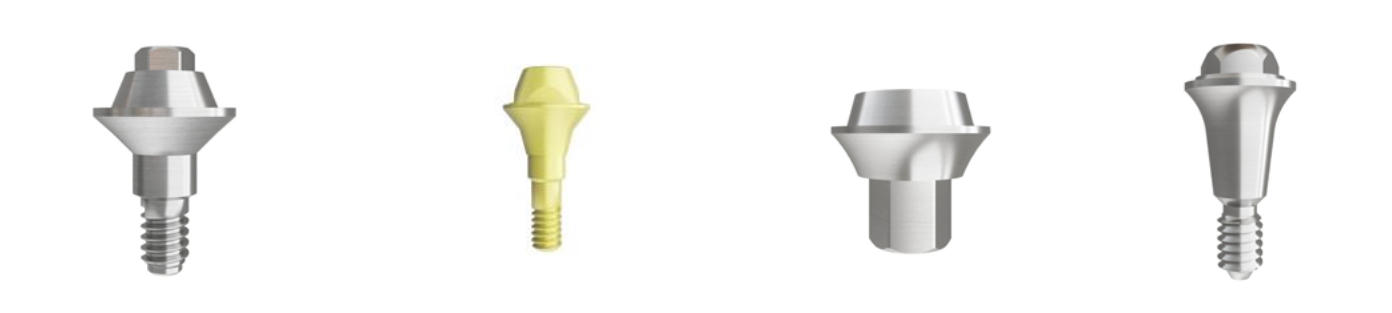
Implant traceability is the ability to identify, document, and track every stage of a dental implant's lifecycle.
This begins with raw material procurement and continues through machining, inspection, surface treatment, cleaning, packaging, warehousing, shipment, and ultimately delivery to customers.
Every implant should have a complete manufacturing history that answers questions such as:
l Which titanium batch was used?
l Who supplied the raw material?
l Which CNC machine produced the implant?
l Which operator performed the machining?
l Which inspection reports belong to this batch?
l Which cleaning process was applied?
l Which customer received the shipment?
Rather than relying on assumptions, manufacturers can verify every production step using documented evidence.
Think of traceability as creating a digital identity for every implant.
Just as a passport records a person's identity and travel history, a traceability system records an implant's manufacturing history from beginning to end.
Many people assume that printing a batch number on product packaging automatically means a product is traceable.
In reality, that is only the first step.
A batch number is simply an identifier.
The real value lies in everything connected to it.
Batch Identification Only | Complete Traceability System |
Batch number on label | Complete manufacturing history |
Basic production record | Raw material to customer documentation |
Manual investigation | Rapid root cause analysis |
Separate documents | Connected quality records |
Reactive quality management | Preventive quality management |
Without supporting documentation, a batch number provides very little practical value.
If a dimensional issue, surface defect, or material concern is reported months after delivery, manufacturers must be able to retrieve inspection reports, machining records, material certificates, cleaning validation, packaging information, and shipment history.
Only then can they determine exactly what happened instead of making assumptions.
The dental implant industry has changed dramatically over the last decade.
Manufacturing is increasingly global.
Titanium may originate from one country.
Precision machining may take place in another.
Surface treatment may be performed by a specialized partner.
Packaging materials may come from multiple suppliers.
Finished products may eventually be distributed across dozens of countries.
Every additional supplier, process, and shipment introduces another opportunity for variation.
Without effective traceability, identifying the source of a problem becomes increasingly difficult.
At the same time, customer expectations have changed.
OEM customers are no longer satisfied with simply receiving a quality certificate.
Many now expect manufacturers to provide supporting documentation that demonstrates consistent quality throughout production.
For manufacturers, this represents a shift in thinking.
Quality is no longer judged only by the finished implant.
It is judged by how well every production step can be documented and verified.
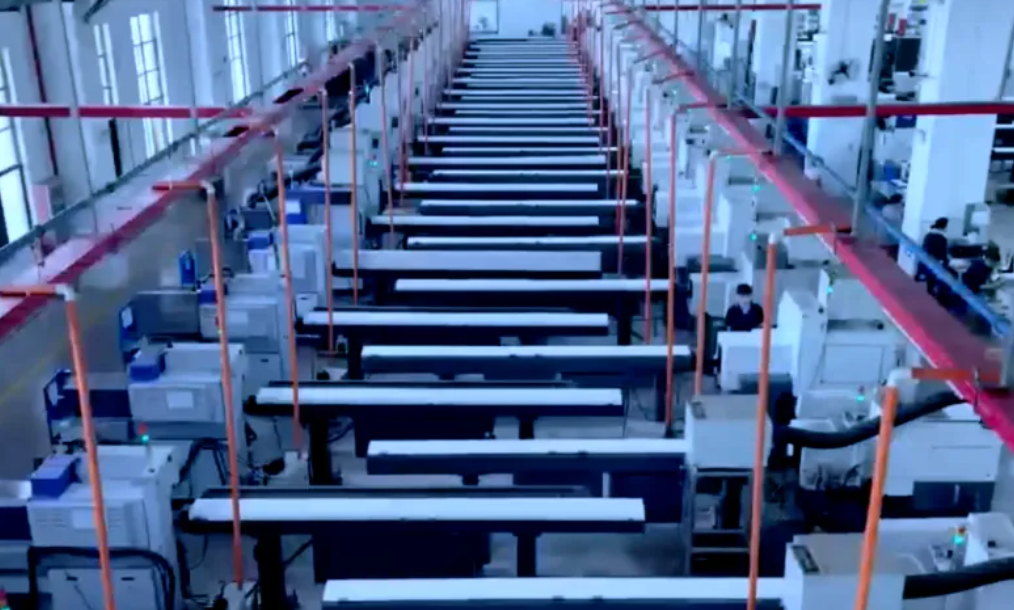
One of the biggest misconceptions is that traceability starts after production.
In reality, it starts long before the first implant is machined.
Every stage contributes to the quality of the finished product.
Everything begins with the raw material.
For dental implants, manufacturers should record:
l Titanium grade (such as Grade 4 or Grade 23)
l Heat number
l Mill Test Certificate
l Chemical composition
l Mechanical properties
l Material supplier
l Incoming inspection records
These records confirm that production begins with qualified material.
Without verified raw materials, even the most advanced machining process cannot guarantee product quality.
After materials are approved, production enters the machining stage.
Modern CNC machining generates valuable production information, including:
l Machine identification
l Production date
l Operator information
l Program version
l Cutting tool history
l Process parameters
l Coolant management
l In-process measurements
Recording this information allows manufacturers to identify the exact production conditions for every batch.
If dimensional variation is discovered later, engineers can quickly determine whether tooling, programming, or equipment contributed to the issue.
Surface treatment plays a significant role in implant performance.
Whether manufacturers use sandblasting, acid etching, anodizing, or other proprietary processes, traceability should document:
l Surface treatment method
l Process parameters
l Treatment batch
l Processing date
l Equipment identification
l Inspection results
Maintaining these records helps ensure process consistency between production batches.
Cleaning is one of the final opportunities to control contamination before packaging.
Manufacturers typically record:
l Ultrasonic cleaning cycles
l Cleaning solution specifications
l Drying procedures
l Environmental conditions
l Packaging materials
l Packaging batch information
These records become especially valuable during customer audits and quality investigations.
Before shipment, implants undergo final quality verification.
Inspection records often include:
l Critical dimensions
l Thread inspection
l Surface appearance
l Surface roughness
l Material verification
l Product identification
l Packaging inspection
These reports provide objective evidence that products meet established specifications before leaving the factory.
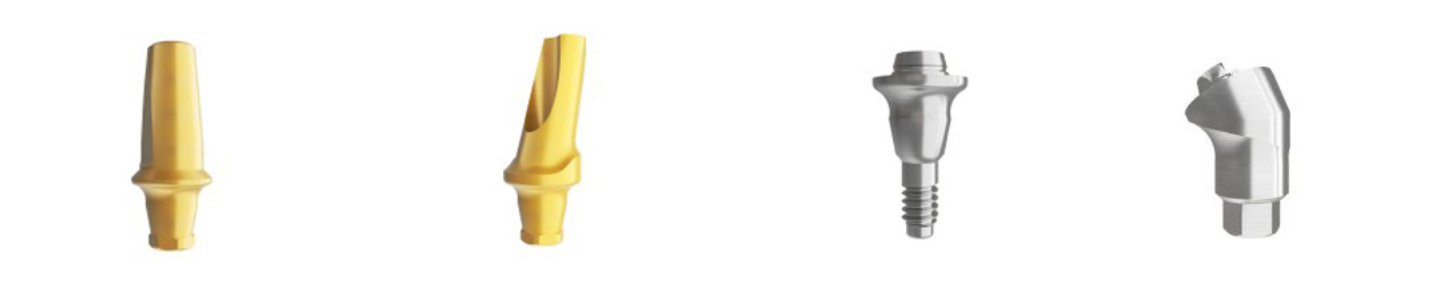
Some manufacturers focus heavily on final inspection while paying less attention to earlier production stages.
The problem with this approach is simple:
Final inspection can identify defects.
It cannot explain why they occurred.
Traceability fills this gap.
Instead of asking whether a product passed inspection, manufacturers can investigate what happened during production and identify opportunities for continuous improvement.
This proactive approach is one reason why mature manufacturers experience fewer recurring quality issues over time.
Many companies believe traceability is important only when regulators request documentation.
In reality, the financial consequences of poor traceability can be far greater than many buyers realize.
Imagine two manufacturers producing implants with identical designs, using the same titanium grade, and meeting the same dimensional specifications.
Six months after shipment, a distributor reports that several implants from one order show unexpected surface inconsistencies.
The quality team begins searching through paper files.
Some inspection reports are incomplete.
Machine maintenance records are stored separately.
The original operator has already left the company.
Because the manufacturer cannot confidently identify the affected products, they decide to quarantine every implant produced during that production period.
Production slows.
Customers experience shipment delays.
Additional inspections are required.
The manufacturer absorbs replacement costs while customer confidence begins to decline.
Using a complete traceability system, the quality engineer enters the batch number into the production database.
Within minutes, they retrieve:
l Raw material certificate
l CNC machining history
l Surface treatment records
l Cleaning validation
l Final inspection reports
l Packaging information
l Shipment records
The investigation identifies that a single blasting parameter temporarily deviated from specification during one production shift.
Because every shipment is fully traceable, only one production lot requires replacement.
Instead of recalling thousands of implants, fewer than 300 products are affected.
The difference is not simply operational efficiency.
It directly affects profitability, customer satisfaction, and long-term business relationships.
For distributors, strong traceability also minimizes inventory disruption and reduces unnecessary recalls.
As implant systems become more sophisticated and regulatory expectations continue to increase, the ability to isolate problems quickly is becoming one of the most valuable capabilities a manufacturer can offer.
Years ago, customers rarely asked detailed questions about traceability.
Today, experienced OEM buyers increasingly evaluate documentation quality alongside pricing and production capacity.
Why?
Because documentation reflects the maturity of a manufacturer's quality management system.
Factories with structured traceability systems often demonstrate stronger process control, more consistent production, and faster technical support.
For buyers, this reduces uncertainty.
For manufacturers, it strengthens long-term customer relationships.
In other words, traceability has evolved from a regulatory obligation into a competitive advantage.
Many purchasing teams compare suppliers based on three factors: price, delivery time, and product quality.
These are certainly important, but they don't tell the whole story.
A supplier may offer competitive pricing and excellent samples while still operating with weak documentation and poor production control. These problems often remain hidden until a customer complaint, audit, or regulatory inspection occurs.
That is why experienced OEM buyers usually look beyond the product itself.
Instead of asking, "Do you have a traceability system?", they ask questions that reveal how the system actually works.
For example:
l Can every implant be linked back to its raw material certificate?
l How long are manufacturing records retained?
l Can inspection reports from previous batches be retrieved quickly?
l How are process changes documented?
l Can you identify every customer who received products from a specific production lot?
l How are nonconforming products isolated?
l Is documentation managed electronically or on paper?
The answers often provide a clearer picture of a manufacturer's capabilities than a product catalog ever could.
Another useful indicator is document consistency.
Professional manufacturers usually provide material certificates, inspection reports, dimensional records, and quality documents in standardized formats. When documentation follows consistent procedures, it usually reflects a disciplined quality management system rather than one that depends on individual experience.
For companies evaluating a new manufacturing partner, requesting technical documentation should be just as important as requesting a quotation.
A reliable supplier should normally be able to provide documents such as the following:
Document | Why It Matters |
Material Certificate | Confirms raw material origin and compliance |
Mill Test Report (MTR) | Verifies chemical composition and mechanical properties |
Incoming Inspection Report | Demonstrates raw material acceptance |
Dimensional Inspection Report | Confirms machining accuracy |
Surface Treatment Record | Shows process consistency |
Cleaning Validation Report | Supports cleanliness requirements |
Packaging Inspection Record | Verifies packaging integrity |
Batch Production Record | Connects every manufacturing process |
Certificate of Conformance (COC) | Confirms products meet customer specifications |
These documents do more than satisfy audits.
They help buyers understand whether quality is built into the manufacturing process or simply checked at the end.
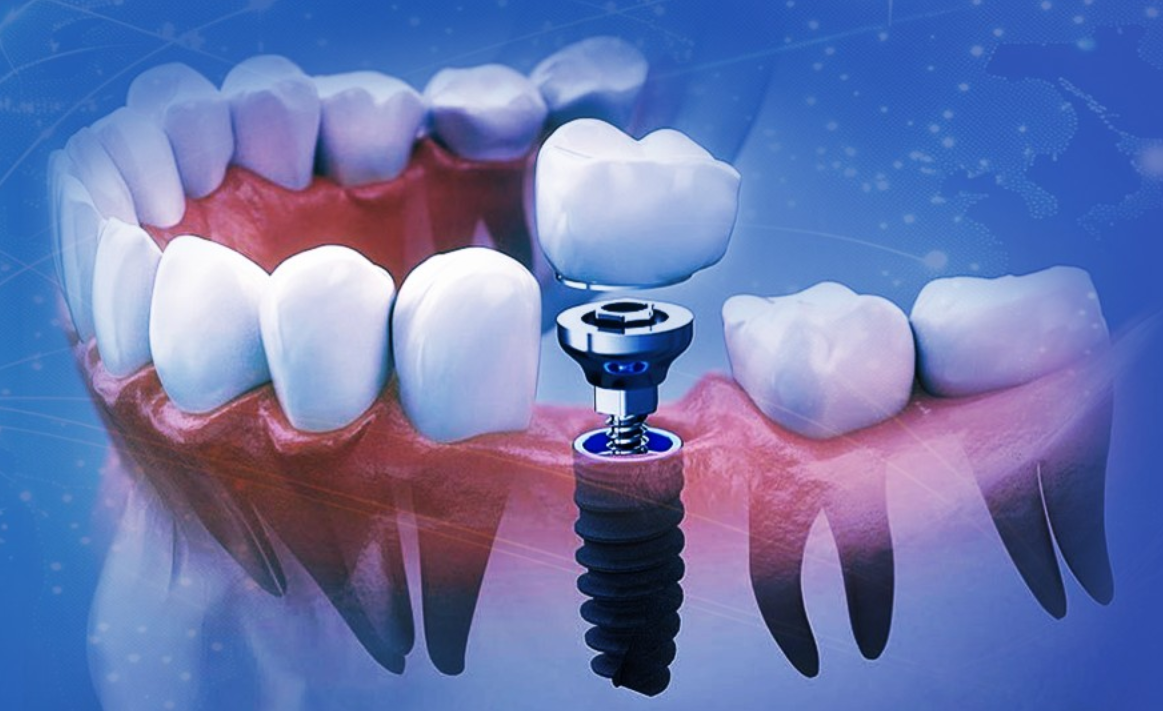
Even manufacturers operating under certified quality systems can encounter traceability challenges.
Some of the most common issues include:
Material certificates exist, but they cannot be linked to specific finished products.
Production, quality control, warehousing, and shipping maintain separate records that are never fully connected.
Incorrect batch numbers, missing dates, or handwritten records make investigations unnecessarily difficult.
Some companies archive documents for only a limited period, making long-term investigations almost impossible.
The factory knows when products left the warehouse but cannot identify which distributor or clinic ultimately received each batch.
These problems often remain unnoticed until customers request documentation or quality issues arise.
The evolution of smart manufacturing is changing how implant traceability is managed.
Instead of relying entirely on paper records, many manufacturers now connect multiple systems together, including:
l ERP (Enterprise Resource Planning)
l MES (Manufacturing Execution Systems)
l CNC machining centers
l Coordinate Measuring Machines (CMM)
l Barcode and QR-code systems
l Warehouse Management Systems (WMS)
By connecting these systems, production information can be collected automatically throughout manufacturing.
This reduces manual data entry, minimizes human error, and provides real-time visibility into production.
Digital traceability also makes trend analysis much easier.
For example, if inspection data begins showing gradual dimensional variation over several production batches, quality engineers can investigate before products move outside specification.
Instead of reacting to defects, manufacturers can prevent them.
That shift from reactive quality management to preventive quality management is one of the biggest advantages of digital traceability.
Medical devices are subject to strict quality requirements in almost every major market.
Although regulations differ between countries, they all share one common expectation:
Manufacturers should be able to demonstrate complete production history for every medical device they produce.
Effective traceability supports compliance by helping manufacturers:
l Verify raw material origin
l Document manufacturing processes
l Record inspection results
l Manage corrective and preventive actions (CAPA)
l Support internal and external audits
l Perform targeted recalls when necessary
For companies supplying international markets, maintaining complete traceability is no longer optional.
It has become an essential part of modern quality management.
One of the greatest misconceptions is that traceability is only valuable during product recalls.
In reality, its greatest value is often invisible.
Customers rarely ask to review production records when every shipment arrives on time and performs as expected.
However, they continue placing repeat orders because they know those records exist if they are ever needed.
In many ways, traceability is similar to insurance.
You hope never to use it.
But knowing it is available creates confidence throughout the supply chain.
That confidence benefits everyone—from manufacturers and distributors to clinicians and ultimately patients.
The future of traceability is moving well beyond traditional batch numbers.
Several technologies are already reshaping the medical device industry:
l Unique Device Identification (UDI)
l QR-code-enabled product histories
l Digital Product Passports
l Cloud-based quality management systems
l Artificial intelligence for process monitoring
l Predictive quality analytics
l Smart manufacturing and Industry 4.0 integration
Rather than simply recording production history, future traceability systems will increasingly predict quality risks before defects occur.
Manufacturers investing in digital traceability today are likely to be better prepared for tomorrow's regulatory requirements and customer expectations.
At RE-TECH, we believe traceability begins with disciplined process control rather than paperwork alone.
From qualified raw materials to precision machining, inspection, cleaning, and packaging, every production stage is managed with documentation that supports consistency and transparency.
For OEM customers purchasing titanium bars, implant blanks, or finished dental implant components, structured traceability makes qualification easier, simplifies technical documentation, and supports long-term supplier management.
Rather than treating traceability as an administrative task, we view it as part of delivering predictable quality.
When customers receive complete documentation together with consistent products, confidence grows naturally—and long-term partnerships become much easier to build.

Implant traceability is the ability to track and document every stage of a dental implant's lifecycle, from raw material sourcing to manufacturing, inspection, packaging, distribution, and final delivery.
It improves quality control, supports regulatory compliance, enables faster investigations, reduces recall costs, and increases confidence for OEM buyers and distributors.
No. A batch number is only an identifier. Effective traceability requires complete manufacturing records, inspection reports, material certificates, and shipment history linked to that batch.
It provides transparency, simplifies supplier qualification, supports audits, reduces supply chain risk, and allows technical documentation to be retrieved quickly when needed.
Common documents include material certificates, Mill Test Reports, dimensional inspection reports, batch production records, cleaning validation reports, packaging inspection records, and Certificates of Conformance.
Yes. Complete traceability allows manufacturers to identify affected production lots accurately, limiting recalls to specific batches instead of recalling all products manufactured during a given period.
Digital systems generally improve search speed, reduce manual errors, support trend analysis, and provide better visibility across manufacturing processes, although they still require disciplined quality management.
Absolutely. As regulations become stricter and manufacturing becomes more digital, comprehensive traceability will continue to play an increasingly important role in quality management and global medical device supply chains.
Buyers should review documentation quality, ask how production records are managed, verify links between raw materials and finished products, and assess how quickly quality records can be retrieved.
Because the existence of a robust traceability system demonstrates disciplined manufacturing, reduces uncertainty, strengthens customer confidence, and supports long-term business relationships—even when every shipment performs exactly as expected.
Implant traceability is no longer just a regulatory requirement.
It has become one of the clearest indicators of how mature a manufacturer's quality management system really is.
While pricing, lead time, and machining capability remain important, they tell only part of the story.
Behind every reliable implant is a system that records materials, processes, inspections, and production history with consistency and accuracy.
For OEM buyers and distributors, selecting suppliers with strong traceability means lower business risk, faster technical support, easier regulatory compliance, and greater confidence in every shipment.
As the dental implant industry continues to evolve, traceability will increasingly become a basic expectation rather than a competitive advantage.
Manufacturers that invest in transparent, data-driven quality systems today will be better positioned to support customers, meet future regulations, and build lasting partnerships tomorrow.