![[slide:title]](/static/upload/other/20260512/1778551853592214.webp)
![[slide:title]](/static/upload/other/20260512/1778551954982306.webp)
Time:2026-05-28 Form:本站
Mid-Range vs Premium Implant Systems: How Clinics and Distributors Should Choose
Dental implant buyers often face a difficult question: should they choose a premium implant system or a mid-range implant system?
For clinicians, the decision affects treatment planning, prosthetic flexibility, patient communication, and long-term maintenance. For distributors, the choice is even more strategic. It influences inventory cost, market positioning, profit margin, training requirements, component availability, and the ability to serve different clinic segments.
Premium implant systems are often associated with strong brand recognition, long clinical history, extensive research, and a complete restorative ecosystem. Mid-range implant systems, on the other hand, are usually chosen for cost efficiency, practical compatibility, faster market adoption, and better flexibility for price-sensitive markets.
However, the real difference is not simply “expensive vs affordable.” A premium implant is not automatically the best solution for every clinical or commercial situation, and a mid-range implant should not be judged only by price. The more important question is:
Which implant system creates the best balance between clinical reliability, prosthetic support, supply stability, and business profitability?
This article compares mid-range and premium implant systems from a practical B2B perspective, especially for dental clinics, distributors, importers, and OEM implant buyers.
Premium implant systems usually refer to well-established global brands with long clinical documentation, strong academic visibility, advanced surface technologies, large product portfolios, and a wide network of training and technical support.
Examples often considered premium in the market include brands such as Straumann, Nobel Biocare, Astra Tech, and Zimmer Biomet. These systems are widely used in private clinics, specialist practices, university hospitals, and high-end implant centers.
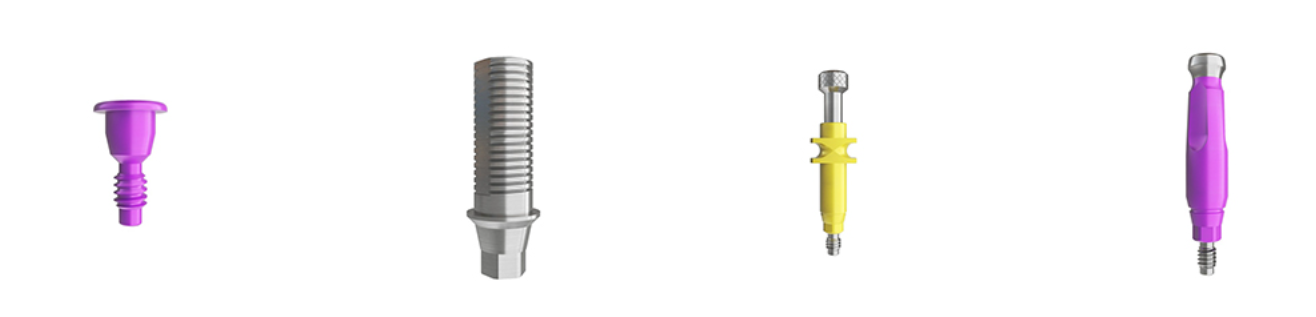
The main value of a premium system is not only the implant body itself. It is the complete ecosystem around the implant: surgical kits, prosthetic components, digital workflow tools, guided surgery solutions, scan bodies, multi-unit abutments, temporary components, impression transfers, libraries for CAD/CAM, clinical education, and brand trust.
For complex cases, full-arch restorations, immediate loading protocols, or patients who strongly care about brand reputation, premium systems can provide a sense of security for both clinicians and patients.
Clinical evidence also shows that modern dental implants generally achieve high survival rates when properly selected and placed. A systematic review reported implant survival of 96.8% after five years for implants supporting single crowns, while a large 2025 review reported an overall survival rate of 97.79% across 158,824 implants. These figures show that implant success is strongly linked to case planning, surgical execution, prosthetic design, and maintenance—not only the logo on the implant package.
Mid-range implant systems occupy the space between low-cost generic implants and premium global brands. They are often designed to offer reliable clinical performance, standard prosthetic compatibility, and stable supply at a more accessible price level.
Many mid-range systems are produced by manufacturers with strong machining capability, mature surface treatment processes, and OEM/ODM experience. Some focus on specific implant connections or compatibility with popular prosthetic workflows. Others compete by offering flexible packaging, distributor-friendly pricing, private-label options, and customized component support.
A well-positioned mid-range implant system is not simply a cheaper copy of a premium product. It should have its own quality control system, traceable materials, validated surface treatment, precise implant-abutment connection, clean packaging, and consistent production standards.
For distributors, mid-range systems are often attractive because they create a better margin structure. A distributor may not be able to compete directly with a premium brand on reputation, but can build market share by offering a clinically practical, well-supported system with reliable stock and reasonable pricing.
For clinics, mid-range systems can help serve patients who want implant treatment but cannot afford high-end imported brands. This is especially important in emerging markets, price-sensitive regions, group clinics, and general dental practices that need predictable solutions for routine cases.
Many buyers assume that premium implants always perform better clinically. This is not always the full picture.
A classic review comparing implant systems found no obvious differences in implant survival between systems, while also noting that much of the evidence came from lower-level clinical study designs rather than direct head-to-head randomized comparisons.
This does not mean all implant systems are equal. It means that implant outcomes are influenced by many factors beyond brand tier, including:
l Bone quality and implant site
l Surgical skill and placement accuracy
l Implant surface and macro-design
l Primary stability
l Prosthetic design
l Occlusal loading
l Patient hygiene
l Smoking and systemic health
l Maintenance and follow-up
l Component fit and availability
In other words, the difference between premium and mid-range systems is often less about whether the implant can integrate, and more about risk control, ecosystem completeness, documentation, training, and commercial positioning.
A premium brand may reduce perceived risk in complex cases because clinicians trust the research background and component system. A strong mid-range system may perform very well in routine cases if the design, surface, precision, and restorative support are reliable.
Factor | Premium Implant Systems | Mid-Range Implant Systems |
Brand recognition | Very strong, globally recognized | Moderate, often regional or distributor-driven |
Clinical documentation | Usually extensive | Varies by manufacturer |
Price level | High | More accessible |
Distributor margin | Often limited due to high purchase cost | Usually more flexible |
Patient acceptance | Easier in high-end clinics | Depends on dentist explanation and local trust |
Prosthetic ecosystem | Very complete | Can be complete, but must be verified |
Digital workflow | Often mature and widely supported | Increasingly available |
Inventory pressure | Higher capital required | Lower inventory burden |
Best use cases | Complex cases, high-end clinics, premium positioning | Routine cases, price-sensitive markets, distributor expansion |
OEM/private label flexibility | Usually limited | Often more flexible |
This table shows why the decision is not simply technical. It is also commercial. A distributor selling to premium clinics may need a famous brand to enter the market. A distributor serving general clinics may benefit more from a stable mid-range system with good margins and fast delivery.
The implant body is the foundation of the system. Premium brands often invest heavily in macro-design, thread geometry, self-tapping ability, tapered body structures, and primary stability features. These design differences can matter in soft bone, immediate placement, extraction sockets, and cases requiring strong insertion torque.
Mid-range systems may use similar macro-design principles, but buyers should not evaluate them by appearance only. Two implants may look similar but behave differently if their thread depth, cutting edge, connection tolerance, surface roughness, or packaging cleanliness differs.
For B2B buyers, the key questions are:
Does the implant achieve stable insertion torque in common clinical situations?
Is the thread design suitable for different bone densities?
Is the apex design safe and practical?
Are the diameters and lengths complete enough for daily clinical use?
Does the manufacturer maintain consistent machining accuracy from batch to batch?
Premium brands often have strong answers to these questions because of their documentation and training systems. Mid-range systems can also compete well if the manufacturer provides technical data, consistent production, and real component support.
Surface treatment is one of the most important technical differences between implant systems. Most modern titanium implants use roughened or modified surfaces to improve bone response compared with older machined surfaces.
Titanium and titanium alloys remain widely used in dental implant production because of their biocompatibility, corrosion resistance, and mechanical strength. Reviews on titanium dental implants continue to emphasize the importance of material properties, surface modification, and biological response in implant performance.
Premium systems often promote proprietary surface technologies, such as hydrophilic surfaces, chemically modified surfaces, or specific roughness profiles. These surfaces are usually supported by clinical studies and brand education.
Mid-range systems may use SLA, RBM, sandblasted and acid-etched surfaces, or other established surface processes. The important point is not whether the surface has a famous marketing name. The important point is whether the surface is clean, controlled, repeatable, and suitable for osseointegration.
For distributors, surface treatment should never be treated as a vague selling point. It should be verified through documentation, surface images, production control, cleaning process, and batch consistency.
Many buyers focus on implant price but ignore the implant-abutment connection. This is a mistake.
The connection affects mechanical stability, screw loosening risk, micro-movement, bacterial microgap, prosthetic accuracy, and long-term maintenance. Premium systems often have well-documented internal conical connections, internal hex connections, platform switching designs, and full prosthetic protocols.
Mid-range systems can also perform well if the connection is precisely machined and supported by a complete prosthetic component line. However, low-quality systems may have inconsistent tolerances, leading to poor abutment seating, screw loosening, prosthetic misfit, or compatibility problems.
Platform switching is also widely discussed in implant dentistry. Systematic reviews and clinical studies suggest that platform switching may help reduce marginal bone loss compared with platform-matched connections, although outcomes depend on many clinical and design factors.
For B2B buyers, the connection is where a supplier’s true manufacturing capability becomes visible. The implant body may look acceptable, but the connection tolerance reveals whether the system is truly reliable.
For clinics and distributors, the prosthetic ecosystem is often more important than the implant body itself.
A complete implant system should include:
Healing abutments
Cover screws
Impression transfers
Lab analogs
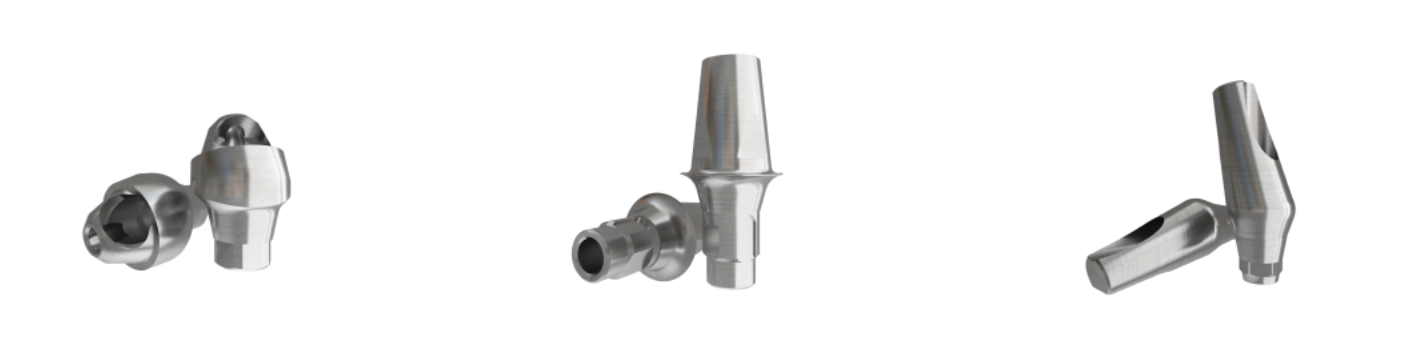
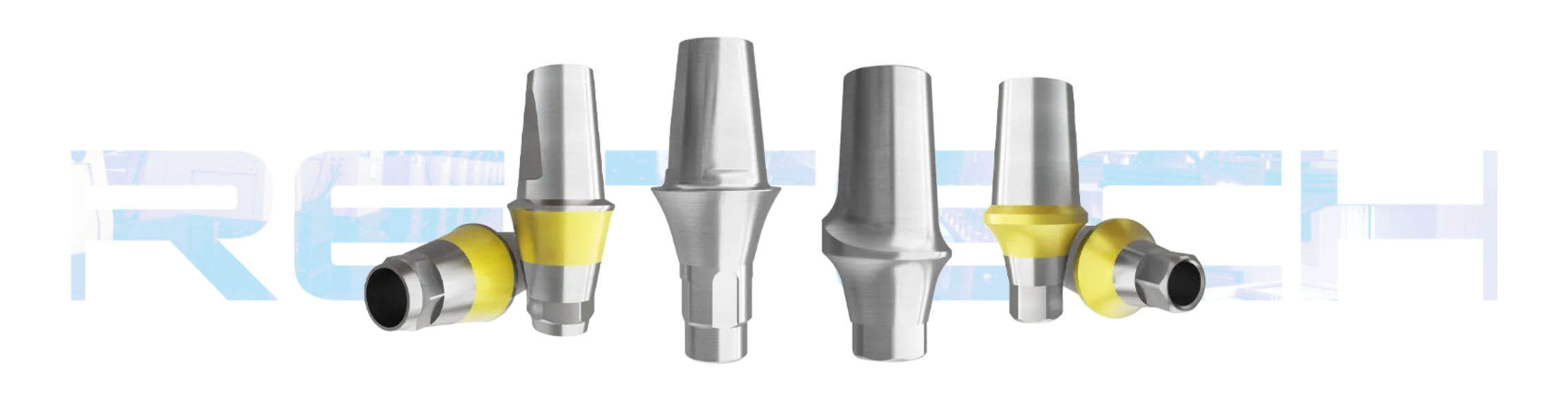
Straight abutments
Angled abutments
Temporary abutments
Ti bases
Scan bodies
Multi-unit abutments
Ball attachments or locator-type solutions
Screws and drivers
CAD/CAM libraries
Guided surgery support
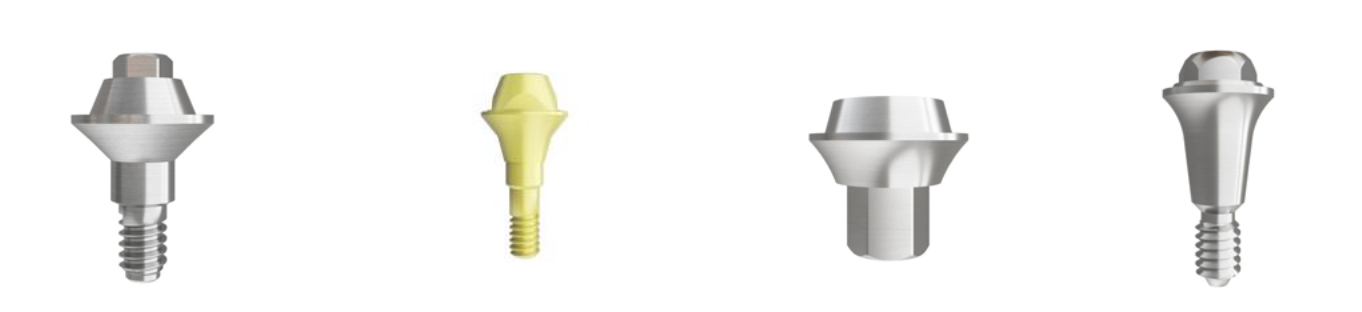
Premium brands usually perform very well in this area. Their component ecosystem is broad, well-organized, and supported by digital libraries. This makes them easier to use in complex restorations.
Mid-range systems must be evaluated carefully. Some are excellent for routine single crowns and bridges but weaker in full-arch, multi-unit, or digital workflows. Others have strong compatibility and a complete prosthetic line, making them highly competitive for distributors.
For example, manufacturers such as RE-TECH focus not only on implant bodies but also on prosthetic components and compatibility support, which is important for distributors who need a practical product line rather than a single implant SKU. This type of system-level support can help buyers reduce after-sales problems and simplify inventory planning.
The best implant system is not the one with the lowest implant body price. It is the one that allows the clinic to complete the entire restoration smoothly.
Premium implant systems usually cost more for several reasons:
They invest heavily in research and clinical documentation.
They maintain global education networks.
They provide extensive product portfolios.
They support digital workflows and software libraries.
They have strong regulatory and marketing infrastructure.
They carry brand value that clinics can present to patients.
For high-end clinics, this price may be justified. Patients may accept a higher treatment fee because the brand is familiar, the dentist trusts the system, and the restorative workflow is predictable.
Mid-range systems are priced differently. They usually have lower brand premiums and more flexible distribution structures. This allows clinics to offer implant treatment at a more competitive price and allows distributors to maintain healthier margins.
The real question is not “Which implant is cheaper?” The better question is:
Which system gives the best value for the intended patient group and clinical workflow?
A premium implant may be the better choice for a complex full-mouth rehabilitation in a high-income market. A mid-range implant may be the better choice for routine posterior cases, general clinics, or markets where patients are highly price-sensitive.
From a distributor’s perspective, inventory is one of the biggest challenges.
Premium systems require significant capital investment. The distributor must stock multiple implant sizes, prosthetic components, surgical kits, impression parts, scan bodies, and restorative tools. Because the purchase price is high, slow-moving inventory creates financial pressure.
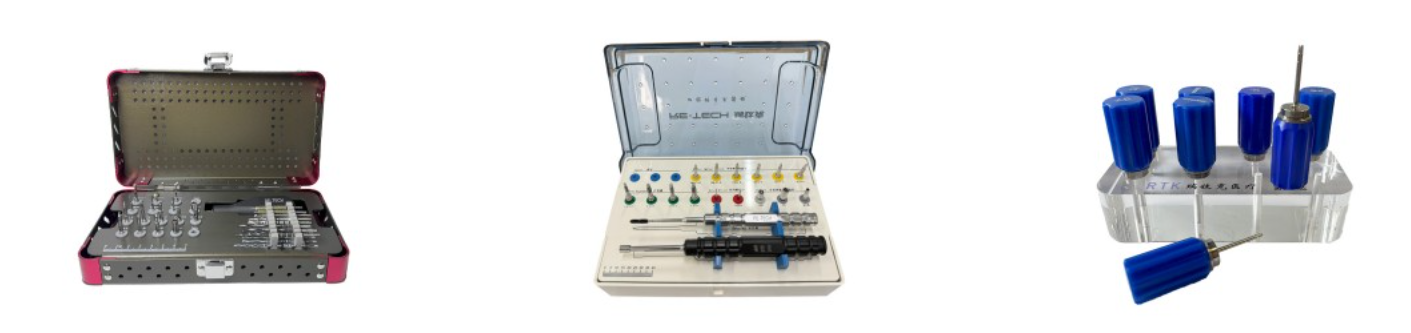
Mid-range systems are often easier to scale. A distributor can build a focused SKU structure around the most commonly used diameters and lengths, then expand gradually based on clinic demand.
A practical distributor strategy is to divide the product portfolio into three levels:
Premium systems for specialist clinics and high-end cases
Mid-range systems for routine clinical demand
OEM/private-label systems for market differentiation and margin control
This structure allows distributors to serve different customer segments without relying on only one brand. It also reduces the risk of price competition.
For manufacturers, this is where OEM and ODM support becomes valuable. A factory that can provide implant bodies, prosthetic components, packaging, labeling, and compatibility planning can help distributors build a more complete business model.
For clinics, the decision depends on case type, patient profile, and restorative workflow.
Premium systems may be better when:
The case is complex
The patient demands a famous brand
The clinic charges premium treatment fees
The clinician needs strong digital workflow support
The restoration involves full-arch or immediate loading
The clinic wants strong academic and training support
Mid-range systems may be better when:
The case is routine
The patient is price-sensitive
The clinic wants to improve treatment acceptance
The dentist already understands the surgical protocol
The system has stable prosthetic components
The distributor provides reliable local support
For general dental clinics, a strong mid-range system can be a practical daily-use solution. For specialist implant centers, premium systems may still be preferred for complex indications and brand positioning.
The smartest clinics often do not choose only one system. They use different systems for different cases.
For distributors, the answer is different from clinics.
A distributor must consider:
Market price level
Competitor brands
Clinic purchasing habits
Regulatory requirements
Stock turnover
Training cost
After-sales responsibility
Component availability
Profit margin
Supplier stability
Premium brands help distributors gain credibility, but they may also limit pricing flexibility. Mid-range systems provide more room for market development, especially when the supplier can support customization, stable production, and fast restocking.
If a distributor wants to build long-term market control, relying only on famous brands may not be enough. Competitors can sell the same brands, and price competition becomes difficult to avoid. A well-supported mid-range or private-label implant system can give the distributor a more differentiated position.
This is why many B2B buyers look for implant manufacturers that can provide both technical reliability and flexible cooperation. RE-TECH, for example, can be positioned naturally as an OEM/ODM implant manufacturer for distributors that need implant systems, prosthetic components, and compatibility-oriented product planning without relying only on premium-brand distribution.
Not all mid-range systems are worth buying. A strong mid-range system should be evaluated carefully before distribution or clinical adoption.
The buyer should check:
Material grade and traceability
Surface treatment process
Implant-abutment connection accuracy
Sterile packaging quality
Available implant sizes
Prosthetic component completeness
CAD/CAM and scan body support
Surgical kit design
Regulatory documents
Batch consistency
After-sales response
Long-term supply stability
The most dangerous mistake is choosing a mid-range system based only on low price. In implant dentistry, a small saving at the purchase stage can create large costs later if components are missing, screws are inconsistent, or prosthetic compatibility is unclear.
A good mid-range supplier should be able to explain not only the implant design, but also the full restorative workflow.
Premium systems are usually worth the higher price when the buyer needs reduced perceived risk, high patient trust, strong documentation, and complete workflow support.
They are especially suitable for:
High-end private clinics
Specialist implant centers
Full-arch rehabilitation
Immediate loading protocols
Esthetic-zone cases
Clinics with premium patient positioning
Markets where brand name strongly affects patient decisions
In these situations, the premium brand does more than provide an implant. It supports the clinic’s reputation and treatment communication.
However, premium systems may not always provide the best business return for routine cases. If the clinical indication is simple and the patient is highly price-sensitive, using a premium implant may reduce treatment acceptance or compress clinic profitability.
Mid-range systems are often the smarter choice when the buyer needs a balance of quality, price, and scalability.
They are especially suitable for:
Routine single-tooth cases
General dental clinics
Emerging markets
Distributor expansion
Private-label implant projects
Price-sensitive patient groups
Clinics that need better treatment acceptance
Markets where premium brands are too expensive
A strong mid-range system allows clinics to serve more patients while maintaining acceptable clinical confidence. For distributors, it can create better stock turnover and stronger margins.
The key is to avoid positioning mid-range implants as “cheap implants.” A better message is:
Clinically practical, well-supported, and cost-effective implant systems for routine and scalable implant treatment.
Not always. Premium systems usually have stronger clinical documentation, brand recognition, and component ecosystems. However, modern mid-range systems can also perform well when they have reliable materials, precise machining, validated surface treatment, and complete prosthetic support. Clinical outcome depends heavily on case selection, surgical skill, prosthetic design, and maintenance.
Premium implants cost more because the price includes brand value, research investment, clinical education, digital workflow support, regulatory infrastructure, and a wide prosthetic ecosystem. The implant body itself is only one part of the total system value.
Yes. Mid-range implant systems can be very suitable for distributors because they often provide better pricing flexibility, healthier margins, and easier market expansion. However, distributors must verify component availability, packaging quality, regulatory documents, and long-term supplier stability before committing.
Yes. Many clinics use different systems for different clinical situations. Premium systems may be used for complex or high-end cases, while mid-range systems may be used for routine cases or price-sensitive patients.
The biggest risk is not the lower price itself. The real risk is incomplete prosthetic support, unstable supply, poor connection tolerance, unclear compatibility, or inconsistent quality control. A mid-range system should always be evaluated as a complete implant and prosthetic ecosystem.
B2B buyers should ask about material traceability, surface treatment, implant connection design, available prosthetic components, sterile packaging, CAD/CAM support, regulatory documents, OEM/ODM options, lead time, and after-sales support. A reliable manufacturer should be able to provide clear answers, not only a price list.
OEM implant systems can be a good alternative for distributors who want stronger market control, private-label branding, and better margins. The key is to work with a manufacturer that has stable production, accurate machining, complete component support, and clear quality management.
The best decision is not “premium is good, mid-range is bad” or “mid-range is enough, premium is unnecessary.”
The correct decision depends on the case, the market, and the business model.
Premium implant systems are strong when brand trust, research background, and complete ecosystem matter most. Mid-range implant systems are strong when clinics and distributors need practical performance, competitive pricing, flexible supply, and scalable market development.
For clinics, the best strategy may be to use premium systems for complex or high-value cases and reliable mid-range systems for routine cases. For distributors, the best strategy may be to build a balanced portfolio that includes premium brands for credibility and mid-range or OEM systems for margin and growth.
In the end, implant system selection should not be based only on price or brand reputation. It should be based on a complete evaluation of clinical reliability, component support, prosthetic workflow, supply stability, and long-term business value.