![[slide:title]](/static/upload/other/20260512/1778551853592214.webp)
![[slide:title]](/static/upload/other/20260512/1778551954982306.webp)
Time:2026-04-23 Form:本站
Managing Implant SKUs for Distributors: A Practical, Scalable Framework for Dental Implant Manufacturers
In the dental implant industry, SKU management is often treated as a back-office necessity—something handled by ERP systems and logistics teams. But for manufacturers targeting distributors (B2B), SKU strategy is not just operational—it’s a growth lever.
Poor SKU structure leads to inventory inefficiencies, distributor confusion, lost orders, and ultimately reduced market penetration. On the other hand, a well-designed SKU system can simplify ordering, improve forecasting accuracy, and strengthen long-term distributor relationships.
This article goes beyond surface-level advice. It explores how implant manufacturers can design, structure, and manage SKUs specifically for distributors—balancing clinical complexity with commercial scalability.
Unlike standard industrial products, dental implants involve multiple variables that multiply SKU counts rapidly:
l Diameter (e.g., 3.0mm–6.0mm)
l Length (e.g., 6mm–15mm)
l Connection type (internal hex, conical, etc.)
l Surface treatment
l Packaging format (sterile/non-sterile, single/multi-pack)
l Platform compatibility
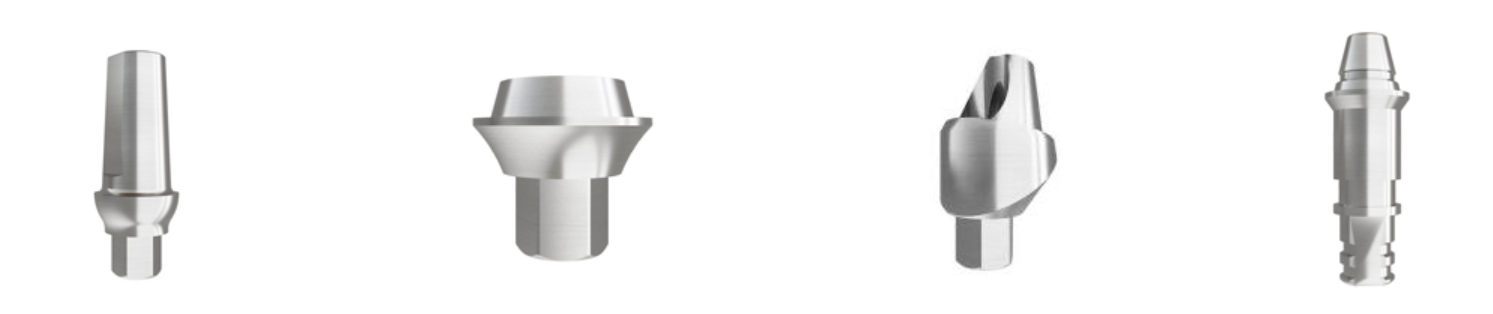
l Prosthetic components (abutments, screws, healing caps)
Even a modest product line can easily exceed 500–2,000 SKUs.
For distributors, this creates three major problems:
1. Inventory overload
2. Ordering complexity
3. Slow-moving stock accumulation
Manufacturers who ignore this reality often lose distributor engagement—even if their product quality is strong.
Many manufacturers design SKUs based on internal production logic. That’s a mistake.
A distributor doesn’t care how your machining process works—they care about:
l Fast ordering
l Clear differentiation
l Predictable demand
l Low risk of dead stock
The most successful implant brands align SKU logic with clinical usage patterns and distributor economics, not just manufacturing convenience.
A scalable SKU system should encode key product attributes in a structured format.
[System]-[Diameter]-[Length]-[Connection]-[Surface]
Example:
RTK-40-10-CN-SA
Where:
l RTK = system line
l 40 = 4.0mm diameter
l 10 = 10mm length
l CN = conical connection
l SA = sandblasted acid-etched surface
Distributors can:
l Identify products without catalogs
l Reduce ordering errors
l Train sales teams faster
A consistent SKU language becomes a shared communication tool across markets.
One of the biggest strategic mistakes is offering too many variations too early.
In most markets:
l 20% of SKUs generate 80% of sales
Typical high-frequency SKUs:
l Diameters: 3.5mm, 4.0mm, 4.5mm
l Lengths: 8mm, 10mm, 12mm
Instead of launching 200 SKUs:
l Start with core surgical set (30–50 SKUs)
l Expand based on distributor feedback
l Monitor usage data before adding variants
This approach:
l Reduces distributor risk
l Improves inventory turnover
l Speeds up market entry
Some manufacturers, including brands like RE-TECH, have increasingly adopted modular product strategies, where core implant lines are standardized while prosthetic flexibility is maintained.

Distributors don’t just buy products—they build solutions.
1. Starter Kits
l Core implant sizes
l Surgical tools
l Prosthetic basics
2. Surgical Kits
l Drills, drivers, torque tools
l Organized by system compatibility
3. Prosthetic Kits
l Abutment families
l Compatible components
l Reduce decision fatigue
l Increase average order value
l Accelerate onboarding of new distributors
A well-designed kit can outperform individual SKUs in early-stage partnerships.
Distributors evaluate suppliers based on inventory efficiency, not just product quality.
l Inventory turnover rate
l Days of inventory on hand (DOH)
l Stockout frequency
l Dead stock ratio
You should actively help distributors optimize these metrics by:
l Recommending optimal stock levels
l Providing consumption data benchmarks
l Offering SKU rationalization guidance
For example, instead of pushing a full catalog, suggest:
“Start with these 40 SKUs covering 85% of clinical cases.”
This positions you as a partner—not just a supplier.

Not all SKUs should be treated equally.
A-SKUs (Fast-moving)
l Always stocked
l High priority in production
B-SKUs (Moderate demand)
l Stocked regionally or centrally
C-SKUs (Low demand)
l Made-to-order only
l Reduces inventory burden
l Improves cash flow for distributors
l Aligns production planning with real demand
This tiering system is especially useful when expanding into new markets.
SKU management is not just digital—it’s physical.
l Clear, multilingual labeling
l Barcode/QR code integration
l Color coding for diameter/platform
l Sterilization indicators
Distributors often manage multiple brands. If your packaging is confusing, your product becomes a liability.
A clean, intuitive packaging system reduces errors and builds trust.
Modern distributors expect digital compatibility.
l ERP compatibility (SAP, Oracle, etc.)
l Excel-friendly SKU lists
l API-ready product databases
l Real-time inventory visibility (optional but powerful)
Providing structured data (not just PDFs) significantly improves distributor efficiency.
Custom SKUs for every distributor create chaos.
Fix: Standardize first, customize later.
If SKUs don’t match how dentists actually work, adoption suffers.
Fix: Align SKUs with surgical protocols.
Confusing SKU codes increase ordering errors.
Fix: Use consistent, intuitive logic.
Old SKUs remain in circulation, causing fragmentation.
Fix: Implement lifecycle management.
Most manufacturers compete on:
l Price
l Surface technology
l Branding
Very few compete on operational simplicity.
Yet for distributors, simplicity is often more valuable than marginal product differences.
A manufacturer that offers:
l Clean SKU structure
l Optimized product range
l Strong inventory logic
They will often outperform technically superior competitors.
This is one reason why some emerging implant brands gain traction quickly—they reduce friction.
Based on market behavior, distributors consistently prefer:
l Fewer SKUs with higher turnover
l Clear product hierarchy
l Predictable supply
l Easy training for sales teams
They are not looking for the most complex system—they are looking for the most manageable one.
Typically 30–50 core SKUs is optimal for initial distributor adoption. This covers most clinical cases while minimizing inventory risk.
Only after a stable base system is established. Early customization increases complexity and operational costs.
l Analyze sales data quarterly
l Phase out low-demand variants
l Shift rare sizes to made-to-order
Designing SKUs based on internal production logic instead of distributor usability.
Focus on:
l Simplicity
l Standardization
l Inventory efficiency
Support this with clear documentation and structured data.
Not initially. Most prefer a focused, high-rotation portfolio, then expand gradually.
Managing implant SKUs is not just an operational task—it is a strategic discipline that directly impacts your ability to scale through distributors.
In a market where many manufacturers offer similar materials and technologies, the real differentiator often lies in how easy you are to work with.
A thoughtful SKU strategy:
l Reduces friction
l Improves distributor profitability
l Accelerates market penetration
Manufacturers who recognize this early—and design their systems accordingly—position themselves for sustainable global growth.
If your goal is not just to sell implants, but to build long-term distributor networks, SKU management is one of the most underestimated levers you have.