![[slide:title]](/static/upload/other/20260512/1778551853592214.webp)
![[slide:title]](/static/upload/other/20260512/1778551954982306.webp)
Time:2026-06-29 Form:本站
Factory Capacity Explained: What Dental Implant Buyers Should Really Evaluate Before Choosing an OEM Manufacturer
When purchasing dental implants or looking for an OEM manufacturing partner, buyers often ask one simple question:
"What is your factory capacity?"
At first glance, the answer seems straightforward. A manufacturer might respond with "500,000 implants per month" or "10 million components annually." These numbers sound impressive and are frequently highlighted on company websites, brochures, and exhibition displays.
However, experienced procurement managers know that production capacity is much more than a single number.
A factory that advertises enormous output may still struggle with delivery delays, inconsistent quality, or production bottlenecks. On the other hand, a manufacturer with a more modest production volume may consistently deliver stable quality, predictable lead times, and reliable technical support.
For dental implant brands, distributors, and OEM customers, understanding the real meaning of factory capacity can significantly reduce sourcing risks and improve long-term supply chain performance.
This article explains what factory capacity actually means in modern dental implant manufacturing, how it influences product quality and delivery performance, and what buyers should evaluate beyond the numbers printed in a catalog.
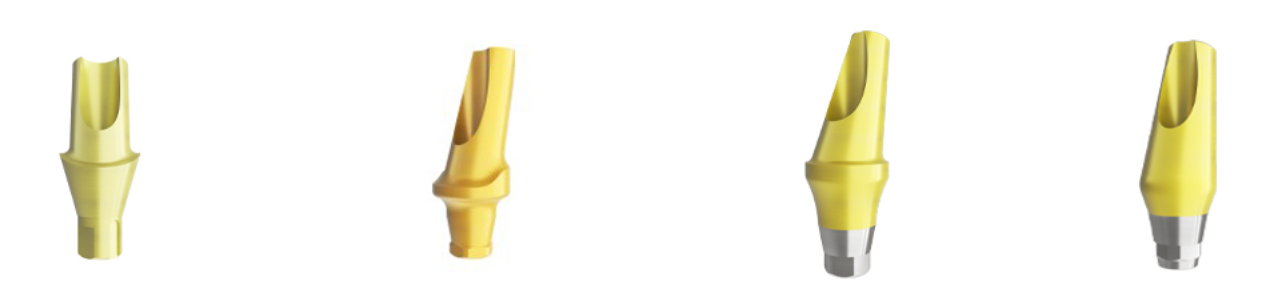
Many people define factory capacity as the maximum quantity a manufacturer can produce within a specific period of time.
While technically correct, this definition only describes one aspect of manufacturing capability.
In reality, factory capacity is a combination of multiple interconnected systems working together:
l Manufacturing equipment
l Skilled workforce
l Production planning
l Material availability
l Quality control
l Engineering capability
l Process stability
l Supply chain coordination
Think of capacity like an orchestra.
Owning more musical instruments does not automatically produce better music. The conductor, rehearsal, timing, and coordination determine the final performance.
Manufacturing works in much the same way.
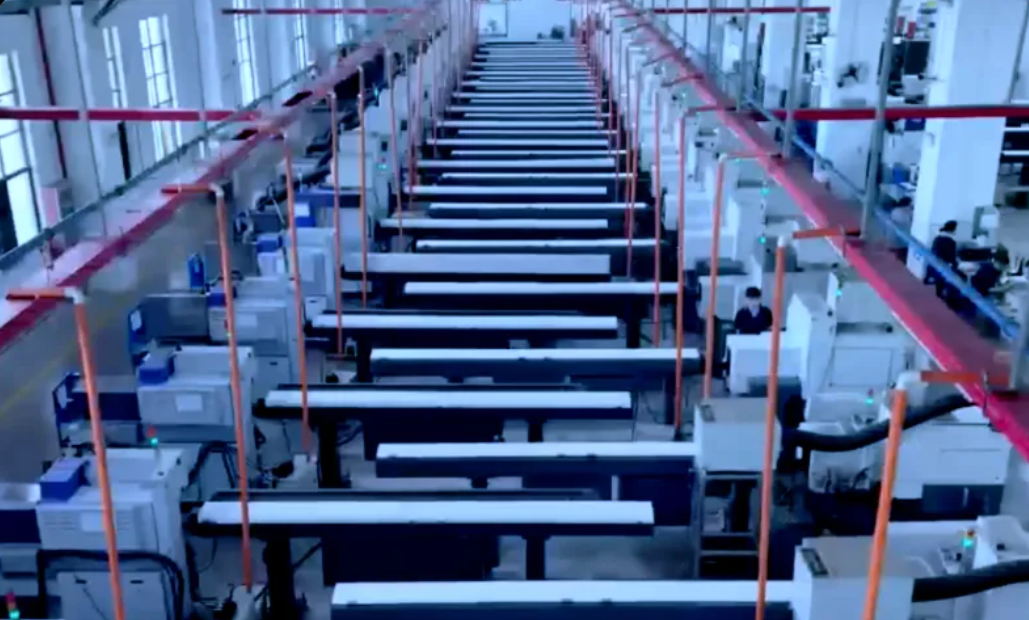
A dental implant factory with 150 CNC machines cannot reach its theoretical capacity if raw materials arrive late, inspection equipment becomes a bottleneck, or programming engineers cannot support production efficiently.
For this reason, experienced buyers rarely judge a supplier solely by the number of machines on the factory floor.
Instead, they evaluate whether the entire production system can operate consistently under different business conditions.
One of the biggest misconceptions in manufacturing is equating installed capacity with effective production capacity.
Installed capacity refers to the theoretical maximum output under ideal conditions:
l Every machine operates continuously.
l No maintenance interruptions occur.
l Every operator is available.
l No defective products are produced.
l Material supply is uninterrupted.
In reality, no factory operates under perfect conditions.
Unexpected machine maintenance, employee scheduling, inspection delays, engineering changes, customer customization, and supplier lead times all reduce actual output.
For dental implant manufacturers, additional variables make production even more complex.
Unlike ordinary industrial components, implant products require strict dimensional tolerances, validated machining processes, extensive inspection records, cleaning procedures, packaging verification, and complete traceability.
Each additional quality requirement consumes production capacity.
This is why two factories with identical equipment may achieve very different delivery performance.
The difference lies not in machine quantity but in operational efficiency.
These two concepts are often used interchangeably, but they describe different aspects of manufacturing.
Factory capacity represents what a production system is capable of producing under sustainable operating conditions.
Production output represents what was actually produced during a given period.
For example:
Factory | Monthly Capacity | Actual Output |
Factory A | 800,000 implants | 760,000 implants |
Factory B | 800,000 implants | 430,000 implants |
At first glance, both factories appear equal.
However, Factory A is utilizing approximately 95% of its planned capacity, suggesting efficient scheduling, stable operations, and balanced production.
Factory B may have the same equipment, yet lower utilization could indicate demand fluctuations, planning inefficiencies, workforce shortages, quality issues, or supply chain interruptions.
For OEM buyers, understanding this distinction helps explain why two suppliers quoting similar capacities may offer very different lead times and reliability.
Rather than asking only how many implants a factory can produce each month, buyers should evaluate five interconnected dimensions that determine long-term manufacturing performance.
Equipment capacity refers to the production capability of manufacturing assets such as CNC machining centers, Swiss-type lathes, milling machines, grinding equipment, cleaning systems, laser marking machines, and automated inspection equipment.
More machines generally increase production potential.
However, equipment quantity alone tells only part of the story.
Machine utilization, preventive maintenance programs, tooling management, software integration, and process optimization often have a greater impact than simply purchasing additional equipment.
A factory operating 80 machines efficiently may outperform another operating 150 machines inefficiently.
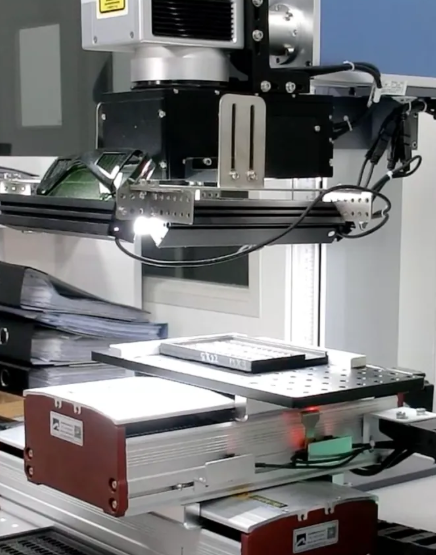
Modern dental implant manufacturing is highly automated, but skilled people remain essential.
Experienced operators, process engineers, programmers, quality inspectors, and production planners determine whether equipment operates efficiently.
Without sufficient technical personnel, even advanced manufacturing equipment cannot consistently achieve expected production targets.
Training programs, employee retention, standardized operating procedures, and cross-functional collaboration all contribute to sustainable production capacity.
Production cannot begin without stable raw material availability.
Dental implant manufacturing depends on high-quality medical-grade materials such as titanium Grade 4, titanium Grade 5, titanium Grade 23, stainless steel, cobalt-chromium alloys, and other specialized biomaterials.
Material shortages often create production bottlenecks that cannot be solved simply by adding more machines.
Manufacturers with diversified supplier networks and inventory planning generally experience fewer production interruptions during periods of market volatility.
This became particularly evident during recent global supply chain disruptions, when factories with stronger procurement strategies maintained more stable delivery performance than competitors relying on limited sourcing channels.
Quality inspection is often overlooked when discussing factory capacity.
Yet every inspection step consumes valuable production resources.
Coordinate measuring machines, optical inspection systems, roughness measurement, hardness testing, dimensional verification, cleaning validation, packaging inspection, and documentation all require skilled personnel and specialized equipment.
If inspection capacity fails to keep pace with machining capacity, completed products accumulate while waiting for release.
In many factories, quality control—not machining—becomes the true production bottleneck.
For dental implant manufacturing, this balance is particularly important because every component must meet stringent dimensional and traceability requirements before shipment.
Perhaps the least visible—but arguably the most influential—dimension is management capacity.
Effective production planning determines how efficiently machines, materials, employees, and customer orders interact.
A well-managed factory can often increase effective production without purchasing additional equipment.
Advanced scheduling, digital production tracking, preventive maintenance, ERP integration, and continuous process improvement enable manufacturers to maximize existing resources while maintaining product consistency.
In many cases, operational excellence creates greater competitive advantage than physical factory size.
The table below highlights an important distinction that many buyers overlook.
Aspect | Large Installed Capacity | High Effective Capacity |
Number of machines | High | Appropriate |
Equipment utilization | May be low | Consistently high |
Production stability | Varies | Stable |
Delivery reliability | Can fluctuate | Predictable |
Quality consistency | Depends on management | Usually stronger |
Flexibility for OEM projects | Sometimes limited | Often higher |
Long-term customer satisfaction | Not guaranteed | Generally better |
This comparison illustrates why experienced procurement teams rarely focus on factory size alone.
Instead, they seek manufacturing partners capable of delivering consistent performance over many production cycles.
Production capacity should be viewed as a measure of manufacturing resilience, not simply manufacturing volume.
A supplier capable of maintaining stable deliveries during seasonal demand increases, engineering changes, raw material shortages, and customized production is often more valuable than one advertising the industry's highest output figures.
For OEM dental implant projects, consistency frequently outweighs maximum volume.
Delayed shipments can interrupt product launches, increase inventory costs, strain distributor relationships, and ultimately affect patient treatment schedules.
For this reason, experienced buyers increasingly evaluate capacity through a broader lens—one that includes process stability, quality assurance, engineering support, and supply chain coordination rather than relying solely on monthly production figures.
Understanding these underlying factors enables procurement teams to select suppliers that can support sustainable growth rather than simply meeting today's production requirements.
For many buyers, larger production capacity seems like a safer choice. The assumption is simple: more machines mean faster delivery and greater reliability.
Unfortunately, that assumption is not always correct.
In practice, many supply chain problems arise because buyers evaluate only production volume while overlooking operational capability.
A factory may advertise an annual capacity of several million implants, yet if most of that capacity has already been committed to existing customers, new projects may receive lower priority.
This often results in:
l Longer lead times
l Frequent schedule changes
l Delayed engineering support
l Slower sample development
Capacity on paper is very different from available capacity.
When evaluating a supplier, buyers should ask not only "How much can you produce?" but also "How much capacity is currently available for new OEM projects?"
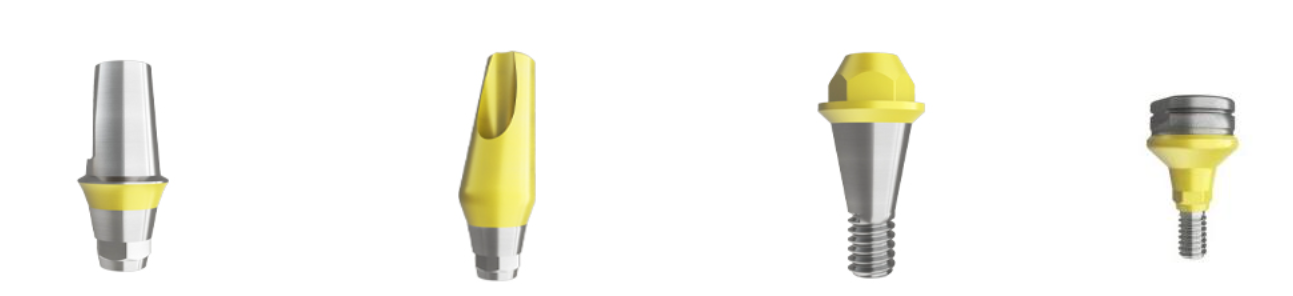
Another overlooked issue is uncontrolled growth.
As factories expand rapidly, they often purchase additional equipment and hire new employees in a short period.
If training, quality management, and process standardization cannot keep pace, product consistency may decline.
This is especially critical in dental implant manufacturing, where dimensional tolerances are measured in microns rather than millimeters.
Even small process variations can affect implant performance, component compatibility, and customer satisfaction.
A manufacturer that expands steadily while maintaining standardized production procedures is often more reliable than one experiencing aggressive growth.
Large factories usually manage hundreds of customer projects simultaneously.
While this demonstrates business success, it may also create communication challenges.
Engineering questions may take longer to answer.
Drawing revisions may require additional approvals.
Custom packaging requests may move through multiple departments before implementation.
For OEM customers developing new products, responsive technical communication is almost as important as production capability.
Many buyers eventually discover that working with a manufacturer offering dedicated engineering support saves more time than choosing the largest supplier available.
Although factory size should not be the only evaluation criterion, larger manufacturing capacity does provide important advantages under certain circumstances.
For example:
l Long-term annual contracts requiring predictable supply
l Multi-country distributors serving different regional markets
l Large product portfolios with numerous implant systems
l Customers requiring safety stock and rapid replenishment
Large manufacturers generally have greater flexibility in balancing production between different machining lines and production shifts.
If one production line experiences unexpected downtime, work can often be transferred to another line with minimal disruption.
This redundancy improves delivery stability.
However, these benefits are realized only when capacity is supported by effective production management.
Without proper planning, even the largest factory can experience significant delays.
Experienced procurement teams rarely rely on a single question.
Instead, they evaluate capacity from multiple perspectives.
Here are some examples of useful questions during supplier qualification:
A factory consistently operating at around 70–85% utilization usually has enough flexibility to accommodate urgent orders while maintaining stable production.
Factories running continuously at nearly 100% capacity may struggle to respond to unexpected demand increases.
Can additional shifts be added?
Is reserve equipment available?
Can qualified operators support increased production?
These questions reveal how adaptable the manufacturing system is during periods of rapid business growth.
Standard products and customized products require different production planning.
Engineering reviews, tooling preparation, validation, and packaging development all influence delivery schedules.
Understanding these processes helps buyers establish realistic expectations.
Modern manufacturers increasingly rely on ERP systems, digital scheduling platforms, and real-time production monitoring.
These tools improve delivery accuracy while reducing scheduling conflicts.
Production planning often has a greater influence on customer satisfaction than factory size itself.
Recent years have demonstrated how quickly global logistics and raw material supply can change.
Manufacturers with diversified raw material suppliers, inventory planning, and contingency strategies generally recover faster from disruptions.
Supply chain resilience has become an important part of manufacturing capacity.
High production capacity is valuable only if every product remains fully traceable.
Dental implants are highly regulated medical products.
Every manufacturing stage—from raw material procurement to machining, cleaning, inspection, packaging, and shipment—should be documented.
As production volume increases, maintaining complete traceability becomes more challenging.
Manufacturers that invest in digital production records, barcode systems, batch management, and inspection databases are better positioned to scale production without sacrificing quality assurance.
This is one reason why advanced quality management systems have become increasingly important as implant manufacturers continue to expand globally.
At RE-TECH, we believe that sustainable manufacturing capacity is built on consistency rather than simply increasing production volume.
Instead of focusing only on machine quantity, our manufacturing approach emphasizes balanced production systems that integrate precision machining, quality inspection, engineering support, and stable material sourcing.
For OEM customers, this means every project follows standardized production procedures, documented quality control, and clear communication throughout the manufacturing process.
Whether customers require standard implant components or customized OEM solutions, production planning is designed to maintain consistent quality while supporting reliable delivery schedules.
More importantly, capacity planning is continuously reviewed alongside customer demand, allowing production resources to expand in a controlled and sustainable manner without compromising product quality.
This philosophy helps build long-term partnerships rather than short-term production output.

Factory capacity refers to the sustainable production capability of a manufacturer. It includes equipment, workforce, quality systems, material supply, engineering support, and production management—not simply the number of products produced each month.
Capacity directly affects lead times, delivery reliability, production flexibility, and the manufacturer's ability to support long-term business growth.
Not necessarily. Large factories may have greater production resources, but service quality depends on management efficiency, communication, engineering support, and quality control.
Buyers should review production processes, quality systems, equipment utilization, lead times, traceability procedures, and supply chain stability instead of relying solely on advertised production numbers.
Machine maintenance, workforce shortages, raw material delays, quality inspection bottlenecks, engineering changes, and production scheduling issues can all reduce effective manufacturing capacity.
If production expands faster than quality systems, consistency may decline. Sustainable capacity growth requires standardized processes, trained personnel, and sufficient inspection resources.
Installed capacity is the theoretical maximum output under ideal conditions, while effective capacity reflects what the factory can consistently produce under normal operating conditions.
Capacity should be reviewed regularly, especially before launching new products, increasing order volumes, or entering long-term supply agreements.
Yes. A well-managed medium-sized manufacturer with efficient production planning, stable quality systems, and responsive engineering support can often deliver more reliable performance than a larger but poorly managed factory.
Buyers should also evaluate quality management, traceability, engineering expertise, regulatory compliance, communication efficiency, customization capability, and long-term supply chain stability.
Factory capacity is one of the most discussed topics in manufacturing, yet it is also one of the most misunderstood.
Production volume alone does not determine whether a manufacturer can become a reliable long-term partner.
Real manufacturing capacity is the result of equipment, skilled employees, production planning, quality management, engineering capability, material supply, and operational discipline working together as a unified system.
For dental implant brands, distributors, and OEM buyers, selecting a supplier should never be based solely on the largest production number presented in a brochure.
Instead, buyers should evaluate how consistently that capacity can be transformed into high-quality products delivered on time.
In today's competitive dental implant market, reliability has become just as valuable as production volume.
Manufacturers capable of balancing capacity, quality, flexibility, and traceability are far more likely to support sustainable business growth for their partners over the long term.