![[slide:title]](/static/upload/other/20260512/1778551853592214.webp)
![[slide:title]](/static/upload/other/20260512/1778551954982306.webp)
Time:2026-05-11 Form:本站
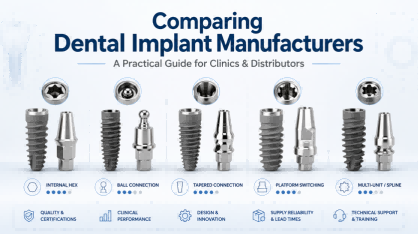 Comparing Dental Implant Manufacturers: A Practical Guide for Clinics, Distributors, and Dental Businesses
Choosing a dental implant manufacturer is not simply a question of asking, “Which brand is the best?” In real clinical and commercial environments, the better question is: which implant manufacturer fits your treatment model, price strategy, prosthetic workflow, market position, and long-term supply needs?
For a single clinic, the wrong implant system may increase chairside complexity, limit prosthetic flexibility, or make maintenance more difficult. For a distributor, the wrong manufacturer can create inventory pressure, weak margins, inconsistent supply, or low customer loyalty. For a dental group or private-label buyer, the wrong manufacturing partner may affect brand reputation for years.
Today, the dental implant market includes global premium brands, regional value brands, specialized implant system providers, and OEM/ODM manufacturers. Well-known names such as Straumann, Nobel Biocare, Dentsply Sirona, Osstem, BioHorizons, Zimmer Biomet, MIS, Dentium, MegaGen, Camlog, and others all serve different market segments. Some focus on advanced clinical research and digital ecosystem integration. Others compete through cost efficiency, broad compatibility, strong local training, or distributor-friendly pricing.
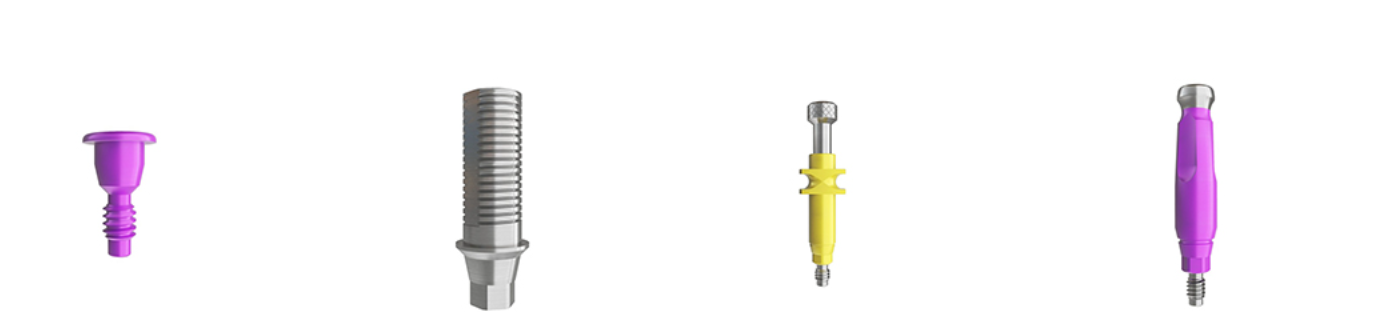
This article compares dental implant manufacturers from a practical B2B perspective. Instead of ranking brands only by popularity, we will look at the criteria that actually matter when clinics, distributors, and dental businesses evaluate implant suppliers.
Major global manufacturers continue to develop different implant systems and digital workflows. For example, Straumann promotes systems such as iEXCEL, Nobel Biocare lists systems including Nobel Biocare N1, Osstem offers multiple implant lines such as TS Implant, and Dentsply Sirona’s implant portfolio includes Astra Tech Implant System and Ankylos.
Dental implants may look similar at first glance: a titanium or titanium alloy fixture, a connection, a surface treatment, an abutment system, and prosthetic components. However, behind each system is a full manufacturing and clinical ecosystem.
A dental implant manufacturer is not only selling a screw-shaped medical device. It is offering a complete platform that includes:
l Implant body design
l Thread geometry
l Surface treatment
l Prosthetic connection
l Surgical kit system
l Digital libraries
l Scan bodies
l Impression components
l Healing abutments
l Multi-unit abutments
l Clinical documentation
l Training support
l Regulatory approvals
l Long-term component availability
This is why two implants with similar dimensions can perform very differently in the market. One may have stronger clinical trust but higher cost. Another may offer excellent pricing but limited prosthetic support. A third may provide strong OEM flexibility but require careful evaluation of certification, quality control, and compatibility.
For B2B buyers, the goal is not always to select the most famous brand. The goal is to build a product portfolio that balances clinical confidence, profitability, operational simplicity, and long-term customer retention.
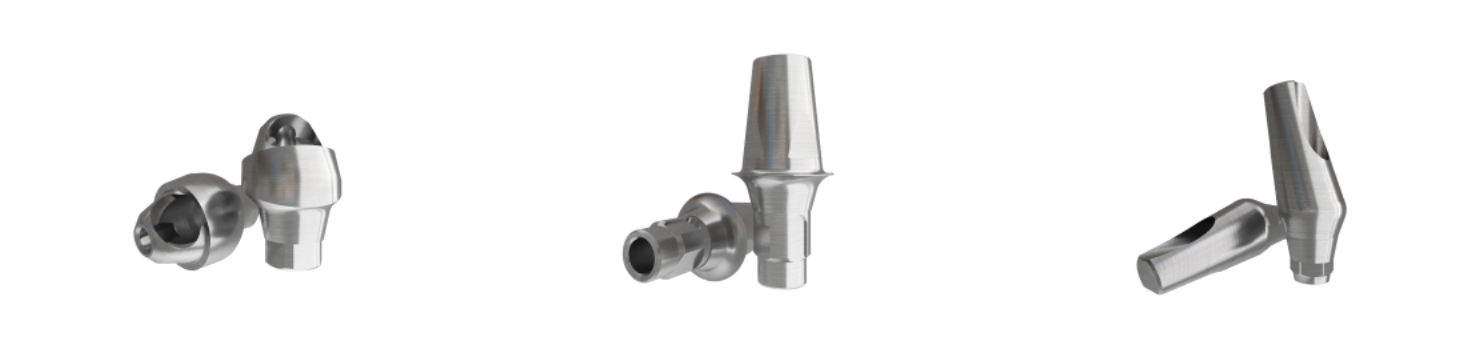
Before comparing individual manufacturers, it helps to understand the major categories in the market.
Premium manufacturers usually have strong brand recognition, long clinical histories, extensive research, and broad international distribution. Examples often include Straumann, Nobel Biocare, Dentsply Sirona, and similar high-end systems.
These brands are commonly preferred by specialist clinics, premium dental chains, academic institutions, and markets where patients recognize implant brand names. Their advantages usually include strong documentation, advanced surfaces, digital solutions, and broad prosthetic ecosystems.
However, premium systems also come with higher costs. For distributors and clinics in price-sensitive markets, this can limit case acceptance or reduce margins.
Mid-tier manufacturers often focus on reliable performance at a more accessible price level. Some Korean, European, Israeli, Chinese, and regional manufacturers have grown quickly by offering clinically accepted systems with competitive pricing.
Osstem, Dentium, MegaGen, MIS, Alpha-Bio Tec, and other brands are often discussed in this segment depending on the market. Osstem, for example, has built a broad international presence and offers different implant systems for different clinical indications.
This category can be attractive for clinics that want predictable treatment outcomes without the premium-brand price structure. It is also important for distributors who need stronger margin space.
OEM manufacturers produce implants, abutments, surgical tools, or prosthetic components for other brands. Some buyers work with OEM manufacturers to build their own implant brand, expand product lines, or supply compatible components.
This category is especially important for dental distributors, importers, and regional brands. Instead of competing only by reselling established brands, they can build differentiated product portfolios.
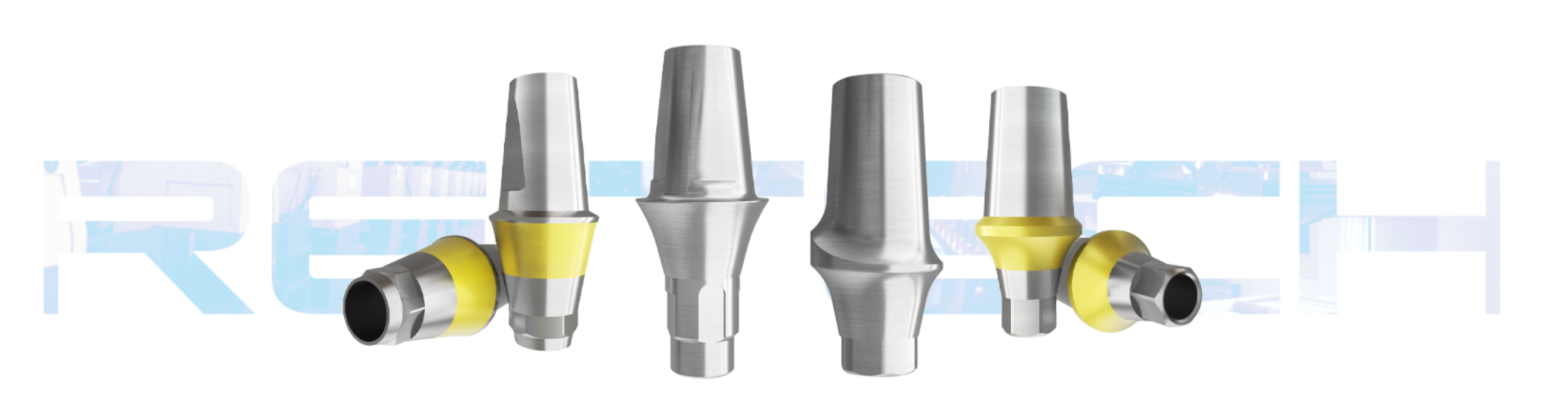
A manufacturer such as RE-TECH can be naturally positioned in this space for buyers looking for OEM/ODM dental implant manufacturing, compatibility-focused prosthetic components, and private-label supply. For these buyers, the key is not only price, but also production consistency, surface treatment control, packaging, traceability, and regulatory documentation.
Some manufacturers focus on specific clinical needs, such as short implants, ceramic implants, narrow implants, full-arch solutions, guided surgery, or special connection systems.
These companies may not always be the largest, but they can be valuable when a clinic or distributor wants to solve a specific clinical problem or differentiate from competitors.
Clinical evidence is one of the strongest differentiators among implant manufacturers. Premium brands often invest heavily in long-term studies, university partnerships, and published clinical data.
For clinics, this reduces perceived risk. For distributors, it makes sales conversations easier. A dentist is more likely to trust an implant system if the manufacturer can provide survival-rate data, bone-level stability evidence, and long-term follow-up studies.
However, clinical evidence should be evaluated carefully. A manufacturer may promote “clinical success,” but buyers should ask:
l Are the studies independent or company-sponsored?
l How long is the follow-up period?
l Are the implants used in normal cases or highly controlled conditions?
l Is the same implant surface and connection still being sold today?
l Does the evidence apply to immediate loading, full-arch cases, or only standard single implants?
For B2B buyers, clinical evidence is not just a medical issue. It is a sales tool. A distributor with strong documentation can support dentists more effectively and reduce resistance during product adoption.
Implant design affects insertion torque, primary stability, bone response, and clinical flexibility. Important design elements include:
l Tapered vs parallel-walled body
l Thread depth and pitch
l Apical cutting design
l Platform switching
l Bone-level vs tissue-level design
l Connection type
l Neck/collar design
l Self-tapping ability
A tapered implant may perform well in softer bone and immediate placement scenarios. A tissue-level implant may simplify soft tissue management in certain cases. A conical connection may improve sealing and stability, while an internal hex system may offer broad compatibility and simpler restoration workflows.
There is no universal “best” design. The best design depends on case type, dentist preference, surgical protocol, and prosthetic plan.
For clinics, the most practical question is:
Does this implant system make daily cases easier and more predictable?
For distributors, the question becomes:
Can this system cover enough clinical indications without creating excessive inventory complexity?
Surface treatment is one of the most important technical areas in implant manufacturing. Common surface concepts include SLA-type roughened surfaces, RBM surfaces, hydrophilic surfaces, anodized surfaces, and other proprietary modifications.
A surface should support predictable osseointegration while maintaining cleanliness and consistency. Buyers should look beyond marketing names and ask:
l What is the surface treatment process?
l Is the surface chemically clean and consistently controlled?
l Does the manufacturer provide SEM images or surface analysis?
l Are blasting residues controlled?
l Is the surface supported by clinical or laboratory evidence?
l How is contamination prevented during packaging?
For OEM buyers, surface treatment control is especially important. Two implants may have the same macro design but very different surface consistency. Poor process control can damage long-term brand trust.
Many implant buyers focus too much on the fixture and not enough on prosthetic components. In reality, the prosthetic ecosystem often determines whether dentists continue using a system.
A strong implant manufacturer should offer reliable access to:
l Healing abutments
l Impression copings
l Scan bodies
l Temporary abutments
l Straight and angled abutments
l Multi-unit abutments
l Ti-bases
l Digital libraries
l Analogues
l Screws
l Drivers
l Guided surgery components
For distributors, prosthetic component availability is one of the biggest operational issues. If a dentist places an implant but cannot quickly get the right abutment, the supplier relationship suffers.
This is where compatibility-focused manufacturers and OEM partners can create value. A supplier like RE-TECH may be useful for distributors that need implant systems and prosthetic components designed around practical compatibility, stable supply, and B2B customization rather than only premium-brand positioning.
Digital workflows are now a major part of implant dentistry. Manufacturers are increasingly judged not only by implant quality but also by how well their systems connect with digital planning, intraoral scanning, CAD/CAM restoration, guided surgery, and lab workflows.
Important digital factors include:
l Availability of accurate scan bodies
l Open digital libraries
l Compatibility with common CAD software
l Guided surgery kit support
l Ti-base options
l Full-arch digital workflow support
l Accuracy of library data
l Ease of communication between clinic and lab
Premium manufacturers often have stronger digital ecosystems, but this does not automatically mean they are the best choice for every buyer. Some clinics prefer more open systems because they work with different labs and software platforms.
For B2B buyers, the key question is:
Will this implant system make digital restoration easier or more restrictive?
Dental implants are regulated medical devices. A serious manufacturer should provide documentation such as:
l ISO 13485 quality management certification
l CE documentation where applicable
l FDA registration or clearance where applicable
l Material certificates
l Sterilization validation
l Packaging validation
l Traceability records
l Instructions for use
l Lot number tracking
l Risk management documentation
The required documents depend on the target market. Europe, the United States, Latin America, the Middle East, and Asia may have different regulatory expectations.
For distributors and importers, documentation is not optional. Even if the product is well made, weak documentation can block market entry, delay registration, or create legal risk.
When comparing dental implant manufacturers, always ask whether the supplier can support your target market’s regulatory pathway.
The answer depends on the business model.
Premium implant brands usually offer stronger brand recognition, extensive clinical documentation, broad digital ecosystems, and high dentist trust. They are useful in markets where patients ask for brand names or where clinics position themselves as high-end providers.
Value-oriented brands, on the other hand, can be more suitable for price-sensitive markets, high-volume clinics, emerging regions, and distributors who need stronger margins. If the quality system, surface treatment, and prosthetic support are reliable, a value implant system can compete effectively in daily clinical use.
The real mistake is assuming that “premium” always means better for every business, or that “lower cost” always means lower quality. B2B buyers should compare manufacturers based on total value, not just brand reputation or unit price.
A practical approach is to divide the portfolio into three levels:
1. Premium line for high-end clinics and complex cases
2. Core line for routine daily implant cases
3. OEM/private-label line for margin control and distributor differentiation
This structure allows distributors and clinics to serve different customer groups without relying on only one manufacturer.
Evaluation Factor | Why It Matters | What B2B Buyers Should Check |
Clinical evidence | Builds dentist trust and reduces adoption resistance | Long-term studies, survival data, case indications |
Implant design | Affects stability, handling, and case flexibility | Taper, thread design, connection, platform options |
Surface treatment | Influences osseointegration and product consistency | Surface process, cleanliness, SEM images, validation |
Prosthetic system | Determines restoration convenience and repeat usage | Abutments, scan bodies, Ti-bases, screws, drivers |
Digital workflow | Supports modern clinic-lab communication | CAD libraries, guided surgery, scan accuracy |
Regulatory support | Enables legal market entry | ISO 13485, CE/FDA documents, traceability |
Supply stability | Protects distributor reputation | Lead time, inventory, production capacity |
Pricing structure | Affects case acceptance and distributor margin | Volume pricing, MOQ, component cost |
Training support | Helps dentists adopt the system | Surgical guides, manuals, courses, videos |
OEM flexibility | Supports private-label growth | Custom packaging, branding, compatibility options |
The cheapest implant fixture is not always the lowest-cost system. If prosthetic components are expensive, unavailable, or difficult to use, the total cost becomes higher.
A distributor should compare the full system cost, including surgical kits, impression parts, scan bodies, Ti-bases, abutments, screws, and replacement components.
Compatibility can be a major advantage or a major risk. Dentists often prefer systems that are easy to restore and supported by labs. If a system is too proprietary or difficult to identify, it may create long-term maintenance problems.
However, compatibility should be handled professionally. Buyers should confirm dimensions, tolerances, torque recommendations, and component fit rather than assuming that similar-looking parts are interchangeable.
Brand recognition helps, but it does not automatically solve every business problem. A famous brand may have high prices, strict distribution policies, or limited flexibility for private-label buyers.
For B2B companies, the best supplier is often the one that matches the company’s business model.
Implant packaging is not just a box. It protects sterility, supports regulatory compliance, and communicates professionalism.
A serious manufacturer should provide clear labels, batch numbers, sterilization information, implant dimensions, and traceable documentation.
Before committing to a manufacturer, buyers should test the complete workflow:
l Surgical kit handling
l Implant insertion feel
l Cover screw fit
l Healing abutment fit
l Impression workflow
l Scan body accuracy
l Lab restoration process
l Screw tightening
l Final prosthetic seating
Many problems only appear after the system is used in real clinical and laboratory conditions.
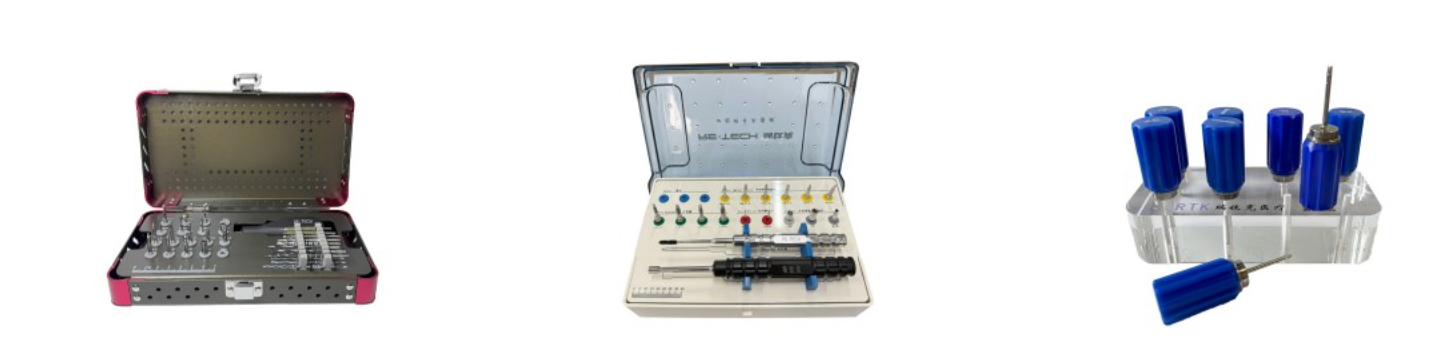
Distributors should avoid depending on only one type of manufacturer. A strong portfolio usually combines brand trust, margin control, and supply flexibility.
A possible structure is:
This segment is useful for dentists who request globally recognized names. It supports reputation and high-end treatment plans.
This is the main volume segment. The implant system should be reliable, easy to restore, reasonably priced, and supported by sufficient components.
This segment helps distributors build their own brand identity and protect margins. It can also reduce dependence on global brands.
For OEM/private-label cooperation, a supplier such as RE-TECH can be introduced naturally as a manufacturing partner for businesses that need dental implant systems, prosthetic compatibility, and customized supply programs. The decision should still be based on quality audits, sample testing, documentation review, and long-term supply capability.
Clinics should evaluate manufacturers differently from distributors. A clinic’s main concern is clinical predictability and workflow efficiency.
Important questions include:
l Is the implant easy to place in common bone conditions?
l Does the system support immediate placement or immediate loading when needed?
l Are prosthetic components easy to obtain?
l Can local labs restore the system easily?
l Is the surgical kit simple and reliable?
l Does the manufacturer provide training or clinical support?
l Are replacement parts likely to be available years later?
For clinics, switching implant systems too often can create confusion. Staff must learn new kits, dentists must adjust surgical protocols, and labs must manage different components. Therefore, clinics should choose systems that are easy to standardize.
OEM buyers need to go deeper than catalog comparison. They should evaluate the manufacturer’s production and quality control capabilities.
Key audit points include:
l CNC machining accuracy
l Thread inspection
l Connection tolerance control
l Surface treatment consistency
l Cleaning process
l Sterile packaging process
l Batch traceability
l Material source documentation
l Quality inspection records
l Regulatory support
l Custom packaging capability
l Lead time stability
l Communication speed
For private-label dental implant brands, the manufacturer becomes part of the brand’s hidden foundation. Even if the end customer never sees the factory name, product consistency will shape the brand’s reputation.
This is why OEM buyers should not choose only based on quotation. A slightly lower unit price can become expensive if the manufacturer has unstable tolerances, weak documentation, or poor delivery control.
A dental implant manufacturer stands out when it combines technical quality with business practicality.
The strongest manufacturers usually offer:
1. Consistent implant machining
2. Reliable surface treatment
3. Accurate prosthetic connections
4. Complete restorative components
5. Clear regulatory documentation
6. Stable lead times
7. Good training and support
8. Practical pricing
9. Digital workflow compatibility
10. Long-term commitment to component availability
For B2B buyers, the best manufacturer is not always the most famous one. It is the one that helps the buyer serve dentists reliably, protect profit margins, and build long-term trust.
The most important factor depends on the buyer. Clinics usually prioritize clinical predictability, prosthetic convenience, and training support. Distributors usually focus on pricing, supply stability, documentation, and market acceptance. OEM buyers should pay close attention to manufacturing consistency, surface treatment control, packaging, and regulatory support.
Not always. Premium brands often provide strong clinical documentation, brand recognition, and advanced digital systems. However, they may also have higher costs and less flexibility for distributors. In many markets, a reliable mid-tier or OEM-supported implant system can be more suitable for routine cases and price-sensitive customers.
Distributors should compare the full business package, not only the implant price. They should evaluate component availability, lead time, regulatory documents, training support, packaging quality, prosthetic compatibility, and long-term supply stability. A good manufacturer should help the distributor sell, support dentists, and maintain repeat business.
The implant fixture is only one part of the treatment. Dentists also need healing abutments, impression copings, scan bodies, Ti-bases, multi-unit abutments, screws, and drivers. If these components are difficult to obtain or not accurate, the system becomes frustrating for clinics and labs.
OEM buyers should check CNC machining capability, quality control systems, material certificates, surface treatment consistency, sterilization process, packaging validation, traceability, regulatory documents, and sample performance. They should also test the full surgical and restorative workflow before placing large orders.
Yes. In fact, this can be a strong strategy. Premium brands help attract high-end clinics, while OEM or private-label systems help improve margins and create brand differentiation. The key is to position each product line clearly and avoid confusing customers.
Clinics should start with a limited number of cases, train the surgical and restorative teams, involve the dental lab early, test component availability, and confirm digital library accuracy. They should avoid switching too many systems at once.
A reliable manufacturer provides consistent product quality, stable supply, complete documentation, responsive communication, accurate components, and long-term availability of prosthetic parts. For B2B buyers, reliability is often more important than a slightly lower price.
Comparing dental implant manufacturers requires a balanced view. Premium brands may offer strong clinical reputation and advanced ecosystems. Value brands may offer better affordability and market access. OEM manufacturers may provide flexibility, customization, and private-label opportunities.
The right choice depends on the buyer’s role.
A specialist clinic may prioritize clinical evidence and digital integration. A distributor may prioritize margin, supply stability, and component availability. A private-label brand may prioritize manufacturing consistency, documentation, and customization. A dental group may need a balanced system that is easy to standardize across multiple clinics.
Instead of asking which dental implant manufacturer is best, buyers should ask:
Which manufacturer gives us the best combination of clinical confidence, workflow efficiency, business flexibility, and long-term support?
That question leads to better decisions—and better long-term results.