![[slide:title]](/static/upload/other/20260512/1778551853592214.webp)
![[slide:title]](/static/upload/other/20260512/1778551954982306.webp)
Time:2026-06-08 Form:本站
China's Top Dental Implant Suppliers: A Practical Guide for Distributors and Private Label Brands
For many dental implant distributors, China is no longer merely a place to find “cheaper products.” Today, it is emerging as a viable sourcing option for companies seeking a stable supply of implant components, private-label products, OEM support, and higher profit margins.
This shift is easy to understand. In many markets, dentists require reliable implant systems, yet patients are increasingly cost-sensitive. Distributors need products that not only meet daily clinical needs but also allow room for local sales margins, marketing, training, and after-sales service.
For this reason, an increasing number of B2B buyers are turning their attention to Chinese dental implant suppliers.
But the real challenge lies in the fact that not all Chinese suppliers are suitable for long-term business partnerships. Some factories specialize in machining, some in prosthetic components, and others merely act as traders for products from different factories. Some can support private-label brands, while others only sell standard products.
Therefore, the question is not simply:
“Which is the best implant supplier in China?”
The more critical question is:
“Which supplier can support my business model, target market, and customer needs in the coming years?”
This article is specifically written for dental distributors, importers, private label manufacturers, and companies planning to establish their own dental implant product lines. It explains how to compare Chinese dental implant suppliers, what to verify before purchasing, and how to avoid common procurement pitfalls.
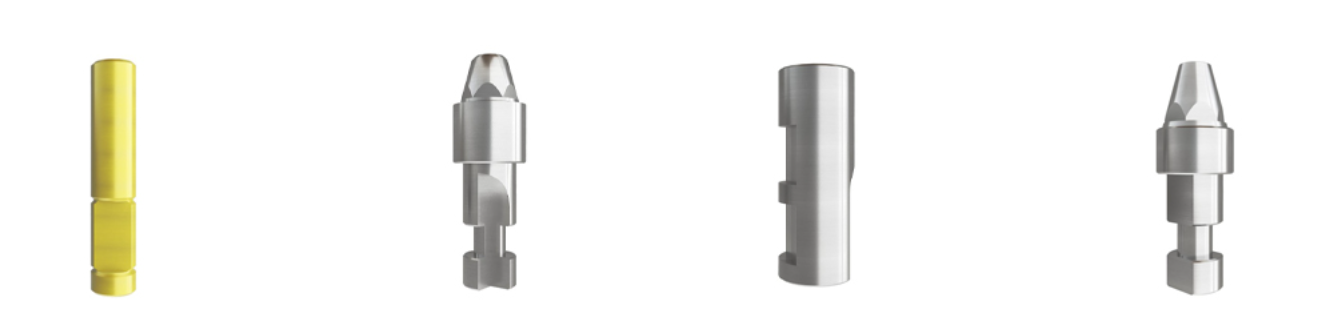
An excellent supplier is by no means simply the one with the lowest quote.
While price is certainly important for dental implants, for distributors, true value extends far beyond the unit price. You need consistent quality, reliable supply, clear product coding, compatible components, standardized packaging, and a partner who can address technical questions when issues arise.
A supplier may initially offer an extremely low quote. However, if their product line is incomplete, abutment compatibility is poor, or delivery times are unreliable, you may lose customers down the line.
In the B2B dental implant business, an excellent supplier should help you achieve sustained sales, not just a one-time transaction.
This means suppliers should possess the following understanding:
They should be familiar with implant systems, connection types, prosthetic workflows, packaging requirements, and private-label needs. They should also understand that distributors need more than just products; they require comprehensive support.
For example, distributors may need assistance in developing an initial SKU list; private labels may require product coding, logo packaging, catalog structure, and matching surgical kits; and suppliers targeting clinics may need to provide dentists with clear, easy-to-understand instructions and components that facilitate inventory management.
For this reason, selecting the right Chinese dental implant supplier is more akin to choosing a business partner.
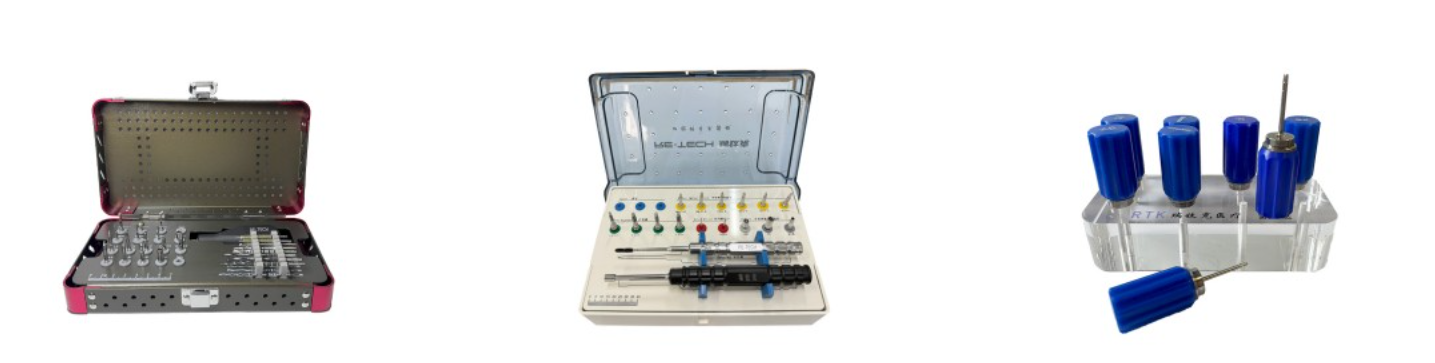
Before selecting a supplier, it helps to understand what type of supplier you are dealing with. In China, dental implant suppliers are not all the same.
These suppliers typically offer implant abutments, cover screws, healing abutments, impression components, simulators, abutments, screws, and surgical kits.
They are suitable for distributors who wish to sell complete implant systems under a single brand. If you are establishing a new implant product line in your home country, this type of supplier may be a good starting point.
The advantages are clear: you can source a variety of products from a single channel, the system is easier to manage, and the components are designed to be highly compatible.
However, there may also be some limitations. Full-system suppliers may have higher minimum order quantities, longer lead times, or less flexibility for small-batch custom orders.
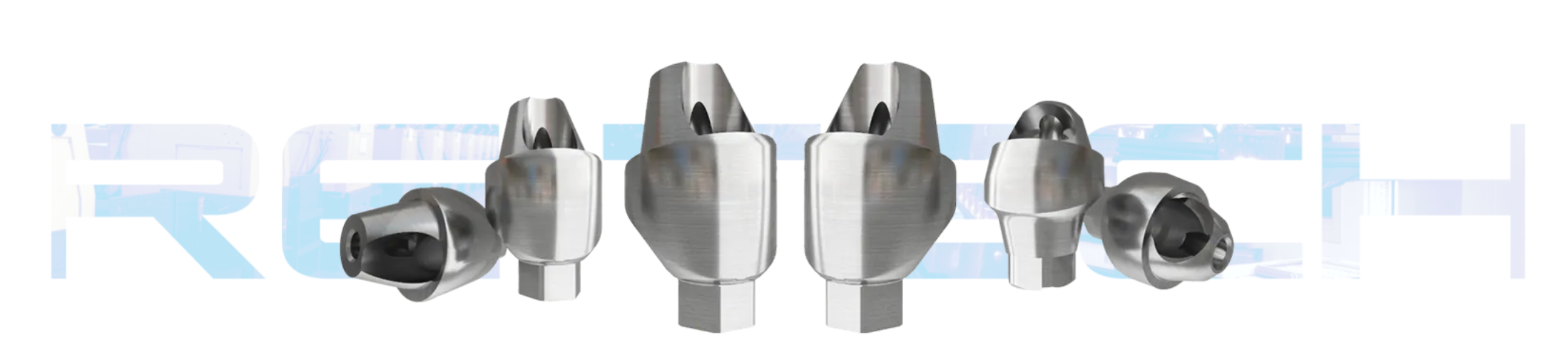
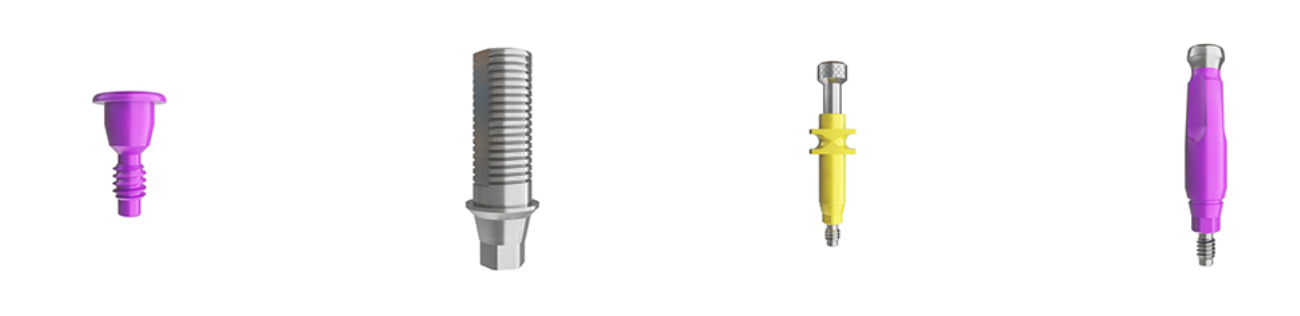
Some Chinese suppliers specialize in implant restoration components. These products may include titanium abutments, healing abutments, scan bodies, simulation models, restoration screws, multi-unit abutments, temporary abutments, and compatible components for mainstream implant systems.
Such suppliers are particularly valuable for distributors who have already sold implants but need a wider selection of components. Many dentists require not only implants but also replacement screws, scan bodies, healing caps, impression copings, and abutments.
If these components are difficult to obtain, selling the entire implant system becomes challenging.
RE-TECH Dental focuses primarily on this area. For distributors and private label buyers, RE-TECH Dental offers implant restoration components, compatible parts, surgical kits, and OEM solutions. This is particularly useful when buyers wish to build a more comprehensive product line without starting from scratch.
For companies wishing to sell products under their own brand, OEM suppliers are essential.
However, private labeling is far more than simply printing your logo on a box. A true private-label project requires product planning, packaging design, product coding, product documentation, and a stable, consistent supply chain.
For example, if you plan to develop your own brand of dental implants, you should consider the following questions:
Which implant connection type will you start with?
What are the most common diameter and length specifications in your market?
Which prosthetic components must be included in the initial order?
Do you need surgical kits?
Do you need neutral packaging initially, or do you require branded packaging from the start?
A good OEM supplier should help you think through these details. If a supplier simply says, “Yes, we can print your logo,” that may not be enough.
In some cases, trading companies can be very helpful. They may respond quickly, offer a wide range of product options, and assist buyers in sourcing various products from different factories.
This can be convenient for small buyers or first-time importers.
However, for a serious implant distribution business, trading companies also pose risks. They may lack direct control over production and may not understand all the technical details. If quality issues arise, communication can become slow because the actual factory is behind them.
This does not mean that all trading companies are unreliable; it simply means that buyers need to remain vigilant. If you wish to establish a long-term implant business, you must clearly identify the actual manufacturer of the products.
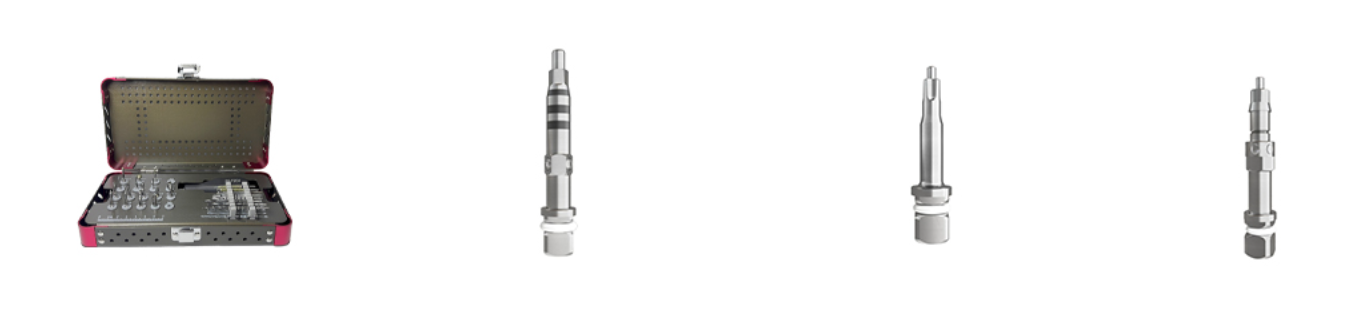
The dental implant business involves more than just implants and abutments. Dentists also need drill bits, implant drivers, torque wrenches, ratchet wrenches, depth gauges, and surgical kits.
A high-quality surgical kit makes the implant system easier to use and enhances the professional image of the product when demonstrating it to dentists.
However, the kit must be fully compatible with the implant system. Before placing an order, carefully verify the drill sequence, scale markings, drivers, and torque tools.
For B2B buyers, the comparison should not be limited to price alone. You need to assess the supplier’s actual ability to support your market.
Here is a simple evaluation method:
Supplier Type | Best Suited For | Best Suited For | Potential Risks |
Complete cultivation system manufacturers | Distributors of Complete Systems | Complete product line | Limited flexibility for small-batch custom orders |
Suppliers of prosthetic components | Buyers requiring abutments, scan models, screws, and mock-ups | Flexible component supply | Compatibility must be carefully checked |
OEM/private label suppliers | Brands establishing their own product lines | Packaging and branding support | Requires clear planning by the buyer |
Trading companies | Small-batch mixed orders | Quick procurement | Limited control over production |
Surgical instrument kit suppliers | Implant System Support | Smoother clinical workflows | Instruments must be compatible with the system |
Although this table is simple, it helps avoid a common mistake: comparing different types of suppliers as if they were the same.
A factory with strong capabilities in scanning bodies may not be the best choice for a complete implant system. Conversely, a full-line implant manufacturer may not be the most flexible option for small-batch, private-label component orders.
Choosing the right supplier depends on your business model.
A professional dental implant supplier should have a clear product range.
For distributors, the basic product line should typically include implant abutments, cover screws, healing abutments, impression components, simulation models, restoration screws, straight abutments, angled abutments, and surgical instruments.
If a supplier offers only a few implant specifications, you should proceed with caution. While the initial order may sell well, dentists may later request other specifications or components. If you cannot supply them, your brand will appear incomplete.
For private labels, product line planning is even more critical. You don’t need too many SKUs initially, but you must ensure the accuracy of those SKUs.
The connection system is one of the most critical components of an implant system.
Designs vary, including internal hex, tapered connections, Morse taper, and external hex. Even minor differences can affect fit, torque, and clinical application.
When sourcing compatible components, never rely solely on labels such as “compatible with Straumann” or “compatible with Nobel,” as these terms are too broad.
You should verify the exact platform model, screw type, torque values, and connection design, and obtain product drawings whenever possible.
Good suppliers ask questions before confirming. This isn’t a bad thing; on the contrary, it shows that they are committed to avoiding mistakes.
Dental implant products are typically made of titanium or titanium alloys. The materials must be stable and traceable.
For implant abutments, surface treatment is equally important. Buyers should ask suppliers how they control the machining, cleaning, surface treatment, inspection, and packaging processes.
Never make a decision based solely on product photos. Photos may look good, but they do not fully reflect production control practices.
Request technical specifications, quality documentation, and batch information when necessary. For B2B transactions, these details are critical.
Packaging is often overlooked in the early stages. However, once sales begin, it becomes crucial.
Dentists and clinics form part of their evaluation of a product based on its packaging. If labels are unclear, packaging appears cheap, or product codes are confusing, it will undermine trust.
For private-label products, packaging is a vital component of brand identity. You should confirm whether the supplier can provide services such as logo printing, product stickers, lot numbers, barcodes, instruction sheets, and outer box labels.
High-quality packaging also aids in inventory management. Your sales team and warehouse staff need to be able to quickly identify products.
While fast delivery is important, consistent delivery is even more critical.
Before partnering, ask the supplier which products are typically in stock and which require production. Also inquire about lead times for repeat orders, custom packaging, and rush orders.
Some suppliers may quote very optimistic delivery times before payment is made. It is best to ask for clarification from the outset.
For distributors, inventory planning is a vital part of sales operations. If popular specifications are frequently out of stock, dentists may switch to other brands.
In dental implant procurement, communication is a vital aspect of quality control.
A good supplier should not only respond quickly but also provide clear answers.
If you inquire about the platform, torque, minimum order quantity, materials, packaging, and delivery times, they should address each point individually. If unsure, they should verify the information before responding.
For B2B buyers, this is crucial. When dentists encounter issues, you need suppliers to help resolve them—not to go silent.
Private-label buyers should be more cautious than buyers of standard products.
When you sell products under your own brand, customers view the products as your own. If problems arise, they won’t blame the Chinese factory—they’ll blame your brand.
Therefore, private label procurement must begin with a clear plan.
Many new brands rush to launch a full product catalog. They want to offer multiple implant sizes, abutments, platforms, surgical kits, and branded packaging all at once.
While this may seem professional, it can create unnecessary pressure.
Too many SKUs mean higher inventory costs and make training more difficult. Your sales team may not be able to clearly explain all the details, and dentists may feel confused if the system is too complex in the early stages.
A better approach is to start with a streamlined product line.
Choose a primary connection method. Select the most common diameter and length specifications in your market. Prepare the necessary prosthetic components. Pair them with a practical surgical kit. Then conduct market testing.
After receiving genuine feedback from dentists, gradually add more specifications and components.
This approach is more prudent and helps build a clearer brand architecture.
While low prices can help you enter the market, they cannot replace product reliability.
If a supplier’s price is significantly lower than others, ask why. Are the materials different? Is the packaging inferior? Is the product outdated stock? Was it manufactured by a different factory? Are certain components missing?
Cheap isn’t necessarily a bad thing, but products of unknown origin always carry risks.
Some distributors focus too much on implant abutments. However, dentists also need healing abutments, screws, mock-ups, scan models, impression components, and abutments.
If these components are not available, dentists may be reluctant to use your system again.
A successful implant business requires a complete restorative workflow.
The thicker the product catalog, the more attractive it appears, but these products are likely to become dead stock.
Initially, it’s best to focus on common sizes. Ask local dentists which diameters and lengths they use most frequently. Base your first order on actual market demand.
Later, once sales have stabilized, you can expand your product line.
This is a very common issue.
Some products may look similar but may not fit together properly. For implant components, “almost the same” is not good enough.
Before placing an order, verify the system, platform, screws, torque settings, and connection methods. For scan bodies, you must also confirm the digital library.
Although this step is time-consuming, it can prevent serious post-sales issues.
OEM is much more than just printing a logo.
If you want to build your own brand, you’ll need product planning, packaging, coding, documentation, and a long-term, stable supply.
Working with an OEM supplier should help you build a product line that is easy to sell and manage.
The safest approach is to start small but with clear goals.
First, prepare a simple product list. Include product names, sizes, platforms, quantities, packaging requirements, and whether you need private labeling.
If you’re unsure what to choose, explain your market to the supplier. For example, you can specify whether your customers are clinics, distributors, laboratories, or implant brand owners. A good supplier should be able to recommend a practical initial product lineup.
Second, request authentic product photos and documentation. While catalog images are helpful, they are not sufficient on their own.
Third, order samples. Samples help you assess the manufacturing process, packaging, labeling, fit, and overall quality.
Fourth, test the supplier’s communication skills. During the sample phase, observe whether they are thorough, patient, and professional.
Fifth, place a small trial order. Avoid purchasing large quantities of slow-moving products initially; start with categories you are confident you can sell.
This process may seem time-consuming, but it is a more prudent approach for long-term business development.
For distributors and private-label buyers, RE-TECH Dental is worth considering when you need implant restoration components, compatible denture parts, surgical kits, and OEM support.
This is particularly beneficial if your business requires a diverse range of products. For example, you may need healing abutments, scan models, simulation models, prosthetic screws, multi-unit components, or tools to complete your implant product line.
For private-label clients, RE-TECH Dental can also assist with product selection and flexible procurement. This helps build a practical product line rather than piecing together various products from different suppliers.
Of course, every buyer should still verify product details, compatibility, packaging, certifications, and local registration requirements before placing an order.
This is standard practice for building a responsible implant supply chain.
Some Chinese implant suppliers are trustworthy, but product quality varies significantly from company to company. Before placing a large order, buyers should verify the product line, samples, documentation, packaging, communication, and the supplier’s ability to maintain a steady supply.
Yes. Many distributors produce private-label implant products through Chinese suppliers. However, private labeling involves more than just applying a logo; it requires product planning, packaging design, product coding, relevant documentation, and a stable, long-term supply capability.
New distributors should typically start with common implant sizes, healing abutments, impression components, simulation models, restoration screws, straight abutments, and surgical kits. It is recommended to begin with key product lines rather than purchasing too many SKUs.
You should verify the specific implant system, platform, connection type, screw type, and torque values, and review technical drawings whenever possible. For scanable abutments, you should also confirm their digital library.
If you intend to establish a long-term implant business, it is generally more advantageous to work directly with the manufacturer. This allows you to maintain clearer control over product details, quality, and repeat orders. Trading companies may be helpful for small, mixed-item orders, but buyers should be aware of the actual manufacturer of the products.
The greatest risk is selecting a supplier based solely on price while neglecting quality control, compatibility, packaging, and after-sales support. Dental implant products require consistent quality and clear technical validation.
Many suppliers offer OEM packaging services, but the quality of these services varies. Buyers should ask suppliers if they can provide logo printing, product labels, lot numbers, barcodes, instruction manuals, and custom cartons.
RE-TECH Dental is suitable for distributors seeking implant restoration components, compatible parts, surgical kits, and OEM support. The brand is particularly well-suited for B2B buyers looking for flexible product supply and private label partnerships.
This depends on market conditions, but it is generally recommended to start with a smaller product line that has high demand. Once sales stabilize, you can add more specifications and components.
You should inquire about the product range, materials, connection methods, compatibility, minimum order quantities, lead times, packaging, certifications, sample policies, and after-sales support. A reliable supplier should be able to answer these questions clearly.
The best implant supplier in China is not necessarily the largest, nor is it necessarily the cheapest.
For distributors and private label brands, the best supplier is a partner that fits your market, supports your product line, and helps you achieve sustained sales.
An excellent supplier should provide stable products, clear communication, complete components, reasonable lead times, and support when issues arise.
If you are building your own brand, choose a supplier who understands the value of long-term cooperation; if you are already a distributor, choose a supplier who can help you fill product gaps and optimize your product portfolio.
Purchasing dental implants is not just about buying products; it is a process of building trust with dentists, clinics, and local customers.
Therefore, take your time to screen suppliers. Ask plenty of questions. Examine samples carefully. Start by focusing on a specific product line.
This is the wise approach to finding a reliable dental implant supplier in China.