![[slide:title]](/static/upload/other/20260512/1778551853592214.webp)
![[slide:title]](/static/upload/other/20260512/1778551954982306.webp)
Time:2026-05-06 Form:本站
Abutment Size Guide: A Practical, In-Depth Framework for Precision Implant Restorations
In implant dentistry, success is often attributed to osseointegration, surgical precision, or prosthetic design. But there is a quieter variable that consistently determines long-term outcomes: abutment size selection.
Too often treated as a routine step, abutment sizing directly influences soft tissue stability, emergence profile, mechanical load distribution, and ultimately, prosthetic longevity. For dental labs, implant distributors, and manufacturers, understanding abutment sizing is not just clinical—it’s a strategic advantage.
This guide goes beyond basic definitions. It breaks down how abutment size works, why it matters, how systems differ, and how to make smarter decisions that reduce complications and improve consistency across cases.
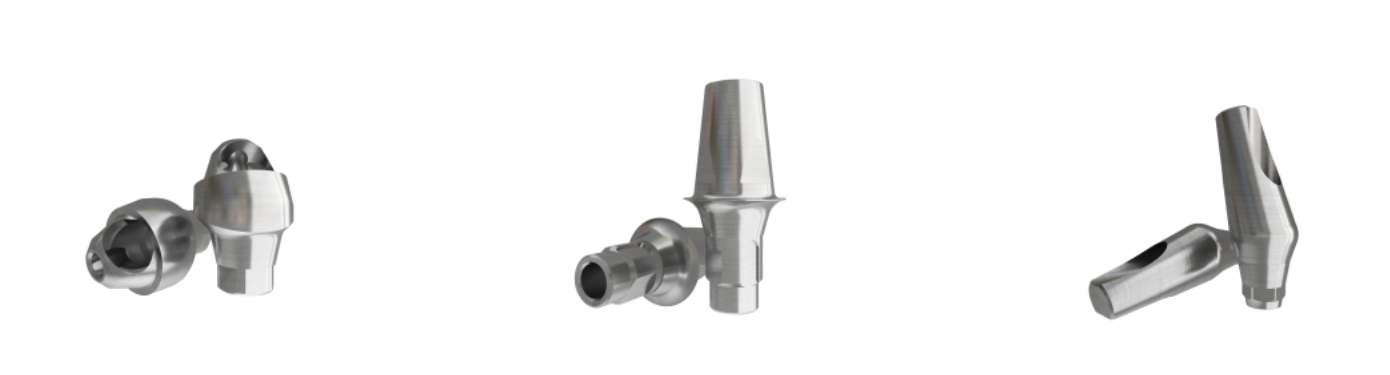
An abutment is the intermediary component connecting the implant fixture to the final prosthesis. But “size” in this context is multidimensional:
l Platform diameter (connection interface)
l Gingival height (collar height)
l Abutment height (occlusal dimension)
l Emergence profile width and contour
Each parameter interacts with biological and mechanical factors.
A mismatch in any one dimension can result in:
l Poor soft tissue adaptation
l Food impaction
l Cement retention issues
l Biomechanical overload
So when we talk about abutment size, we’re really talking about a system of proportions, not a single measurement.
This is the connection size between implant and abutment. Common categories include:
l Narrow platform (NP)
l Regular platform (RP)
l Wide platform (WP)
Key consideration:
Platform size must match the implant system, but it also affects emergence profile and load distribution.
Insight:
Platform switching (using a smaller abutment on a larger implant platform) has been shown to reduce crestal bone loss by shifting stress inward.
Measured from the implant platform to the margin where the prosthetic crown begins.
Typical options:
l 1 mm
l 2 mm
l 3 mm
l 4 mm+
Clinical relevance:
l Too short → subgingival margin, cement risk
l Too tall → exposed metal, poor aesthetics
Best practice:
Match gingival height to soft tissue thickness rather than guessing. Digital scans or probing depth should guide selection.
This is the vertical height available for crown retention.
Rule of thumb:
l Minimum 4 mm for adequate retention in cemented restorations
l Less height increases risk of crown loosening
For screw-retained restorations, this becomes less critical, but still impacts angulation and access.
Often overlooked, but arguably the most important aesthetic factor.
A well-designed emergence profile:
l Mimics natural tooth contour
l Supports gingival tissue
l Prevents black triangles
Stock abutments often fall short here, which is why custom abutments are increasingly preferred.
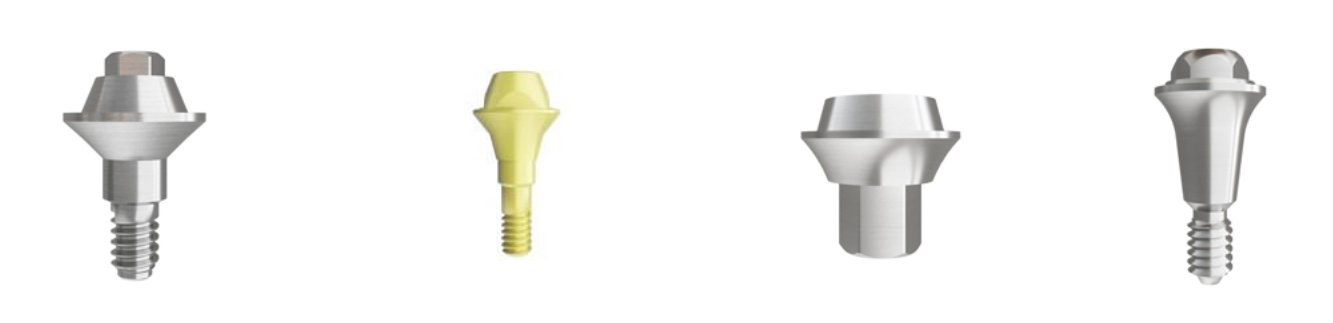
Advantages:
l Lower cost
l Immediate availability
l Standardized dimensions
Limitations:
l Limited emergence profile options
l Compromised soft tissue support
l Aesthetic limitations in anterior zones
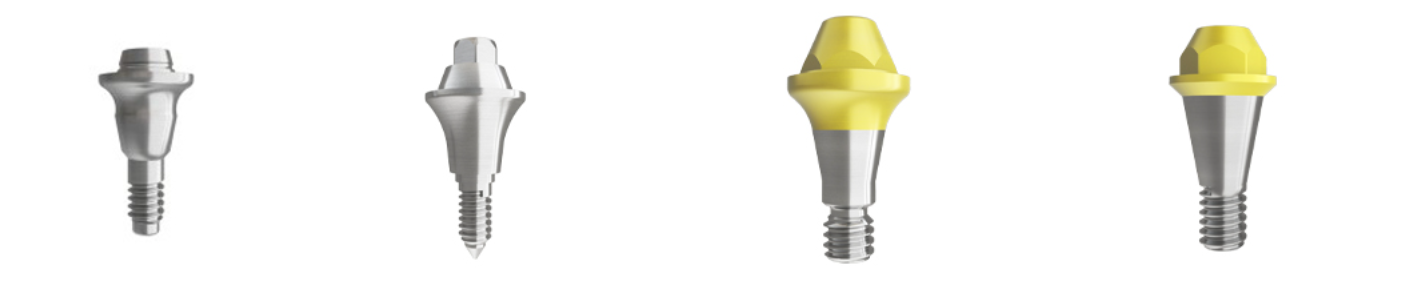
Advantages:
l Patient-specific emergence profile
l Better soft tissue management
l Improved aesthetics and biomechanics
Limitations:
l Higher cost
l Requires digital workflow
Clinics are increasingly shifting toward customized solutions, especially with digital dentistry growth.
Manufacturers like RE-TECH have responded by offering:
l Precision-machined titanium bases
l Compatible CAD/CAM abutment systems
l Stable connection tolerances across major implant platforms
This shift is not just clinical—it reflects market demand for predictable outcomes and workflow efficiency.
l High strength
l Excellent biocompatibility
l Ideal for posterior regions
l Superior aesthetics
l Tooth-colored
l More brittle under high load
This is becoming the dominant solution:
l Titanium interface ensures strength
l Zirconia provides aesthetics
Industry trend:
Ti-base systems are now widely adopted due to their compatibility with digital workflows and reliable mechanical performance.
Leads to either exposure or inflammation.
Stock limitations should not dictate clinical decisions.
Insufficient height compromises retention and function.
Results in unnatural contours and hygiene issues.
Digital workflows (intraoral scanning + CAD/CAM) allow:
l Precise measurement of gingival height
l Simulation of emergence profile
l Custom abutment design before fabrication
For manufacturers and distributors, this means:
l Higher demand for Ti-base compatibility
l Increased need for tight tolerance machining
l Greater emphasis on system interoperability
Companies like Ruitek are aligning with this shift by focusing on precision interfaces and digital-ready components, rather than just standard stock offerings.
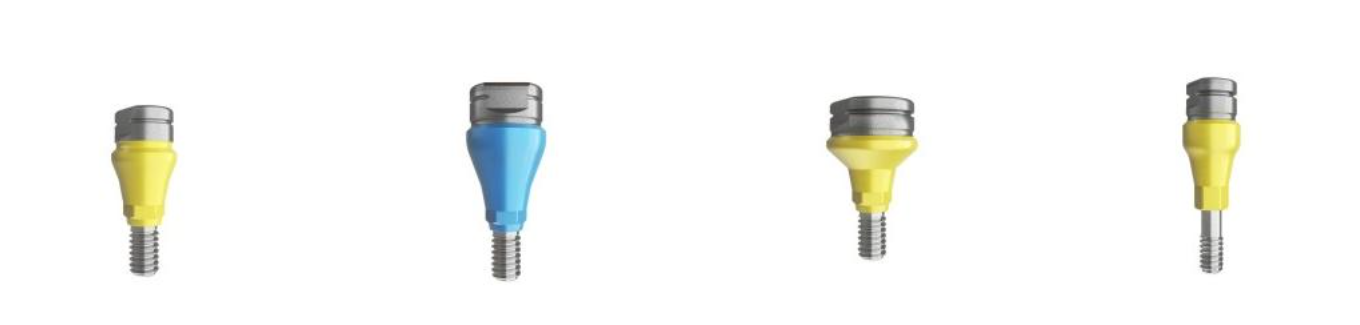
Here’s a simplified decision framework used by experienced clinicians:
1. Identify implant platform
2. Measure soft tissue thickness
3. Evaluate occlusal clearance
4. Decide retention type (screw vs cement)
5. Choose stock vs custom
6. Adjust emergence profile
This systematic approach reduces guesswork and improves consistency.
Measure soft tissue thickness at the implant site. The abutment collar should ideally sit slightly above the gingival margin to avoid subgingival cement.
Not always, but it is beneficial in many cases for preserving crestal bone. It depends on implant system compatibility and prosthetic design.
l Anterior cases
l Irregular gingival contours
l High aesthetic demand
Generally not recommended for high-load posterior regions unless reinforced with a titanium base.
Improper sizing—especially inadequate height and poor emergence profile—leading to loosening, inflammation, or aesthetic failure.
For dental professionals, abutment selection is a technical decision.
For manufacturers and suppliers, it’s a differentiation opportunity.
The market is moving toward:
l Customization
l Digital integration
l Precision engineering
B2B buyers are no longer just comparing price—they are evaluating:
l Compatibility
l Consistency
l Clinical predictability
A well-designed abutment system doesn’t just fit—it performs.
And that’s where forward-thinking manufacturers, including Ruitek, are positioning themselves: not as sellers of components, but as providers of reliable restorative solutions.