![[slide:title]](/static/upload/other/20260512/1778551853592214.webp)
![[slide:title]](/static/upload/other/20260512/1778551954982306.webp)
Time:2026-04-28 Form:本站
Abutment Compatibility Guide: A Practical Framework for Implant Manufacturers, Distributors, and Labs
In modern implant dentistry, compatibility is no longer a secondary concern—it is a defining factor in clinical success, operational efficiency, and long-term business scalability. While implant fixtures often receive the most attention, abutments are the true interface between biology, mechanics, and prosthetics.
For manufacturers, distributors, and dental labs, understanding abutment compatibility is not just about matching components—it’s about managing risk, ensuring predictable outcomes, and maintaining trust across the supply chain.
This guide goes beyond basic explanations. It provides a structured, real-world framework to evaluate abutment compatibility across systems, highlights hidden risks, and offers actionable insights for B2B decision-makers.
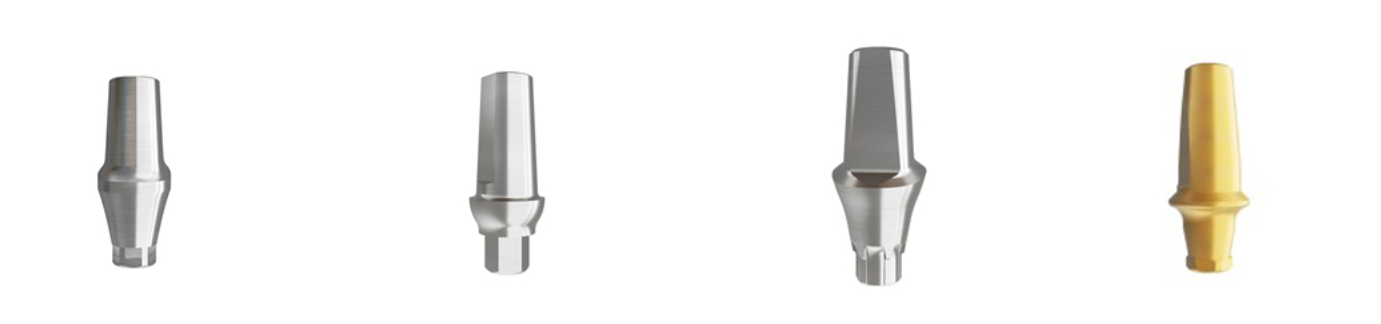
At a surface level, abutment compatibility refers to whether an abutment can physically connect to an implant. But in practice, compatibility operates across three critical layers:
This is the most obvious level:
l Connection type (internal hex, conical, trilobe, etc.)
l Platform diameter
l Indexing geometry
However, two components that “fit” geometrically are not necessarily compatible in function.
This determines long-term performance:
l Torque stability
l Micro-movement resistance
l Load distribution under occlusal forces
Even small deviations in tolerances can lead to:
l Screw loosening
l Microgaps
l Fatigue failure
Often overlooked in manufacturing discussions:
l Seal at the implant–abutment interface
l Bacterial leakage risk
l Soft tissue response
A poorly matched interface can compromise osseointegration over time—even if initial fit appears acceptable.
l Reduces liability from system mismatch
l Enables scalable product lines (OEM/ODM opportunities)
l Supports regulatory compliance
l Simplifies inventory management
l Reduces SKU complexity
l Increases cross-selling potential
l Improves workflow predictability
l Reduces remake rates
l Ensures prosthetic accuracy
In short, compatibility is a cost-control mechanism disguised as a technical feature.
These are closed ecosystems where:
l Only original components are guaranteed to fit
l Tight tolerances are strictly controlled
Advantages:
l High reliability
l Strong clinical validation
Limitations:
l High cost
l Limited flexibility for distributors
l Supply chain dependency
These are designed to match widely used implant connections:
l Based on reverse engineering or open standards
l Produced by third-party manufacturers
Advantages:
l Cost efficiency
l Supply flexibility
l Broader product range
Risks:
l Inconsistent tolerances between suppliers
l Variable surface treatments
l Potential long-term mechanical issues
The term “compatible” is widely used—but often misunderstood.
Two abutments labeled for the same implant system may differ in:
l Connection depth (micron-level differences)
l Cone angle precision
l Surface roughness at the interface
l Material grade (Ti-6Al-4V vs. variations)
These differences may not be visible—but they directly impact:
l Torque retention
l Microleakage
l Long-term fatigue resistance
Key Insight:
Compatibility is not binary (yes/no). It exists on a spectrum from acceptable fit to optimized performance.
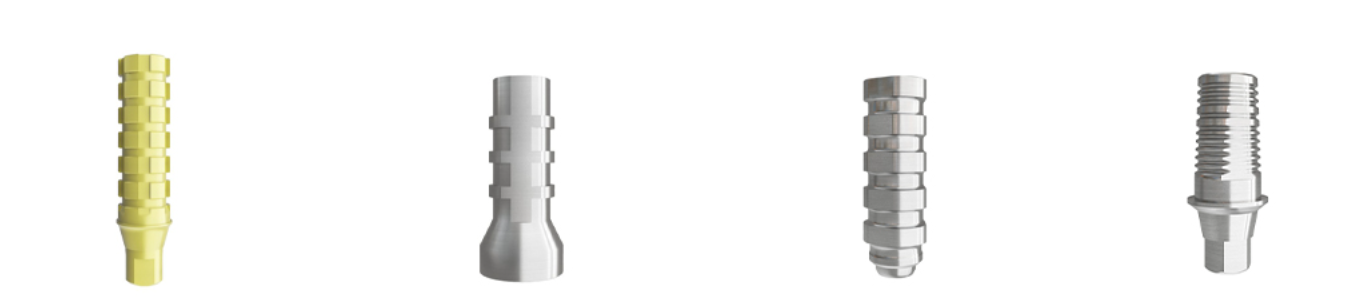
For B2B buyers, relying on supplier claims is not enough. A structured evaluation framework is essential.
l Use coordinate measuring machines (CMM)
l Evaluate tolerance consistency across batches
l Measure torque loss after cyclic loading
l Compare with OEM benchmarks
l Simulate long-term occlusal forces
l Identify fracture thresholds
l SEM (Scanning Electron Microscopy) evaluation
l Check bacterial leakage potential
l Verify titanium grade (ASTM standards)
l Ensure traceability
Manufacturers that provide transparent data in these areas stand out significantly in the B2B market.
l Widely used
l Easier compatibility replication
l More prone to micro-movement
l Superior sealing
l Higher precision required
l Small deviations can cause major issues
l Legacy systems
l Easier compatibility
l Lower mechanical stability
l Increasingly common
l Harder to replicate accurately
l Require advanced machining capabilities
Trend Insight:
The industry is moving toward conical and hybrid connections, which raises the bar for compatibility manufacturing.
Cause:
l Poor tolerance matching
Solution:
l Validate torque stability under load
Cause:
l Inaccurate cone angle or surface finish
Solution:
l Demand SEM-level validation
Cause:
l Material inconsistency or poor machining
Solution:
l Verify fatigue testing data
Cause:
l Different interpretations of the same “standard”
Solution:
l Standardize sourcing from fewer, high-quality manufacturers
Compatibility is ultimately a manufacturing problem, not just a design problem.
Key factors include:
l CNC machining precision
l Tool wear control
l Surface treatment consistency
l Quality inspection protocols
Factories that invest in:
l Multi-axis CNC systems
l Automated inspection
l Cleanroom packaging
are significantly more likely to produce true compatibility—not just nominal fit.
In recent years, some specialized manufacturers—such as RE-TECH—have focused on high-precision compatible abutment production, combining OEM-level tolerances with flexible product offerings. This reflects a broader shift in the industry toward “precision-compatible” manufacturing, rather than basic aftermarket replication.
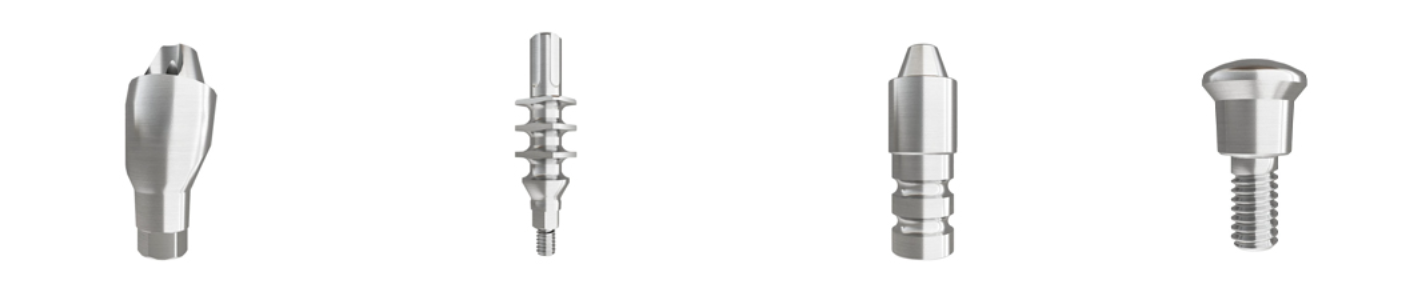
Choosing the right compatibility strategy can:
l Reduce procurement costs by 20–40%
l Expand product portfolios without increasing complexity
l Improve margins without sacrificing reliability
Reliable compatibility means:
l Fewer remakes
l Faster turnaround times
l Better prosthetic fit
Compatibility expertise enables:
l Entry into global markets
l Partnerships with implant brands
l Customization opportunities
l CAD/CAM abutments
l Digital libraries and scanbody alignment
l Increasing demand for cross-system compatibility
l Regulatory scrutiny
l Micron-level tolerances becoming standard
l Shift toward “OEM-equivalent” compatible products
They can be—but only if manufactured with high precision and validated through testing. Not all compatible products meet this standard.
Yes, but with caution. Always verify:
l Connection accuracy
l Torque stability
l Supplier consistency
The biggest risk is hidden tolerance deviation, which may not appear immediately but can lead to long-term mechanical or biological complications.
l Work with fewer, high-quality suppliers
l Request testing data
l Standardize product lines
l Proven machining precision
l Transparent testing data
l Consistent batch quality
l Experience with multiple implant systems
Abutment compatibility is often treated as a simple technical detail—but in reality, it is a strategic lever that affects clinical outcomes, operational efficiency, and business profitability.
For B2B stakeholders, the goal should not be to find components that merely “fit,” but to source products that deliver:
l Mechanical stability
l Biological integrity
l Long-term reliability
As the implant industry continues to evolve, the distinction between basic compatibility and precision compatibility will become increasingly important. Those who understand and act on this difference will be better positioned to compete in a demanding and quality-driven global market.