![[slide:title]](/static/upload/other/20260512/1778551853592214.webp)
![[slide:title]](/static/upload/other/20260512/1778551954982306.webp)
Time:2026-06-10 Form:本站
Best Implant Systems for Cost-Conscious Markets: A B2B Procurement Guide
Are you feeling the squeeze of rising supply costs and shrinking clinical margins? You are not alone. Across the global dental market, high-volume clinics, DSOs, and regional distributors are facing intense pressure. Patients want affordable care, but you cannot afford to compromise on clinical safety.
Choosing a budget-friendly implant system involves more than finding the lowest invoice price per fixture. You must calculate the true total cost of ownership. This includes surgical success rates, prosthetic flexibility, and long-term chair time. If a cheap implant fails, the remake costs will quickly wipe out your initial savings.
This guide delivers a clear, business-focused analysis of value-tier implant systems. We will look past the marketing hype to examine the real manufacturing metrics. Our goal is to help your business protect its bottom line while maintaining excellent clinical standards.
Many buyers get lost in textbook chemistry when looking at implants. For your business, material science directly dictates your remake rates and brand reputation. Let's break down the two primary substrate materials used in modern manufacturing.
Most value-tier systems use either Commercially Pure Titanium (Grade 4) or Titanium Alloy (Grade 5).
Grade 4 titanium offers excellent biocompatibility and forms a stable oxide layer to prevent corrosion. However, it has lower tensile strength than alloyed options. If your clinics place narrow-diameter Grade 4 implants in the posterior region, the structural risk increases.
Grade 5 titanium alloy delivers excellent mechanical strength, often exceeding 860 MPa. This material includes small amounts of aluminum and vanadium. This metallurgical blend allows you to safely place narrow fixtures without worrying about micro-fractures under heavy biting forces.
The way a factory treats the implant surface determines how fast the bone bonds to the fixture. Faster healing means quicker restorative turnaround times for your clinics.
RBM (Resorbable Blast Media): This method uses biocompatible calcium phosphate particles to rough up the titanium surface. It is a reliable, low-cost manufacturing option. However, it lacks the microscopic depth of modern acid etching.
SLA (Sandblasted, Large-Grit, Acid-Etched): This is the current benchmark for cost-effective systems. It combines mechanical blasting with hot acid baths. This process creates a multi-layered micro-topography that maximizes bone attachment.
At RE-TECH, we use fully automated SLA processing lines in our medical manufacturing facilities. This controlled process ensures every batch achieves predictable osseointegration. By reducing early implant failures, we help you lower the hidden costs of clinical remakes.
When you evaluate a value-oriented manufacturer, look beyond the initial invoice. Focus on three specific engineering metrics to avoid hidden operational costs down the road.
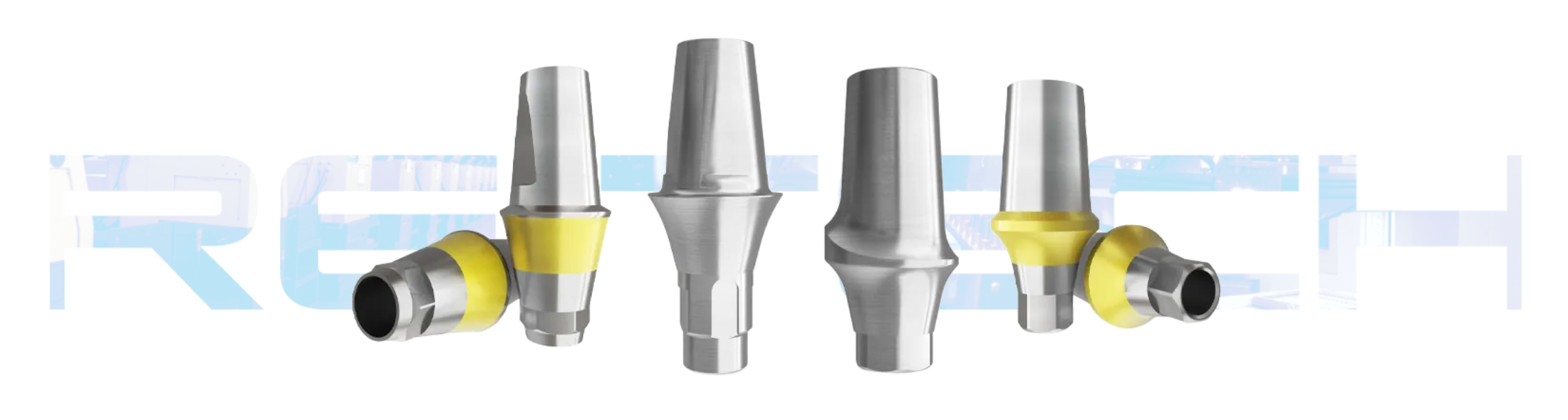
Look for systems utilizing standard internal hex or standard conical connections. Avoid proprietary, closed ecosystems that force you to buy expensive, single-source abutments.
Open platforms let your laboratory partners source affordable, high-quality third-party components. This flexibility instantly drops your overall restorative overhead. It also protects your supply chain from localized shipping delays.
Your clinics want predictable immediate-loading workflows to attract more patients. To deliver this, choose implants with progressive thread designs and self-tapping tips.
These features compress the bone efficiently during insertion. They ensure high initial torque values even in soft Type IV bone. Saving valuable clinical chair time directly improves clinic profitability.
A poorly machined interface between the implant and the abutment leads to screw loosening. This micro-gap allows bacteria to pool inside the fixture, causing bone loss and peri-implantitis.
High manufacturing tolerances are essential for long-term clinical success. Choosing a factory with tight engineering tolerances protects your business from costly product liability issues.
Let's look at how the main global value players stack up for your business. We will analyze their strengths and where they might cost you extra money.
Osstem is a popular high-volume player worldwide. Their TSIII system offers a highly reliable 11-degree Morse taper internal hex connection. This connection provides a strong seal against microbial invasion.
Their SA surface relies on proven SLA principles to give you predictable bone responses. However, their corporate business model has evolved. Because they invest heavily in global sales offices and massive training seminars, their prices have risen steadily. This pushes them to the absolute top of the value-tier pricing scale.
Dentium is a favorite for practices that prioritize simple surgical kits and straightforward protocols. Their SuperLine and Implantium systems focus heavily on reducing stress at the cortical bone level.
They utilize a standard SLA surface that performs well in long-term clinical studies. Dentium keeps their manufacturing costs predictable by avoiding complex design changes. This makes their inventory easy for distributors to manage, though their digital library updates can sometimes lag behind.
Owned by the corporate giant Dentsply Sirona, MIS offers a highly structured approach to budget implant lines. Their Seven system is a standard internal hex fixture used globally.
They use a high-strength Grade 5 titanium alloy, which makes their fixtures physically resilient. However, their corporate bundled contracts can be restrictive. These agreements can sometimes lock your business into specific, higher-priced restorative components.
Operating as the value arm of the Straumann Group, Neodent specializes in full-arch, immediate-loading solutions. Their Grand Morse connection provides excellent mechanical stability for immediate restorations.
They offer a competitive SLA surface called NeoPoros. While their physical engineering is strong, their prosthetic components can still carry a premium price tag. This can reduce your overall margins on complex multi-unit cases.
As a direct medical manufacturing facility, we take a different approach to the market. RE-TECH eliminates the expensive multi-tier distributor networks and heavy corporate marketing budgets that inflate implant costs.
Engineering Architecture: We build our systems on an open-platform philosophy using high-precision internal hex and Morse taper connections. This allows your labs to integrate seamlessly with standard digital CAD/CAM libraries.
Quality Control: We use medical-grade titanium processed on advanced automated milling machines to guarantee tight tolerances. Our multi-stage SLA surface matching ensures rapid healing times.
Business Impact: Buying direct from our factory gives you maximum control over your wholesale margins. This makes us the ideal partner for high-volume private labels and regional distributors looking to scale profitably.
The table below breaks down the engineering characteristics and commercial orientation of these cost-conscious systems.
Brand / System | Primary Material | Surface Process | Connection Type | Core B2B Business Advantage |
Osstem (TSIII) | Grade 4 Titanium | SA (SLA Concept) | 11° Morse Taper / Hex | High clinical familiarity; easy to sell to local doctors. |
Dentium (SuperLine) | Grade 4 Titanium | SLA | Conical Seal / Hex | Simplified surgical kits; low training overhead. |
MIS (Seven) | Grade 5 Alloy | Sandblasted & Etched | Standard Internal Hex | Backed by a major corporate supply chain network. |
Neodent (Grand Morse) | Grade 5 Alloy | NeoPoros (SLA) | Deep Conical / Index | Optimized for specialized full-arch clinical clinics. |
RE-TECH Dental | High-Purity Ti | Automated SLA | Open Platform / Universal | Direct-from-factory pricing; maximum profit margins. |
To maximize profits, you must look at the total procedural cost. A cheap titanium fixture loses its value if the components around it are expensive. Use this simple formula to calculate your true costs:
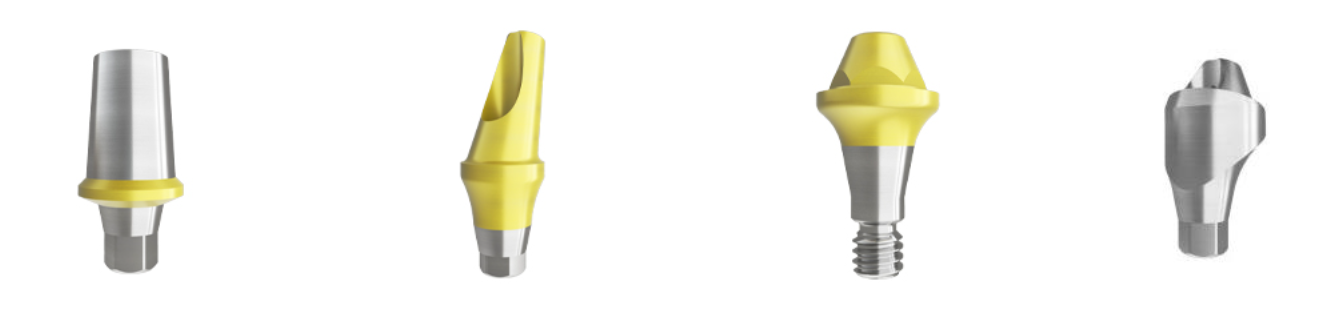
Premium brands often inflate the prices of impression copings, analogs, and definitive abutments. If your prosthetic parts cost more than the implant itself, your business model is broken. Open systems, like RE-TECH, let your labs use non-proprietary components. You can also mill custom titanium bases directly from standard blanks to save money.
Cheap surgical kits use low-grade steel drills that dull after just a few surgeries. Dull drills overheat bone tissue, leading to early implant failures and costly retreatments. High-quality value brands use diamond-like carbon (DLC) coatings to extend drill life. This lowers your long-term instrument replacement costs.
In modern dentistry, physical impressions are becoming obsolete. Your chosen implant system must offer open-architecture digital scan bodies. Free, downloadable exocad or 3Shape libraries save your lab partners time. They also eliminate costly manual errors, speeding up your entire production cycle.
The price difference between premium and value systems is rarely about raw material costs. Medical-grade titanium is a standardized global commodity. Value brands save money by streamlining corporate structures and cutting out massive field sales forces. At RE-TECH, we focus our capital on automated micro-machining and strict quality control, passing those direct structural savings onto you.
This depends entirely on the connection geometry. Many top-tier value systems are engineered to be universally compatible with widely accepted platforms like Zimmer Screw-Vent or NobelBiocare Active. Choosing a cross-compatible system allows your clinics to source parts easily, protecting your business from sudden supply chain disruptions.
Clinical data proves that early failures are rarely caused by the brand name on the box. Instead, failures usually stem from bone overheating due to dull drills, poor initial torque management, or factory packaging contamination. Reliable value manufacturers prevent these issues by utilizing automated cleanroom packaging and precise drill manufacturing.
Traditional brand partnerships often tie your business to strict annual quotas and rigid regional pricing. Direct-from-factory sourcing with Ruitake allows you to build your own private label, establish custom pricing, and capture significantly higher gross margins. You also gain a direct line to our engineering team for fast product updates.
Legitimate manufacturers subject their facilities to strict international audits. When sourcing implants, always verify that the factory holds valid ISO 13485 certifications along with necessary regional clearances, such as CE marks or FDA documentation. These certificates guarantee that the titanium purity and cleaning validations meet strict global safety standards.
The global shift toward value-tier implant dentistry is accelerating. By analyzing structural designs, surface processing quality, and prosthetic compatibility, B2B buyers can confidently protect their margins.
For high-volume operations and growing dental networks, looking toward direct manufacturing solutions like Ruitake provides a distinct commercial advantage. This balanced approach gives you the precision, regulatory security, and financial margins needed to win in today's competitive landscape.